

Table of Contents
- What is a spiritual awakening retreat?
- How do you know if you are ready?
- Types of spiritual awakening retreat
- Meditation-intensive programs
- Breathwork and somatic retreats
- Nature-immersion and vision-quest formats
- Yoga and contemplative practice retreats
- Guided inner-work programs
- What to expect: a typical day
- The research case for retreat
- How to choose the right retreat for your stage
- After the retreat: integration
- Frequently asked questions
- What is a spiritual awakening retreat?
- How long should a first spiritual awakening retreat be?
- What happens during a spiritual awakening retreat?
- Do you need prior meditation experience to attend?
- Are spiritual awakening retreats worth it?
- What is the difference between a spiritual awakening retreat and a regular spiritual retreat?
- Plan your next retreat
The bell rings at 5:30 a.m. You have been awake for fifteen minutes already, listening to rain on a tin roof. By 6 a.m. you are sitting on a cushion in a hall with twenty strangers, eyes closed, back straight, nowhere to be. No phone, no meetings, no small talk. Just this: your own breath, and whatever arrives behind it.
This is a spiritual awakening retreat. Not in the sense of a drama. In the sense of a deliberate slowing down that, over several days, makes the ordinary architecture of your life visible in a way it rarely is when you are inside it.
What is a spiritual awakening retreat?
A spiritual awakening retreat is a residential program structured to support or accelerate an internal shift in how you relate to yourself and the world. The word "awakening" sounds dramatic. In practice it is quieter: a gradual seeing-through of patterns that have stopped serving you, a new relationship with your inner life, a reconnection with what you actually want rather than what you have been running on.
It differs from a general spiritual retreat, covered in more depth in what a spiritual retreat is, in one key way: the orientation is explicitly toward a shift, not simply toward rest or spiritual practice as an ongoing habit. The program design, the facilitator's framing, the schedule: all of it is calibrated to create conditions where something moves.
And it differs from a wellness retreat in that comfort and restoration are not the primary point. The point is the work.
One thing it is not: a single dramatic moment that rewrites your life. Retreats that promise "transformation" in a weekend overstate what any retreat can deliver. What a well-designed spiritual awakening retreat does deliver is a container with enough structure, quiet, and skilled facilitation that your usual defenses soften and something underneath becomes accessible.
How do you know if you are ready?
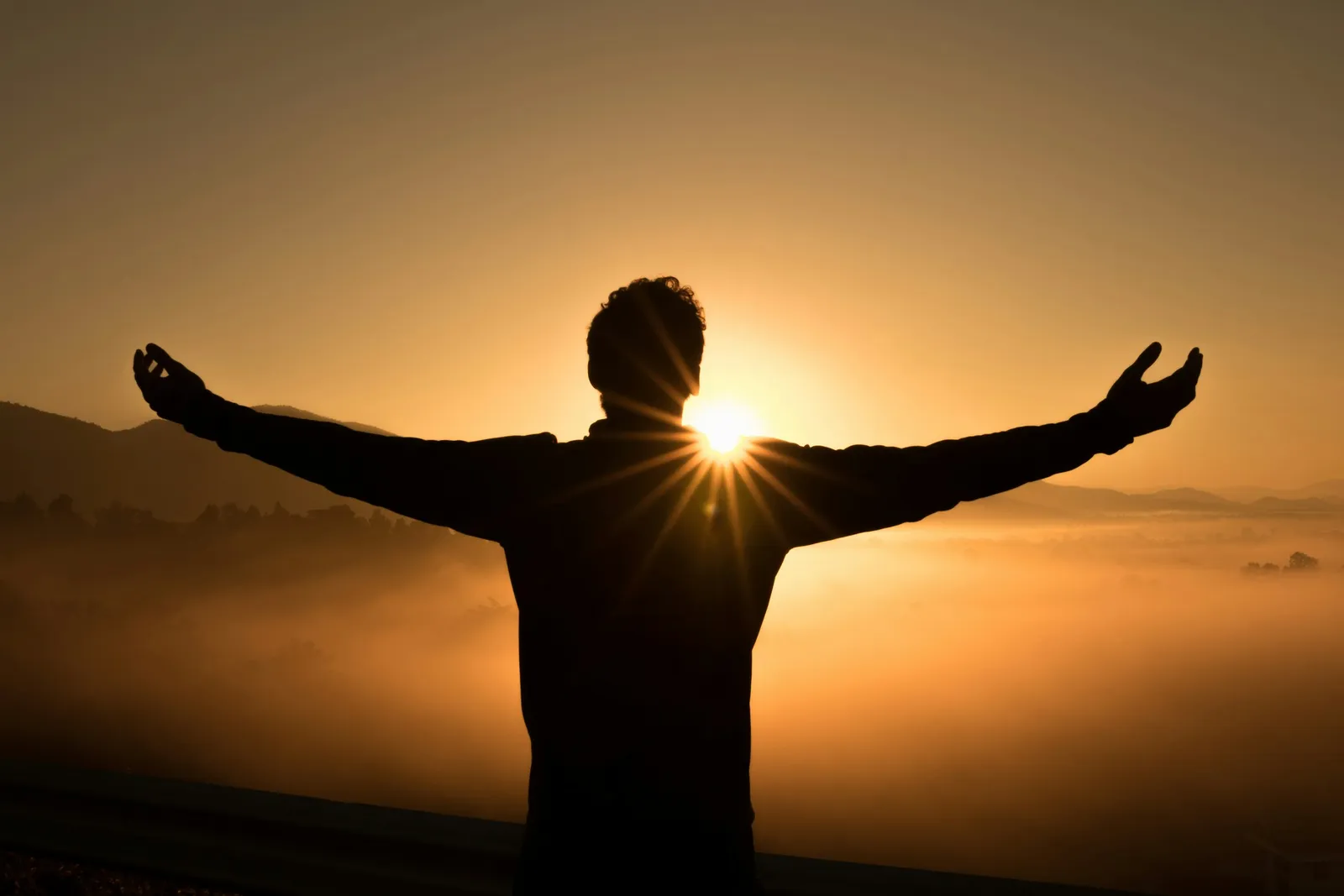
Most people who search for a spiritual awakening retreat are not looking for spiritual content. They are looking for relief from the feeling that something is off. A few common patterns.
You are functional but running on low. Life looks fine from the outside. You meet your deadlines, maintain your relationships, do the things. Inside, it feels like going through the motions. The numbness is often the first signal.
You have had a major disruption. A loss, the end of a long relationship, a career shift that turned out to mean more than it looked. The disruption opened something and now it is sitting there, unaddressed.
Your existing practice has hit a ceiling. You meditate, or you used to. You have read the books. You have the language for the inner life. But something in the practice has gone flat and you know, without being able to say why, that the next step requires more than an app can offer.
You are restless in a specific way. Not anxious about anything in particular. Just a persistent sense that something is missing or waiting. That restlessness is often its own kind of message.
This kind of retreat is not the right first move for everyone. If your primary struggle is professional exhaustion and burnout, burnout recovery retreats are calibrated more precisely for that presentation. If you are in an acute mental health crisis, a retreat is not the right container. A spiritual awakening retreat requires a basic stability: you need to be able to sit with discomfort for sustained periods without it becoming unsafe. That is a matching problem, not a judgment.
Types of spiritual awakening retreat
No programs are named here. What varies most is the modality through which the work happens and the intensity of the container.
Meditation-intensive programs
Structured around long sitting sessions, walking meditation, and silence. The most rigorous version is the ten-day Vipassana-style retreat: noble silence from arrival to departure, no reading, no devices, up to ten hours of sitting per day. Three- to seven-day versions exist for those new to the format who are not ready to commit to ten days immediately.
These programs often produce the most signal per hour for those who can tolerate stillness. They are also the hardest. For the specific mechanics of silent retreats, what a silent retreat involves covers the format in detail.
Breathwork and somatic retreats
Use pranayama, holotropic breathing, or somatic movement to access non-ordinary states and emotional processing, without traditional sitting meditation. Often three to five days. More physically engaging and more emotionally volatile than silent formats. A good first format if you find extended silence too dense, or if you process primarily through the body rather than through thinking.
Nature-immersion and vision-quest formats

Extended time in wilderness, sometimes with fasting, solitude, and structured ceremony. Strong roots in indigenous traditions. Duration: several days to a week. Quality and safety vary significantly in this category. If a program involves plant medicine or ceremonial practice, the facilitator's credentials and safety protocols are not optional reading before booking.
Yoga and contemplative practice retreats
Daily asana, pranayama, and meditation combined with teaching and group practice. Less intense than pure meditation retreats, with more structure and movement for those who need a physical anchor. A good entry format for first-timers who want the awakening orientation without the full silence container.
Guided inner-work programs
Structured around 1:1 sessions with a facilitator, journaling, group sharing, and meditation. Often smaller groups, six to twenty participants. More verbal processing than silence. Good if you want skilled guidance through whatever arises and are less drawn to the more austere formats.
What to expect: a typical day
The shape of a five- to seven-day meditation-anchored spiritual awakening retreat, as a representative composite.
5:30 a.m.: wake. Optional light movement before the first session. 7 a.m.: the anchor practice, guided meditation or breathwork, ninety minutes to two hours. Breakfast follows, often silent. Simple food. No decisions required. 10 a.m.: teaching, dharma talk, or facilitated group sharing, depending on the program's tradition. Lunch and a rest period. 2 to 5 p.m.: solo reflection time, walking meditation, nature. Optional 1:1 session with a facilitator. 5:30 p.m.: evening practice, often movement-based or sound-based rather than sitting. Early dinner, early bed.
The first twenty-four to thirty-six hours are often the hardest. The mind, removed from its usual inputs, gets louder before it quiets. Restlessness, boredom, irritability, and surfacing emotions are normal and expected. They are not signs that the retreat is not working. They are the beginning of the process.
Vipassana-style programs are rigidly scheduled with almost no unstructured time. Lighter programs leave more afternoon space. If structure matters to how you learn and process, read the daily schedule before you book.
The research case for retreat

Retreat benefits have been studied enough to make evidence-based claims, cautiously.
A 2018 systematic review in BMC Complementary and Alternative Medicine examined 23 studies involving 2,592 participants. All studies reported post-retreat health benefits persisting from immediately after retreat to five years later. The authors noted that most studies had small sample sizes and limited follow-up data: the direction of evidence is consistent, the effect size harder to pin down precisely.
A 2024 review published in PMC found that retreat benefits are more enduring than those from standard vacations. Mindfulness gains accounted for roughly half of the psychological improvements observed, and emotional regulation improvements were sustained up to ten weeks post-retreat.
The consistent thread across the research: reduced stress reactivity, better emotional regulation, a restored sense of direction. One thing this evidence does not support is the claim that a single retreat produces permanent change, or that retreat is a substitute for clinical treatment when clinical treatment is what is actually needed.
If you want to explore what supports this kind of inner work outside of retreat, how to heal yourself covers the practices that carry it into daily life.
How to choose the right retreat for your stage
Start with program length, because this is where most mismatches happen. If you have no meditation background, two to three days with a facilitator is the right entry point, not ten days of noble silence. A regular meditator with an established sitting practice can handle five to seven days. Experienced practitioners comfortable with sustained intensive practice can go longer. More days is not better: it is more appropriate or less appropriate depending on where you are.
Modality matters next. Sitting-heavy programs reward those who can tolerate stillness for extended periods. Somatic and breathwork programs suit those who process through the body. Vision-quest formats require physical fitness and baseline psychological stability before attempting. If you are not sure which you are, start with a shorter yoga or guided inner-work format before committing to something more austere.
Check the facilitator, not just the setting. Look for verifiable training, years of experience leading the specific format, and transparent participant feedback. For any plant medicine or intensive somatic work: credentials and clear safety protocols have to come first. Without them, do not book.
Read what "spiritual" means on the program page. Some centers use the word for explicitly Buddhist, Hindu, or shamanic frameworks. Others use it for secular inner-work with no tradition attached. Read carefully if you have a specific tradition preference or a firm preference for secular practice.
Finally, check the logistics that actually change the experience: group size (smaller means more individual support), food (some programs are vegetarian or vegan, some involve fasting), device policy (phone access or none is not a minor distinction on a five-day retreat), and accommodation type (private room versus shared dorm shapes the whole container).
For destination inspiration by region, the most spiritual places in the world covers where serious retreat programs cluster.
Ready to look at specific programs? Browse 421 curated meditation and contemplative retreats at retreat-vacation.com. Most spiritual awakening programs sit in this category.
After the retreat: integration
What happens in the weeks after matters as much as the retreat itself. Research supports this directly: the 2024 PMC review found that benefits are more sustained when retreat practices are integrated into daily life. Without integration, the initial shift fades within weeks for most people.
Practical integration is not complicated. A daily sitting practice, even ten or fifteen minutes, is more useful than ninety minutes twice a week. A journal kept for the first thirty days post-retreat gives structure to observations that would otherwise dissolve back into routine. Maintaining some of the retreat's simplicity, less screen time, more quiet, as a deliberate transition rather than dropping it on departure day, extends the window.
Not every retreat experience is uniformly positive. Some people surface difficult emotions or unsettled states that persist after returning home. This is not a reason to avoid retreat. It is a reason to choose your facilitator carefully, and to have access to a therapist or counselor who understands contemplative experience before you go into intensive work, not after.
Frequently asked questions
What is a spiritual awakening retreat?
A residential program structured around meditation, silence, breathwork, and facilitated inner work, with the explicit aim of supporting a personal spiritual awakening. The key word is explicit: general spiritual retreats may focus on rest, reflection, or prayer without any particular orientation toward a breakthrough. Spiritual awakening retreats are designed to create conditions for one. Formats vary from silent Vipassana programs to somatic retreats to nature-immersion.
How long should a first spiritual awakening retreat be?
Two to five days is the right starting point for most people doing this for the first time: long enough to settle in and do meaningful work, short enough that it is not overwhelming before you know what you are getting into. Ten-day intensive formats are better matched to those with an established sitting practice.
What happens during a spiritual awakening retreat?
A typical day includes morning and evening meditation or breathwork sessions, teaching or group sharing, solo reflection time, and mindful meals. Many programs incorporate silence for part or all of the day. The first twenty-four to thirty-six hours are often uncomfortable as the mind adjusts. This is normal and part of the process, not a sign of failure.
Do you need prior meditation experience to attend?
Not for shorter, facilitator-led programs. A two- to five-day retreat with guided sessions is accessible to motivated beginners. Longer or more intensive formats, particularly ten-day silent programs, benefit from some prior sitting practice. Check the program's stated experience requirements before booking. Most programs are straightforward about this.
Are spiritual awakening retreats worth it?
For people who go with realistic expectations and choose a program matched to their experience level, the evidence is consistently positive. A 2018 systematic review of 23 studies and 2,592 participants found post-retreat health benefits persisting from immediately after to five years later (BMC Complement Alt Med, PMID 29316909). A 2024 review found benefits more enduring than vacation benefits, with emotional regulation gains sustained up to ten weeks (PMC11626984). Individual outcomes depend on program quality, facilitator credentials, and post-retreat integration.
What is the difference between a spiritual awakening retreat and a regular spiritual retreat?
The framing of purpose. A general spiritual retreat may offer yoga, meditation, prayer, or rest with no stated goal beyond the practice itself. A spiritual awakening retreat tells you upfront that the aim is a shift, usually supported by more intensive formats and facilitators trained specifically for that arc. Check what the program description says about its intentions: that language is the most reliable distinguishing marker.
Plan your next retreat
Many spiritual awakening programs are anchored in deep meditation practice. Browse 421 curated meditation and contemplative retreat programs at retreat-vacation.com. The catalogue covers silent meditation retreats, guided inner-work programs, yoga and contemplative practice retreats, and somatic formats across Europe, Asia, and North America. Filter by length and location to find programs matched to your experience level and travel window.