
Table of Contents
- What spiritual healing is (and where the evidence lives)
- The core methods: what they are, how they work, what the evidence shows
- Meditation and mindfulness
- Breathwork
- Sound healing
- Reiki and energy work
- Somatic movement: yoga, qigong, and related practices
- Journaling and contemplative writing
- Time in nature
- How to choose: matching the method to what you need
- What spiritual healing is not for (and when to get different help)
- How a retreat takes these practices off the to-do list
- Frequently asked questions
- What is spiritual healing?
- What are the different types of spiritual healing?
- Does spiritual healing actually work?
- What is the most effective spiritual healing method?
- How do I start with spiritual healing practices?
- Can you practice spiritual healing at home?
- Is spiritual healing religious?
- What is the difference between spiritual healing and therapy?
- Plan your next retreat
The first time most people try breathwork seriously, they are surprised by what surfaces. Not serenity. Something more like a body discovering it had been holding its breath for years. That's not magic. It's physiology responding to a deliberate shift in the nervous system.
Spiritual healing methods work that way: at the intersection of the deliberate and the organic. They are not alternatives to medicine. They are practices that address dimensions of wellbeing that medicine doesn't reach well: meaning, attention, body-awareness, the sense that your life is moving in a direction you actually want. This guide covers the main ones, notes what the evidence says, and offers some honest guidance on when each is actually useful.
For the broader self-healing picture, across emotional, physical, and spiritual domains, how to heal yourself is the orientation read.
What spiritual healing is (and where the evidence lives)
Spiritual healing is an umbrella term for practices that work through attention, meaning, ritual, and body-awareness rather than through pharmacology or physical intervention. The boundary with conventional medicine is clear: if you have a broken bone, a fever, or a clinical depressive episode, you need a doctor. If you have chronic low-grade exhaustion, a fraying sense of purpose, or stress that has settled into your shoulders and your sleep, spiritual practices have a real role.
That role is documented at varying levels of rigor depending on the practice. Mindfulness-based approaches have the densest evidence base, with multiple large meta-analyses showing measurable effects on cortisol, anxiety, and mood. At the other end, crystal healing has essentially no controlled trial evidence. Most practices fall somewhere between those poles.
Honest engagement with this spectrum is itself a form of respect. The reader who comes to this topic skeptically deserves an honest answer, not enthusiasm-as-substitute-for-evidence.
The core methods: what they are, how they work, what the evidence shows
Meditation and mindfulness
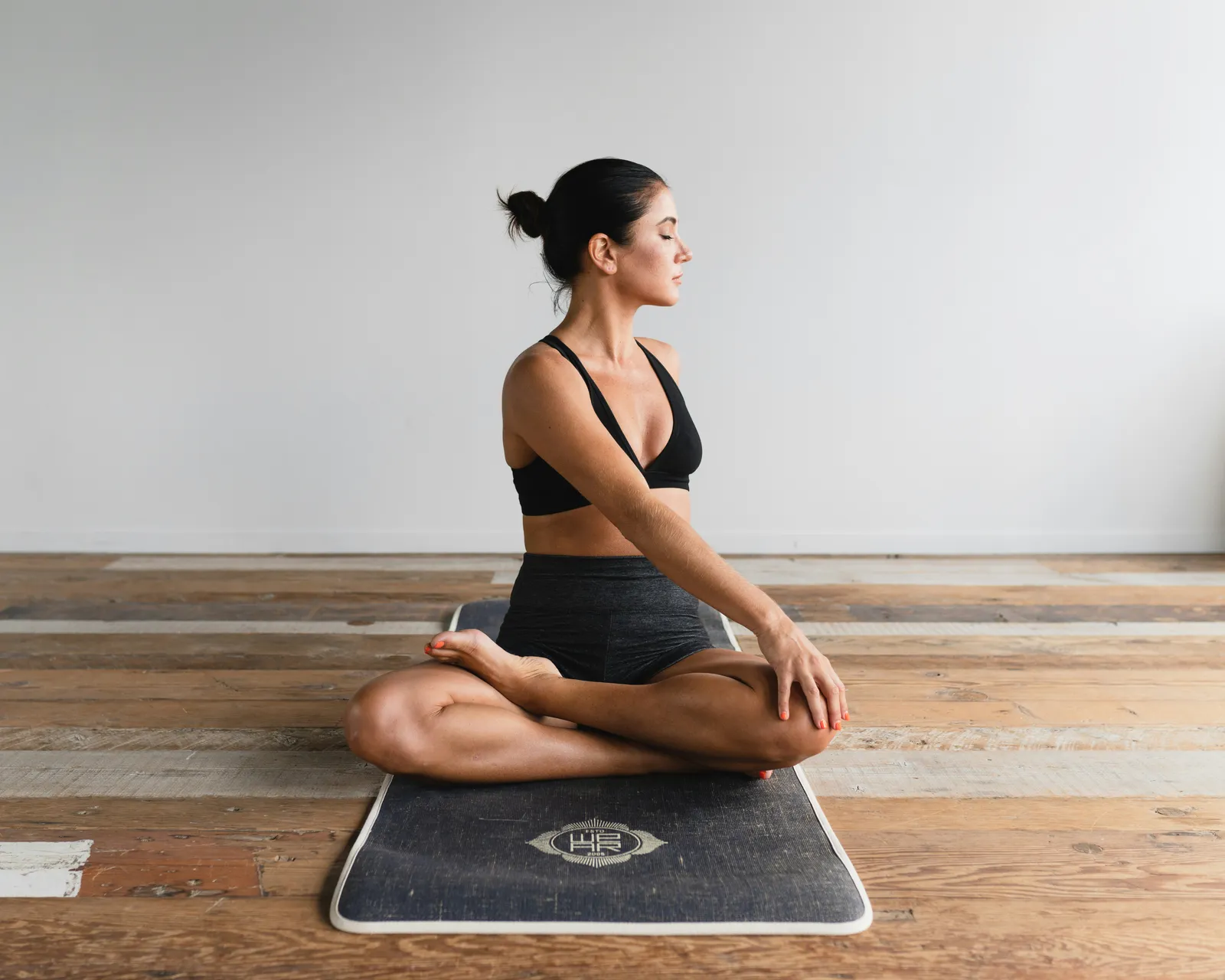
Meditation covers a wide range of practices, from breath-focused attention and body scans to loving-kindness practices and open-awareness sitting. What they share: deliberate direction of attention, typically for a fixed period, with some form of non-judgmental observation of what arises.
The evidence base is the strongest in this category. A 2017 meta-analysis of 45 randomized controlled trials, published in the Journal of Psychiatric Research, found that mindfulness meditation measurably reduces cortisol and other physiological stress markers. Benefits for anxiety, depressive symptoms, and pain perception are replicated across multiple bodies of research. The mechanism is reasonably well understood: meditation downregulates the default mode network (the brain's self-referential "wandering" mode), which tends to be activated in rumination and anxiety.
Entry point for beginners: 10 minutes of breath-focused attention daily, for two weeks, is enough to observe a subjective effect. No app required.
Breathwork
Breathwork encompasses several distinct practices: slow diaphragmatic breathing for parasympathetic activation, structured cyclic hyperventilation approaches, and yogic pranayama. Each acts on the nervous system through different mechanisms, so they are not interchangeable.
Slow, extended-exhale breathing (4-7-8 or box breathing patterns) activates the vagus nerve and measurably increases heart rate variability within minutes, signaling a shift toward parasympathetic dominance. This is the most studied and most immediately applicable of the breathwork methods. Structured hyperventilation has a weaker evidence base but strong anecdotal reports, particularly for emotional release. Pranayama practices embedded in yoga lineages have a long empirical track record at the practice level, even if the RCT literature is thinner.
Breathwork is the lowest-friction entry point to spiritual healing practices: it requires no equipment, no practitioner, and works within one session. For acute stress, try this before anything else.
Sound healing
Sound healing uses auditory stimuli, from singing bowls, gongs, and tuning forks to structured music and chanting, to induce shifts in physiological state. The mechanism that holds up best in the literature is relaxation response via the auditory-vagal pathway: slow, harmonically rich sound (as opposed to percussive or dissonant) slows breathing, reduces heart rate, and shifts brainwave activity toward alpha and theta states.
The evidence for group sound bath sessions is thinner and more self-reported than the evidence for music therapy in clinical settings (which has a longer peer-reviewed history). Where sound healing tends to be most reliable: as a container for body-awareness and attention-settling, particularly for people who find breath-focused meditation difficult.
Reiki and energy work
Reiki involves a practitioner applying light touch or hands hovering near the body, with the intention of directing "universal life energy" toward the recipient. The framing is Japanese in origin, developed in the early 20th century. Chakra-based energy work shares the same model: a system of energy centers in the body whose balance or imbalance reflects and affects wellbeing.
The controlled trial evidence for Reiki specifically is modest: several small studies show effects on relaxation and subjective wellbeing comparable to therapeutic touch in general, but no mechanism for the specific "energy transfer" component has been identified. A reasonable interpretation: the therapeutic contact, the attention of a practitioner, the quiet environment, and the deliberate relaxation all contribute to the reported benefit, regardless of whether the specific energy model is accurate.
Useful for: structured relaxation and body-awareness. The therapeutic contact and quiet attention of a practitioner contribute to the reported benefit regardless of whether the specific energy model is accurate.
Somatic movement: yoga, qigong, and related practices
Yoga, qigong, and tai chi are movement systems with deep roots in spiritual traditions that have substantial contemporary evidence bases as wellness practices. They work on multiple layers simultaneously: physical (strength, flexibility, balance), physiological (breath regulation, parasympathetic activation), and attentional (the focus required to follow a sequence while attending to breath and body).
These practices are "somatic" in the sense that they use the body as the primary instrument of healing, rather than working primarily through cognition (as therapy does) or chemical intervention (as pharmacology does). For people whose stress and disconnection are held physically in the body (which is most people), this embodied approach often produces faster initial shifts than purely cognitive practices.
Journaling and contemplative writing
Writing as a healing practice has a specific mode: not journaling as documentation, but as inquiry. The practice developed by psychologist James Pennebaker involves writing about difficult emotional experiences for 15-20 minutes on consecutive days, without editing or self-censorship. The research on this specific practice is robust: multiple studies across diverse populations show reductions in intrusive thoughts, improvements in immune markers, and better integration of difficult experiences over time.
Contemplative journaling extends this into more reflective territory: questions like "what matters to me now that didn't five years ago?" or "what am I moving toward?" These are explicitly meaning-making practices. They are not clinical interventions, but they address the existential dimension that is genuinely underserved by conventional healthcare.
Time in nature
Forest bathing (shinrin-yoku in Japanese research) is the most studied form of nature-as-healing. A landmark study found that forest walks enhance natural killer cell activity and express anti-cancer proteins, suggesting immune benefits beyond the obvious stress-reduction effect. Multiple studies have replicated the cortisol-reduction and blood-pressure-lowering effects of time in natural environments versus urban environments.
The spiritual dimension of nature immersion is less studied but intuitively legible: natural environments provide scale, sensory richness, and a kind of unhurried time that is absent from built environments. For many people, this is the most accessible and most consistently effective practice in this list.
How to choose: matching the method to what you need
The right method is the one you will actually do. That's not a platitude. These practices require repetition to build effect, and you won't repeat a practice that feels wrong to you.
Some practical guidance by need:
For acute stress (happening today): Breathwork. Specifically slow-exhale techniques. You can do it in a bathroom stall. You can do it in a car before a difficult meeting. Results are immediate and measurable in the nervous system.
For emotional processing and grief: Journaling, specifically the Pennebaker method. Give it four consecutive days. The effect accumulates. Sound healing and structured movement can support this as secondary practices.
For chronic disconnection from meaning or purpose: Meditation and contemplative writing together. These practices work more slowly but address something that breathwork and sound don't reach as directly: the narrative layer, the sense of what your life is for. Expect weeks, not days.
For physical holding of stress in the body: Somatic movement. Yoga, qigong, or any practice that requires sustained attention to physical sensation while also moving. The body often releases what the mind won't.
For community and environmental scaffolding: When home practice keeps failing, the problem often isn't the practice. It's the environment. A retreat provides structured time, a community of other practitioners, facilitated guidance, and physical separation from the contexts where your old patterns are reinforced. This is not a substitute for regular practice; it is an accelerant.
If a structured environment is what you need to actually start, browse meditation and mindfulness retreat programs at retreat-vacation.com. Filter by length and region to narrow the options to what fits your schedule.
What spiritual healing is not for (and when to get different help)
Spiritual practices are not treatments for clinical conditions. If you are experiencing major depressive disorder, panic disorder, PTSD, psychosis, or active addiction, please seek clinical care. A retreat is not a clinical program.
The phenomenon called "spiritual bypassing" is worth naming: using spiritual practice as a way to avoid rather than process difficult emotions. Meditation can become a form of dissociation. Journaling can become a way to intellectualize rather than feel. The practices themselves are not the problem; the use of them to avoid genuine emotional engagement is. If a practice is consistently making you feel better in the moment while your actual life situation gets worse, that's worth examining.
For readers whose need is primarily clinical, mental health retreats for depression and anxiety covers structured programs with trained clinical support.
How a retreat takes these practices off the to-do list
Most people's experience with spiritual healing practices follows a pattern: read about it, try it for three or four days, feel slightly better, and then lose the thread when a deadline appears. This is not a discipline problem. It's an environmental one.
A retreat removes the friction entirely. You're not fitting meditation in before a commute. The day is built around it. There are other people in the same practice. There is a facilitator who has run this structure before and knows where people get stuck. The community effect is real and undervalued in most writing about these practices.
At a meditation and mindfulness retreat in a mid-range residential setting, a week looks like: one to two daily sitting sessions, guided instruction in technique, time for solo practice and reflection, some form of somatic practice or movement, and communal meals with others also recovering from overdrive. The specifics vary by program, but the format does something that a YouTube video cannot: it removes your exits.
For what to expect from the structured retreat experience, what a spiritual retreat involves is the practical guide. For readers coming from a burnout context specifically, burnout recovery retreats covers the programs designed for that specific starting point. And for what happens at a spiritual retreat day-to-day, spiritual retreat activities for adults is the companion read.
Frequently asked questions
What is spiritual healing?
Spiritual healing covers practices that work through attention, meaning, ritual, and body-awareness to support wellbeing. It addresses dimensions that conventional medicine doesn't reach well: the sense of meaning in your life, your relationship to your body, your capacity to process difficult experiences. It is not a substitute for medical care but a complement to it, most effective for chronic stress, emotional processing, reconnection with purpose, and deepening self-awareness.
What are the different types of spiritual healing?
The main categories covered in this guide are meditation and mindfulness, breathwork, sound healing, Reiki and energy work, somatic movement (yoga, qigong), contemplative journaling, and time in nature. These range from well-evidenced clinical-research-backed approaches (mindfulness, breathwork, nature immersion) to practices with more limited empirical research but widely reported subjective benefit (Reiki, sound healing). The categories are not mutually exclusive; most retreat programs combine several.
Does spiritual healing actually work?
For specific practices within this umbrella, yes. Mindfulness meditation has robust randomized controlled trial evidence for stress reduction, anxiety, and mood. Forest bathing has peer-reviewed research on immune function and cortisol. Breathwork shows measurable nervous system effects within a single session. Other practices, like crystal healing, have limited controlled trial evidence. Being specific about what "works" for what goal matters here: stress reduction, emotional processing, and meaning-making have different evidence profiles and different time horizons.
What is the most effective spiritual healing method?
The most effective method is the one you'll do consistently. For acute stress, breathwork works fastest. For emotional processing and grief, journaling over consecutive days has the strongest research. For deeper reconnection with meaning or purpose, meditation and contemplative practice work over weeks. For people whose stress is physically held in the body, somatic movement often unlocks what cognitive approaches don't. There is no universal answer; the method should match your goal and your temperament.
How do I start with spiritual healing practices?
Pick one practice, commit to 10-15 minutes daily for two weeks, and then assess. The lowest-friction starting points are breathwork (no equipment, no app, works in your first session) and journaling (offline, private, no practitioner needed). If you've been trying home practice and it keeps falling off your calendar, a structured retreat is worth considering: the environment removes the friction of self-direction, and the results in two or three days of consistent practice typically exceed months of sporadic attempts at home.
Can you practice spiritual healing at home?
Yes, for most practices in this guide: meditation, breathwork, journaling, and nature immersion are entirely self-directed. Reiki and sound healing typically require a practitioner for a full session, though self-directed versions exist. The limitation of home practice is environmental, not practical: the same setting where your work and stress live is a difficult place to sustain a practice of disengagement. A retreat provides the environmental separation that most home practices can't.
Is spiritual healing religious?
It depends on the practice and the practitioner. Some spiritual healing methods have roots in specific religious traditions (Reiki in Japanese esoteric Buddhism, shamanic healing in indigenous traditions, contemplative prayer in Christianity). Others, including mindfulness-based approaches, breathwork, and forest bathing, have been developed in largely secular research contexts and are widely practiced outside any religious framework. The word "spiritual" in this context refers to the inner, existential, and relational dimensions of wellbeing, not to a specific theological position.
What is the difference between spiritual healing and therapy?
Therapy, particularly psychotherapy, addresses psychological patterns and mental health conditions through structured clinical techniques, usually with a licensed practitioner and a treatment plan. Spiritual healing practices address the experiential and meaning-making dimensions of wellbeing through self-directed or facilitated practice, without a clinical diagnosis framework. The two are not mutually exclusive: many therapists incorporate mindfulness and somatic practices, and many people use both. If you have a diagnosable mental health condition, start with therapy. Spiritual practices can be valuable alongside it, not instead of it.
Plan your next retreat
Browse over 1,000 curated programs at retreat-vacation.com. The catalogue covers meditation and mindfulness retreats, breathwork intensives, yoga and somatic movement programs, sound healing experiences, and spiritual practice retreats across every price tier and region. Filter by length, location, and practice style to find programs that match the methods in this guide. Residential programs in the mid-tier fill several weeks ahead in high season, so filtering by your travel dates first saves time.