
Table of Contents
- What makes spiritual retreat activities different from a studio class
- Core activities at a spiritual retreat
- Meditation: sitting and walking
- Yoga and movement
- Journaling and reflective writing
- Nature walks and forest bathing
- Group sharing circles
- Sound healing and breathwork
- Other activities you may encounter
- A sample day at a spiritual retreat
- What to bring, and what to leave behind
- Frequently asked questions
- What do you do at a spiritual retreat?
- What does a typical day at a spiritual retreat look like?
- Do you need prior experience to participate in spiritual retreat activities?
- Can spiritual retreat activities help with stress and anxiety?
- What is sound healing at a spiritual retreat?
- How are retreat activities different from the same activities at a studio?
- Plan your next retreat
The bell sounds at 5:45 a.m. and you are already awake. Not because of jet lag, but because three days of early rising have quietly rewired your body clock. You roll onto your mat before the facilitator speaks. Outside, the light is barely gray. By the time the session ends 90 minutes later, the sun has cleared the treeline and you are, for the first time in months, genuinely hungry for breakfast.
That is the texture of a spiritual retreat day. Not transcendence on demand. Just the accumulated effect of doing the same practices, in the same setting, without interruption, until the conditions for something quieter and more attentive become normal.
This guide covers what those practices are, how they work, and what a typical day actually looks like. For the foundational question of what a spiritual retreat is, our guide to spiritual retreats is the place to start. For the transformational arc that deeper programs aim for, spiritual awakening retreats covers what that journey typically looks like. For readers whose primary motivation is burnout or exhaustion, burnout recovery retreats covers the formats most relevant to that starting point.
What makes spiritual retreat activities different from a studio class
The activities themselves are not exotic. Meditation, yoga, journaling, walking: you can do all of these at home or in a city studio. What a retreat changes is the container around them.
At home, a 20-minute sit ends when your phone buzzes or your mind surfaces the next item on its list. On day three of a retreat, the same 20-minute sit follows two days of accumulated silence, minimal stimulation, and three previous sits that morning. The quality of attention available to you is different in kind, not just degree. Not because of magic. Because of what was removed.
The honest arc for most first-timers: the first 24 to 36 hours are uncomfortable. The mind, suddenly without its usual inputs, gets louder before it quiets. Phantom vibration sensations. A strong impulse to check email for no practical reason. The conviction that you are uniquely bad at this. This is not a sign the retreat is not working. It is the beginning of the process. By day two or three, something shifts, and the shift is what people mean when they say a retreat is different from a class.
A 2018 systematic review of 23 studies and 2,592 participants found that all studies reported post-retreat health benefits across a range of conditions. A 2024 review in Cureus found that benefits, including emotional resilience and reduced anxiety, persisted well beyond the retreat itself. The mechanism is the container, not the activities in isolation.
Core activities at a spiritual retreat
Most programs combine practices from the following categories, weighted by tradition and duration.
Meditation: sitting and walking

Sitting meditation is the anchor practice at most spiritual retreats: a breath or sensation as the object of attention, a cushion or chair, and a period of uninterrupted practice. Sessions at residential retreats run 20 to 60 minutes. The silence is maintained not just during sits but often through meals and transitions. On a longer program, a student might sit five or six times in a single day, each one different from the last.
Walking meditation is the complement: slow, deliberate movement across a short path (sometimes only 10 to 20 feet, walked back and forth), with full attention on the physical sensation of each step. It is not a break from practice. It is a different form of the same practice, and its purpose is to extend sustained attention from the cushion into the body in motion. Most people find it strange for the first two sessions. By the third, it stops being strange.
Many programs also incorporate extended periods of noble silence. For a detailed look at what that format involves, our guide to silent retreats covers the structure and what to expect.
Yoga and movement
At a spiritual retreat, yoga is typically slower and more internally focused than a fitness class. The teacher's cues are oriented toward sensation rather than alignment: "notice what is happening in the hips" rather than "press the outer edge of the foot into the mat." Common styles: Hatha (alignment-based, longer holds), Restorative (fully supported postures, minimal effort, designed to discharge the nervous system), Yin (deep connective tissue stretch, 3 to 5 minute holds), and Kundalini (chanting, breath retention, dynamic movement). The goal is not athletic; it is integration.
Sessions are usually scheduled at dawn or at the close of the day, when the nervous system is already in a quieter register. A dawn practice in an open-sided shala, before the heat arrives, before anyone has spoken, is a different animal from the same sequence at 6 p.m. in a city studio.
Journaling and reflective writing
Structured writing is one of the more underrated practices at a spiritual retreat, and the one that first-timers most often report finding unexpectedly useful. The format varies: morning pages (three uncensored pages written before analytical thought kicks in), evening reflection prompts, letter-writing exercises to your past or future self. The common thread is externalizing what is otherwise circular.
Meditation surfaces material. Journaling processes it. Without some form of reflective writing, the insights that emerge during sitting practice often dissolve before they can be examined. A good retreat program integrates both, usually with the writing practice in the hour before or after the morning anchor session.
For readers drawn to the broader self-healing dimension of these practices, our guide to self-healing practices covers the wider landscape.
Nature walks and forest bathing
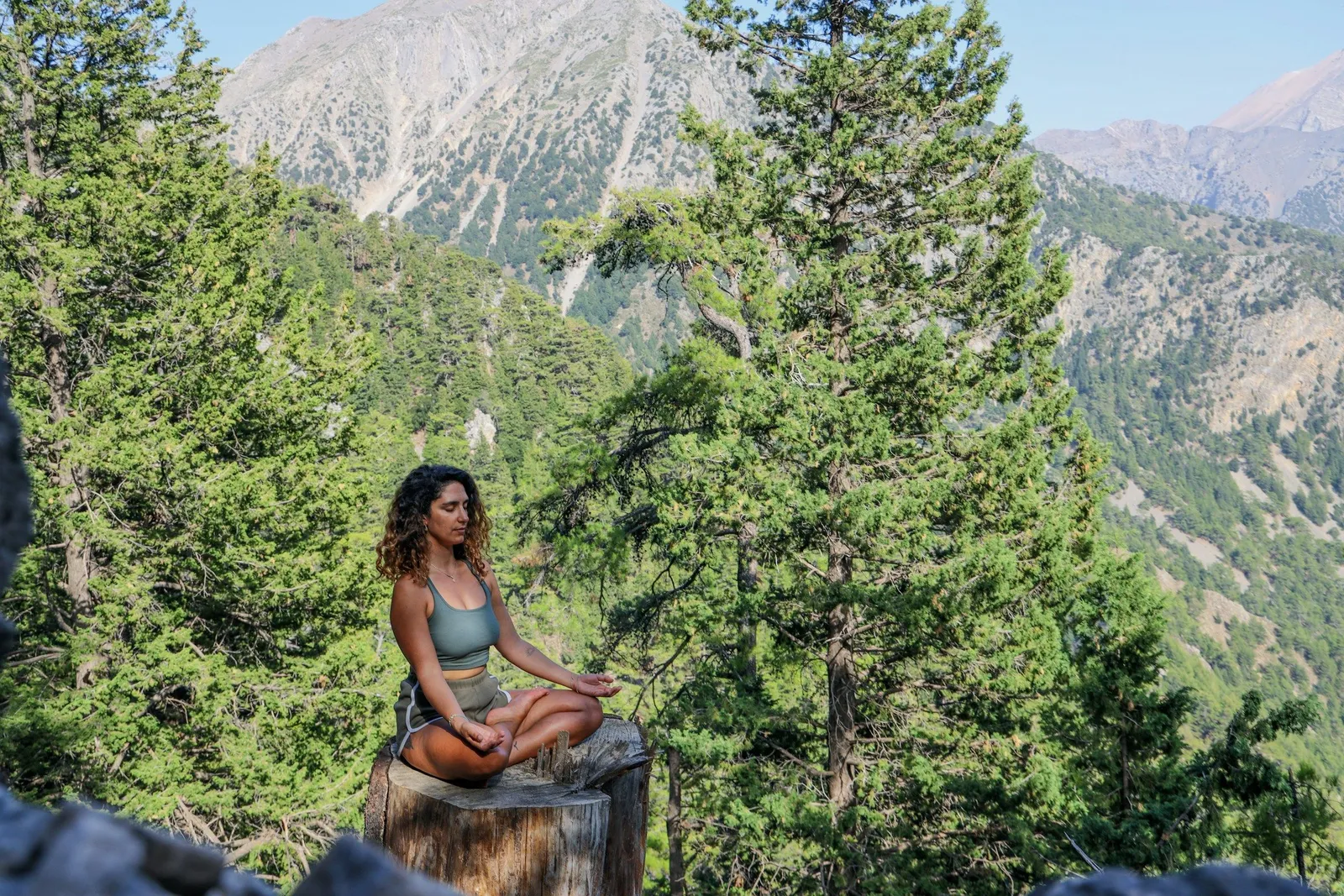
Most spiritual retreats are set in landscape chosen deliberately: forest, mountain, coast, desert. Nature time is built into the daily schedule not as recreation but as practice. Guided walks include prompts (a question to sit with, a sense to privilege over sight), solo walks in designated zones, and in some programs a version of shinrin-yoku, the Japanese practice of slow sensory absorption in a wooded environment.
The research on nature exposure is consistent: repeated studies link time in natural settings to reduced cortisol, restored directed attention, and lower ruminative thought. At a retreat, the structure amplifies this. No earbuds, no agenda, no destination. Just the path and whatever the walk brings.
For destination context, our guide to the world's most spiritual places covers settings where landscape and practice reinforce each other.
Group sharing circles
A facilitated group session where participants share what is arising: an insight from that morning's meditation, a memory that surfaced in the writing exercise, a fear that has been circling for days. The format is structured: no cross-talk (no immediate response or advice from other participants), active witnessing from the facilitator, a clear opening and closing. Being witnessed without immediate interpretation is what makes the format useful; many people report it as one of the more unexpectedly valuable parts of a program.
Not every retreat includes this. Some participants prefer to avoid it. Worth checking the program description before booking if group-sharing is something you strongly want or strongly prefer not to do.
Sound healing and breathwork
Sound healing uses instruments whose sustained vibrations, typically Tibetan or crystal singing bowls, gongs, or tuning forks, induce a deep parasympathetic state. Participants lie down and receive the sound. No participation beyond being present. Sessions run 30 to 90 minutes and are usually scheduled in the evening, as a deliberate counterweight to the morning's more effortful work.
Breathwork covers a range of practices from the gentle pranayama sequences common in yoga (alternate nostril breathing, belly breathing) to more intensive formats such as holotropic or rebirthing-style sessions that can surface strong emotional material. Intensive breathwork benefits from an experienced facilitator; it is not a beginner format at the first session. Most retreat programs that offer it screen for contraindications, but worth asking about if you have a history of anxiety, cardiovascular conditions, or trauma.
Other activities you may encounter
These appear in some programs and not others. The retreat description will specify.
Creative expression. Art, drawing, ceramics, movement, or poetry as a non-verbal processing channel. More common at retreats specifically designed around self-inquiry, grief work, or trauma-informed frameworks. Less common at meditation-focused or Buddhist-rooted programs.
Mindful eating. Meals structured for slow, attentive consumption. Some programs maintain silence through all meals; others only through breakfast. The first silent meal feels strange. Most people, by the end of a week, describe it as the most grounded part of the day.
Fire ceremony. Symbolic burning of written intentions or named patterns. Common in shamanic-influenced or indigenous-inspired formats. Less common in secular mindfulness or Buddhist programs. The tradition has roots in many cultures; the retreat version varies widely in how seriously it is held.
Digital detox as a structured practice. Not passive absence of devices but actively structured disconnection: devices collected at check-in, no Wi-Fi in rooms, specific windows for urgent calls. What surprises most first-timers is not the absence of connectivity but the speed at which the compulsion to check dissipates. The first morning without a phone is restless. By the fourth, the feeling most people describe is relief.
A sample day at a spiritual retreat
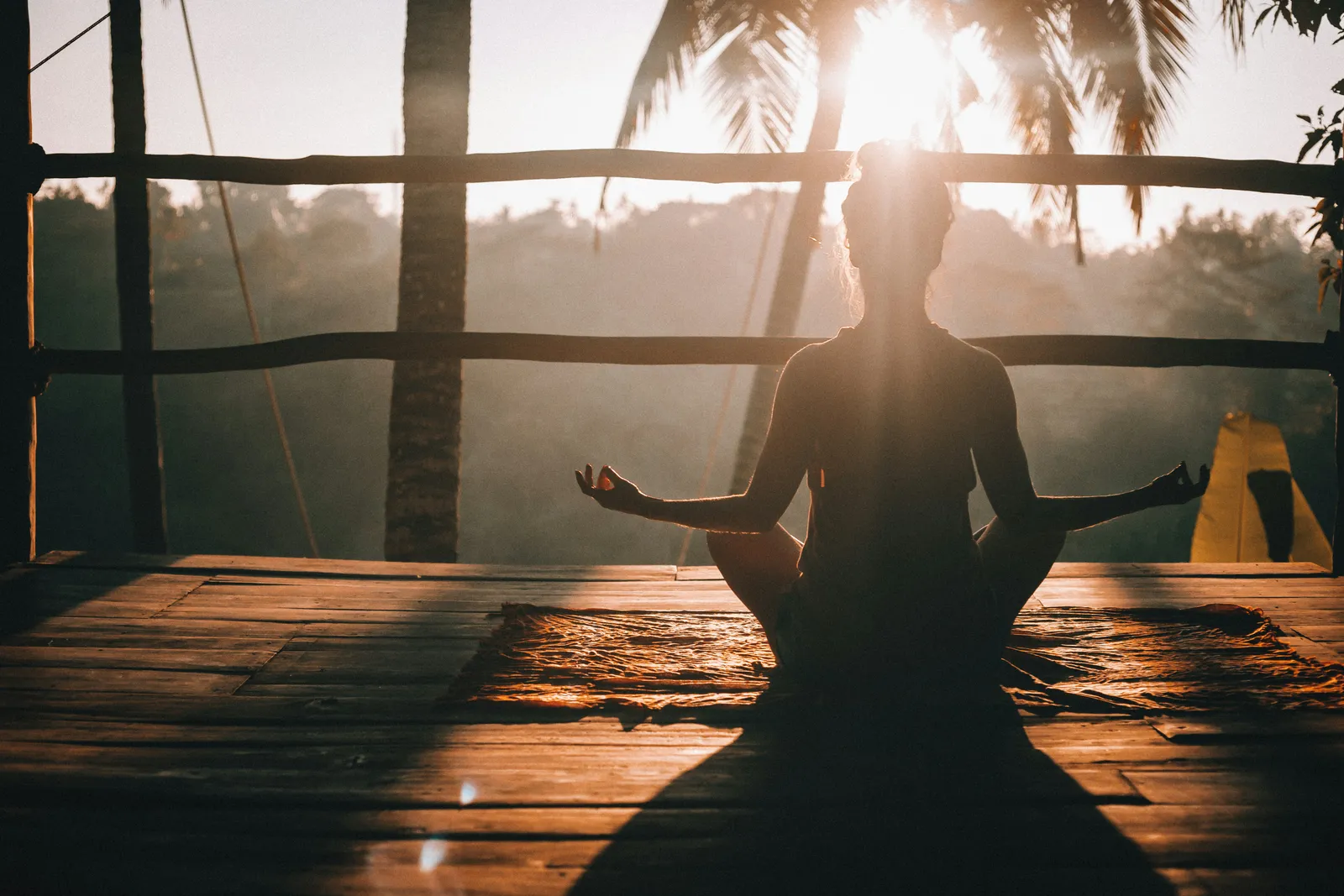
This is a composite of a mid-length meditation and yoga retreat, five to seven days. Every program differs. More intensive formats (silent Vipassana, extended Zen sesshins) are considerably more structured, with almost no free time. Lighter wellness-focused retreats leave afternoons open. Use this as orientation, not expectation.
5:30 to 6:30 a.m. Wake before sunrise. Optional: light stretching outdoors or a walk to clear sleep inertia before the first session.
7 to 9 a.m. Morning anchor practice. Usually the longest and most important session of the day: guided meditation, seated breathwork, or Hatha yoga. Often maintained in silence through the end of breakfast.
Breakfast (9 a.m.). Simple and vegetarian or vegan at most programs. Mindful by design, often silent or minimal conversation.
10 a.m. to noon. Teaching session or dharma talk. Small group sharing circle (in programs that include it). Or self-directed: journaling, solo walk, continued practice.
Lunch (12:30 to 2 p.m.). Often the most social meal of the day. Some formats maintain silence here too.
Rest (2 to 3 p.m.). Unstructured by design. The nervous system integrates practice through rest, not through more practice. Nap, read, sit outside.
Afternoon session (3 to 5 p.m.). Walking meditation, nature immersion, creative expression, or a second yoga session. Lighter in register than the morning anchor.
Optional individual check-in (4 to 5:30 p.m.). Brief meeting with a facilitator or teacher in programs that include individual support.
Evening practice (5:30 to 7 p.m.). Sound healing, restorative yoga, guided visualization, or closing circle. The tone is deliberate wind-down.
Dinner (7 p.m.). Light meal, earlier than most people are used to.
Lights out (9 to 10 p.m.). Strict in intensive programs, informal in lighter ones. The early rhythm is deliberate: it supports the early morning that makes everything else possible.
If any of these formats match what you are looking for, meditation and spiritual retreat programs at retreat-vacation.com are filterable by duration, tradition, and region.
The first morning of this schedule will feel effortful. The 5:30 alarm feels absurd. By midweek, the same alarm is simply the start of the part of the day you have come to look forward to.
What to bring, and what to leave behind
A journal and two pens. Not one pen. Pens run out, usually at the wrong moment. The journal is where insights get written down before the next session dissolves them.
Layers for cold mornings. Early outdoor sessions can be 15 degrees colder than the afternoon even in warm climates. A light down jacket that packs small is the one item people consistently wish they had brought.
Comfortable movement clothing. Non-restrictive, in fabrics that breathe. You will wear the same things every day and not care at all.
A water bottle. Hydration is a practice too, especially during intensive breathwork or long sits in a heated room.
Personal practice items, if relevant. Mala beads, a small altar object, a preferred meditation cushion. These are not required and will not be missed if you do not have them.
What to leave behind: the productivity mindset (the schedule is provided; you are not there to optimize it); alcohol (most centers do not permit it); and as much of your device as you can manage. Most facilitators suggest reducing caffeine, social media exposure, and large meals in the five days before arrival. Not mandatory, but the first day adjusts faster when the body has already started shifting.
Frequently asked questions
What do you do at a spiritual retreat?
At a spiritual retreat, adults typically engage in: sitting and walking meditation, yoga, journaling, nature walks, and group sharing sessions. Daily activities at most programs also include sound healing, breathwork, creative expression, and intentionally structured meals. Many programs also incorporate sound healing, breathwork, creative expression, and intentionally structured meals. The exact combination depends on the retreat type, its tradition, and the duration. A meditation-focused program will be more practice-dense than a yoga and wellness hybrid.
What does a typical day at a spiritual retreat look like?
Most meditation-anchored retreats follow an early structure: up before 6 a.m., a long morning practice session, mindful meals, afternoon reflection or nature time, an evening wind-down, and lights out by 9 to 10 p.m. The rhythm is more structured than a vacation, deliberately so. The consistency supports the deepening of practice. Lighter programs leave more of the afternoon unscheduled. For contrast: wellness retreats often carry a looser daily structure with more optional activities and spa time alongside the core program.
Do you need prior experience to participate in spiritual retreat activities?
No prior experience is required for most spiritual retreat activities. Most activities at facilitated retreats are designed to be accessible to first-timers. The sitting practice, yoga, and nature walks require no prior training. Longer or more intensive formats, such as extended silent sits, holotropic breathwork, or 10-day Vipassana-style programs, benefit from some prior exposure to meditation. Check the program's stated prerequisite level before booking.
Can spiritual retreat activities help with stress and anxiety?
Research consistently identifies stress reduction as a primary benefit. A 2018 systematic review of 23 studies and 2,592 participants found that all studies reported post-retreat health benefits. Meditation and nature immersion are the most studied mechanisms. Not a substitute for clinical care, but a legitimate complement to it.
What is sound healing at a spiritual retreat?
Sound healing sessions use sustained vibrations from instruments, typically Tibetan or crystal singing bowls, gongs, or tuning forks, to induce deep relaxation. Participants lie down and receive the sound; no prior knowledge or active participation is required. Sessions typically run 30 to 90 minutes and are usually scheduled in the evening as a wind-down practice.
How are retreat activities different from the same activities at a studio?
The activities are structurally similar but contextually different. A yoga class at a studio ends when you leave the mat. The same practice at the midpoint of a five-day retreat follows two days of accumulated silence, minimal stimulation, and several previous sessions. What you bring to the fourth or fifth session has no equivalent in a drop-in class. The conditions are what create the difference: time away from normal stimulation, shared intention, sustained practice without an exit door.
Plan your next retreat
The programs that match what this article describes, meditation-anchored, tradition-informed, accessible to first-timers, are listed and filterable at retreat-vacation.com. Browse over 1,000 curated meditation retreat programs. Filter by duration, region, tradition, and accommodation type. If your calendar is fixed, filter by dates first, then narrow by format. Programs range from three-day introductory weekends to silent month-long immersions. Shoulder-season spots in fall 2026 tend to fill by late summer.