
Table of Contents
- Why June works: the honest case
- What the weather actually means for a retreat schedule
- Where to base a retreat in June: four areas
- Bali's retreat scene: what to expect when you book
- June cultural calendar: what's happening
- Things to do that complement a retreat
- Practical planning for a June retreat in Bali
- Who should (and shouldn't) go to Bali in June
- Frequently asked questions
- Is June a good time to visit Bali?
- What is the weather like in Bali in June?
- Is June a good time for a yoga retreat in Bali?
- Is Bali crowded in June?
- Which area of Bali is best for a retreat?
- How far in advance should I book a retreat in Bali in June?
The air at dawn in Ubud in June has a specific quality. Cool and clear, somewhere around 24 degrees, carrying woodsmoke from the morning offering fires. By the time the first yoga session starts at 7 a.m., the light is already through the rice paddies and the mist has mostly cleared. If you are going to practice outside anywhere in Southeast Asia, this is the time and the place.
June is not the cheapest month to go to Bali, and it is not the quietest. It is, for most retreat travelers, the best balance of conditions, value, and program availability the island offers. This guide makes the honest case for June, and what to actually do with it.
Why June works: the honest case
June sits at the heart of Bali's dry season, which runs May through September. The rainy season that makes October through March complicated, with afternoon downpours that arrive on their own schedule, is over. The July-August peak, when international school holidays push prices and crowd levels sharply upward, has not yet started.
What June actually delivers: minimal rainfall (typically two to four rain days across the month), daytime temperatures of 28-32°C on the coast, cooler highland temperatures of 24-27°C in Ubud and the mountainous interior, and calm seas on the south and west coasts. Reliable conditions for outdoor practice, open-air yoga shalas, and dawn hikes to crater rims.
What it does not deliver: rock-bottom prices. May is quieter. October costs less and carries rain risk. If budget is the primary constraint, affordable wellness retreats covers the full calculus of when and where to spend less. If June is the window you have, the conditions justify it.
What the weather actually means for a retreat schedule
Most travel guides describe June in Bali as "beautiful" and leave it at that. Here is the more useful version.
Ubud mornings in June run 24-26°C with low humidity and clear sky. This is why open-air yoga shalas work here. Practicing outdoors during Bali's wet season means interruption; in June it means finishing a two-hour morning practice without having to towel off between poses.
By early afternoon, temperatures rise into the high twenties to low thirties even at Ubud's elevation. This is when retreat programming naturally moves indoors: workshops, lectures, bodywork sessions, cooking classes. Not because the weather becomes unworkable, but because the day's arc creates a structure that most retreat schedules map onto cleanly. The early hours are for movement; the heat of midday is for sitting and learning; evenings cool down again for communal dinners and meditation.
One geographic note. On the south coast (Seminyak, Kuta, Uluwatu), temperatures run 3-4 degrees warmer with higher humidity than in Ubud. The beach energy is real there, but for retreat-focused stays, the highland microclimate of Ubud is the more comfortable base.
Where to base a retreat in June: four areas
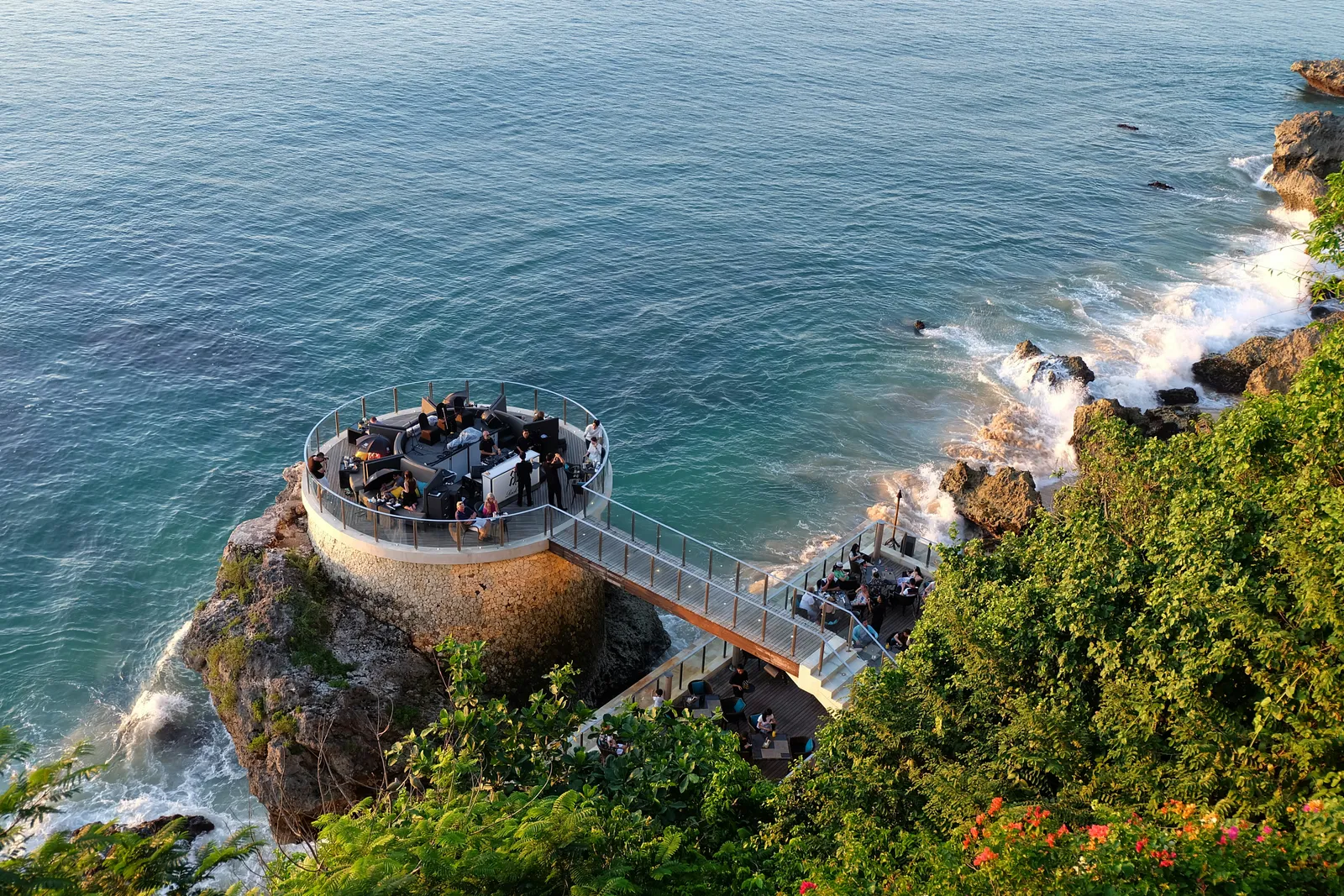
Bali is not one destination. Four areas matter for retreat travelers, each with a different character and program type.
Ubud (highland cultural center). The undisputed retreat capital of Bali, situated at 400-600 meters with a cool microclimate, jungle-and-ricefield backdrop, and a dense ecosystem of yoga studios, healing practitioners, and retreat centers. June mornings here are the closest Bali gets to ideal open-air practice conditions. Best for: yoga retreats, meditation, Balinese healing traditions, detox programs, spiritual retreats. If this is your first retreat experience and you want a place that is both approachable and serious about practice, Ubud is the easiest entry point. The yoga retreats for beginners guide covers how to choose within that category.
Canggu (surf-yoga coast). North of Seminyak on the black-sand west coast. Sea breeze keeps temperatures slightly lower than central south Bali. Younger energy, significant digital-nomad population. A growing retreat scene of shorter programs (3-5 days) alongside boutique yoga studios. Best for: surf-and-yoga combinations, travelers who want retreat structure alongside flexibility, shorter retreats that do not require full residential immersion.
Amed and the northeast coast. A different Bali entirely. Black volcanic sand, calm diving waters, remote feel. The retreat scene is small but growing, centered on meditation and freediving. Best for: retreat-seekers who want diving as a complement to their program, travelers who find Ubud too crowded, anyone who needs genuine quiet.
Nusa Lembongan. A small island 35 minutes by fast boat from Sanur. No traffic, smaller scale, notably quieter than the main island. A handful of boutique retreat operations. Best for: three to four day retreats with snorkeling and sea views, retreat-goers who want a clean break from main-island energy. Not suited to long multi-week programs, which are better supported by Ubud's infrastructure.
Bali's retreat scene: what to expect when you book

A typical Bali yoga retreat in the Ubud area includes accommodation (anywhere from guesthouse-style shared rooms to private villas with plunge pools), two daily yoga sessions (typically one early morning and one late afternoon), Balinese meals, and usually one cultural element: a temple visit, a cooking class, or a short healing session with a local practitioner. Program lengths cluster around five to eight days, with three-day short stays and two-week options also common.
June pricing sits below the July-August peak and above October shoulder rates. Entry-tier programs with shared accommodation exist at the lower end of the market; mid-range and premium programs with private villa accommodation sit above that. For the full breakdown of what each price tier actually buys in Bali and comparable destinations, affordable wellness retreats covers it.
One detail most listings do not mention: group sizes in June are smaller than in July-August. A twelve-person group in an intimate studio and the same program with twenty-two people in high season are meaningfully different experiences. June is the better window if the group dynamic matters to you.
For yoga retreats, meditation intensives, and multi-day programs available in Bali, browse current listings at retreat-vacation.com and filter by destination and date to see what fits your window.
June cultural calendar: what's happening
Bali runs on the 210-day Pawukon calendar, which means major Hindu festivals like Galungan and Kuningan do not fall on fixed Gregorian dates. Depending on the year, they may or may not coincide with a June visit. Check the current year's calendar before you book. When Galungan does fall during your stay, the island transforms: bamboo penjor poles decorated with offerings line every road, family temple ceremonies run across the island, and elaborately costumed processions move through village streets. It is spectacular, and compatible with a retreat stay, though some retreat centers reduce programming on the first day of Galungan. Confirm with yours if the dates align.
Independent of the Pawukon cycle, several cultural anchors remain constant. Uluwatu cliff temple runs Kecak fire dance performances nightly at sunset on its clifftop stage: one of the few performances in Bali that is genuinely theatrical rather than tourist-formatted. Besakih, the mother temple complex on the slopes of Mount Agung, is accessible by day trip from Ubud (approximately 1.5 hours). Tirta Empul holy spring temple in Tampaksiring, fifteen minutes from central Ubud, hosts ritual purification bathing open to respectful visitors, and is one of the more genuinely moving cultural experiences on the island.
Things to do that complement a retreat
For most retreat travelers, programming fills the majority of the day. These are the activities that work in the gaps.
Sunrise on Mount Batur. The 1,717-meter active volcano in north Bali. A 4 a.m. departure from Ubud, a two-hour guided ascent by headlamp, and a crater-rim sunrise with clouds at foot level. Physically straightforward by hiking standards. Emotionally outsized. Works as a single full-day excursion on a retreat rest day.
Ricefield walks. Tegalalang (20 minutes from central Ubud) and the Jatiluwih UNESCO terraces (further west) are accessible, meditative, and require nothing but walking shoes and a few hours. In June, the terraces are green and the light is reliable.
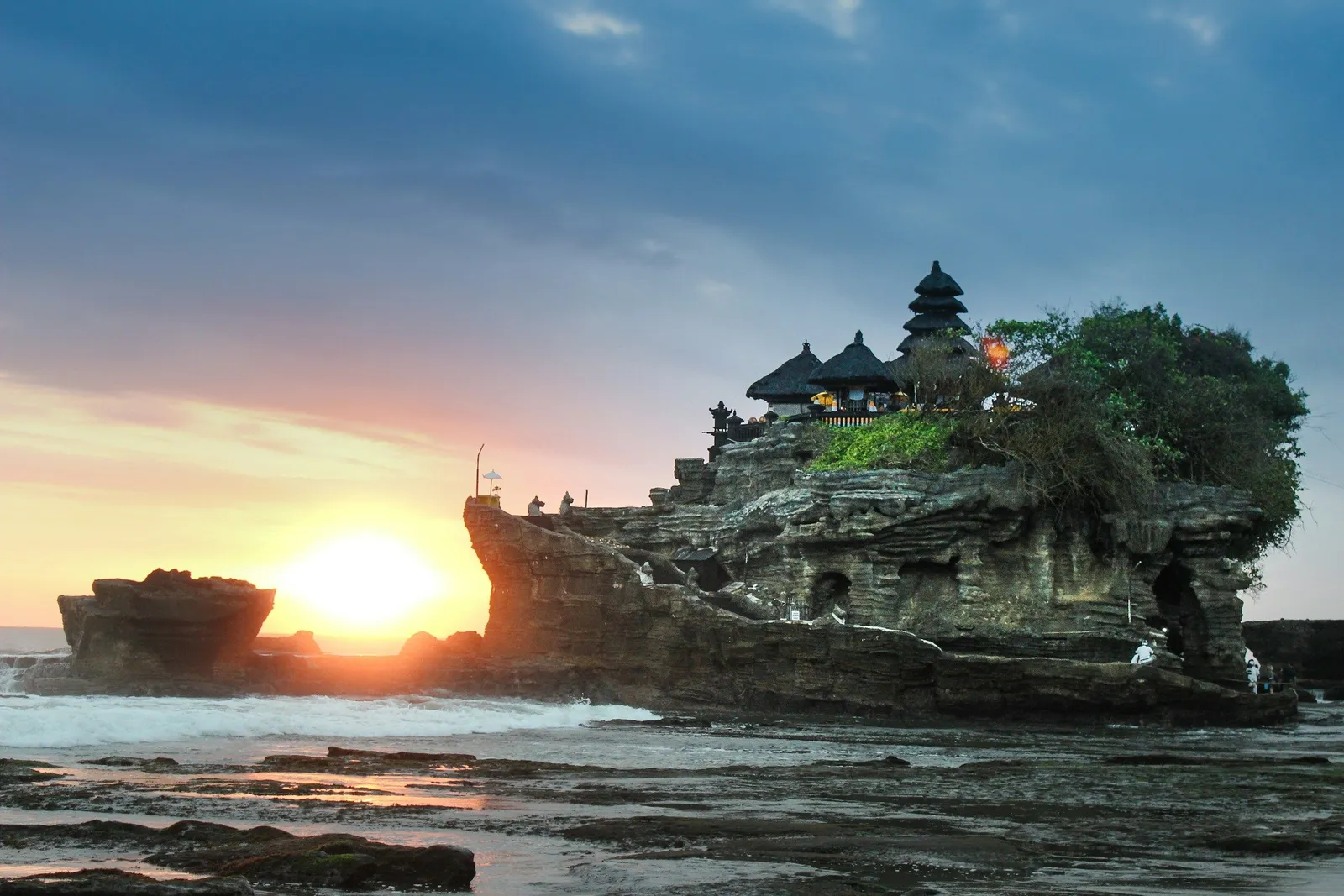
Temple circuit. Tanah Lot at sunset (sea temple on a rocky offshore promontory, 45 minutes from Ubud), Tirta Empul for the ritual spring, Besakih for scale. One temple per day is enough. Bring or borrow a sarong: it is required at all temple sites.
Nusa Penida day trip. Fast boat from Sanur (35-45 minutes). The island's limestone cliffs, Kelingking beach, and Broken Beach are genuinely dramatic. Plan transport in advance from your retreat base.
Diving at Amed. For retreat-goers with open-water certification, the northeast coast coral walls and the USAT Liberty shipwreck at Tulamben are worth a dedicated day trip. The water conditions in June (dry season, calm seas on the north coast) are among the best of the year.
Practical planning for a June retreat in Bali
What to pack for Ubud in June. Lightweight breathable fabric for daytime. A light layer for cool Ubud mornings and highland evenings. A sarong for temple visits (often provided by retreat centers, but useful to carry your own). Reef-safe sunscreen. Quality insect repellent. A reusable water bottle: tap water is not drinkable, and single-use plastic is an environmental issue the island is actively managing.
Getting there. International flights arrive at Ngurah Rai International Airport (Denpasar, south Bali). Private transfer from the airport to Ubud takes 1.5 to 2.5 hours depending on traffic. A shuttle service is cheaper and considerably slower. Most retreat centers arrange airport transfers when you book.
Booking timing. June has more availability than July-August, but the good programs at established retreat centers fill six to eight weeks in advance. Book the retreat before the flights, not after.
Money. Indonesian Rupiah (IDR). ATMs are accessible throughout Ubud. Cash is still widely used at local markets, warungs, and some smaller retreat centers, though most mid-range and premium operations accept bank transfer or card. Airport exchange counters are typically the worst rate on the island.
Who should (and shouldn't) go to Bali in June
Most retreat travelers will find June a good window. The conditions favor outdoor practice, group sizes are smaller than peak season, and Ubud's cultural calendar runs at full strength without the July-August overcrowding.
Where June is less obvious: for travelers with a strict budget, May and October shoulder months cost less (October carries rain risk). For anyone whose primary goal is beach and relaxation rather than structured programming, south Bali works in June but a different destination might serve better. Ubud is lively and full of visitors, not a remote hermitage, so if silence is the priority, expectations need to be realistic. For a different tropical retreat destination with its own seasonal rhythm, Costa Rica in August makes a useful comparison. For a European alternative closer to home, Mallorca in October is the seasonal sibling.
Frequently asked questions
Is June a good time to visit Bali?
Yes. June sits at the peak of Bali's dry season: minimal rainfall, low humidity, calm seas, and daytime temperatures of 28-32°C on the coast and cooler in the highlands. Crowd levels and prices are meaningfully lower than July-August, when international school holidays push both sharply upward. For retreat travelers specifically, June combines reliable practice conditions with smaller group sizes and slightly more program flexibility than peak season.
What is the weather like in Bali in June?
Dry season conditions throughout. On the south coast and lowlands: daytime temperatures 28-32°C, low humidity, typically two to four rain days in the month. In Ubud and the highland interior: cooler, 24-27°C at dawn and dusk, rising to around 29-30°C in the afternoon. Calm seas on the south and west coasts. Excellent conditions for outdoor yoga, hiking, and water activities.
Is June a good time for a yoga retreat in Bali?
Yes, and arguably one of the best. The dry-season mornings in Ubud have the combination of cool temperatures, low humidity, and clear skies that open-air yoga shalas are designed around. Most retreat centers run full programming in June, with group sizes notably below the July-August peak. Prices are lower than high season. The only real trade-off versus May is that June brings slightly more visitors, offset by a richer cultural calendar and wider program availability.
Is Bali crowded in June?
June falls between the peaks. The July-August school holiday rush, when Bali reaches its most crowded, has not started. May is quieter. What June delivers is a town with enough visitors to feel alive, retreat centers running with smaller groups than high season, and restaurants that do not require advance planning. Ubud in June is recognizably busy, just not exhausting.
Which area of Bali is best for a retreat?
Ubud is the right answer for most retreat travelers: the highest density of yoga studios and retreat centers in Bali, a cool highland climate that supports outdoor practice, and a genuinely cultural setting rather than a beach resort one. Canggu works for travelers who want a surf-yoga combination or a shorter program with more flexibility. The northeast coast (Amed) and Nusa Lembongan suit travelers seeking quieter, smaller-scale operations.
How far in advance should I book a retreat in Bali in June?
Six to eight weeks ahead for most programs at established centers. This is less lead time than July-August requires (where quality programs fill months in advance) but more than you might expect for a shoulder month. Book the retreat before you book flights. If you have a specific program style in mind, browse current availability at yoga and meditation retreats on retreat-vacation.com to see what fits the dates before committing to the flights.
Plan your next retreat. Browse over 1,000 curated programs at retreat-vacation.com. If June in Bali is the destination you have settled on, the next step is finding the program that fits how you want to spend that time: yoga retreats, meditation intensives, and retreat stays across Ubud, Canggu, and beyond, all in one place.