
Table of Contents
- Silent retreat, meditation retreat, or both: what each term means
- What "noble silence" means in practice
- How formats differ by tradition and structure
- What the research shows
- What to expect: the honest version
- How to choose the right format for your practice level
- Frequently asked questions
- What is the difference between a silent retreat and a meditation retreat?
- Can beginners do a silence meditation retreat?
- How long does a silence meditation retreat usually last?
- What are the rules of a silent retreat?
- What happens if you break the silence?
- How much does a silence meditation retreat cost?
- Find your format and book it
The dining hall at a five-day silence meditation retreat holds thirty people, and the quietest sound in the room is the scrape of a spoon against a bowl. No one looks up. No one mouths a greeting across the table. There is oat porridge, strong tea, and the particular quality of attention that only comes when thirty people are eating together in genuine silence. By day three, most of them stop noticing the quiet. That is when the work actually begins.
The phrase "silence meditation retreat" appears on program pages, in wellness guides, and in search results where it is used almost interchangeably with "silent retreat," "meditation retreat," and "mindfulness retreat." The terms are not precise synonyms. Each points to a different program structure, a different set of rules, and a different experience. If you are past the beginner-curiosity stage and thinking about booking, understanding the difference matters. For a grounding read on what silent retreats are in their broadest sense, what is a silent retreat covers the fundamentals. For a wider map of all retreat formats, types of retreats is the orientation read. This article is the next step: the compare-and-choose guide.
Silent retreat, meditation retreat, or both: what each term means
A meditation retreat is any residential program where formal meditation practice is the primary activity. Talking may or may not be permitted. Day-long or weekend formats at urban centers often allow conversation between sessions, at meals, and during free time. The meditation is structured; everything else may not be. If you have attended a guided meditation weekend at a local retreat house, you have attended a meditation retreat. Whether silence was part of it depended entirely on that program's design.
A silent retreat is a program where noble silence is the primary container. Communication, not just meditation, is the central rule. Noble silence means no verbal speech, and in stricter formats: no written notes to other participants, no eye contact, no expressive gestures. Meditation may be one of several activities alongside walking periods, rest time, and evening talks. The silence is not a byproduct of the meditation. It is the architecture the meditation sits inside.
A silence meditation retreat combines both: formal meditation practice is the core daily activity, and noble silence applies throughout. It is not simply a meditation retreat with quiet meals. The silence and the practice reinforce each other. The point is what happens in the mind when external communication is removed for several consecutive days.
Reading program descriptions: the phrase to look for is "noble silence maintained throughout" or "silence from arrival to closing." If a program says "we observe periods of silence," that is a meditation retreat with quiet sessions, not a full silence meditation retreat.
What "noble silence" means in practice
Noble silence, as used in most contemporary programs, originates from Buddhist meditation traditions, though secular and non-Buddhist programs now use the term widely. The practical rules at most programs:
- No verbal speech with other participants
- No eye contact during formal periods (some secular programs relax this after the first few days)
- No written messages to other participants
- No personal devices
- No reading unrelated to the program; no journaling in most traditional formats (some secular programs allow personal journaling)
- No expressive gestures as substitutes for speech
What noble silence does not cover: participants can speak to teachers or facilitators in designated one-on-one interview slots, usually once or twice per day. Administrative questions are typically handled in writing at a designated desk. Accidental speech is common, gently noted, and not penalized at most programs.
The distinction that matters when evaluating a listing: "noble silence throughout" versus "silent sessions." The first is a silence meditation retreat. The second is a meditation program with quiet hours.
How formats differ by tradition and structure
Silence meditation retreats do not all look the same. Four broad format types, from most to least structured:
Tradition-based intensive format (10 or more days, strict noble silence). Morning bell at 4:00 or 4:30 a.m., meditation through the day with breaks for meals and short rest, noble silence from arrival to closing bell. Eye contact rules are strict. No reading beyond required program materials. Donation-based programs in this tradition exist in many countries across Southeast Asia, Europe, and the Americas. For those drawn specifically to Buddhist-lineage formats, the silent Buddhist retreat guide covers that sub-niche in more detail. These programs are designed for genuine immersion and are not appropriate as a first retreat for someone with no prior meditation practice.
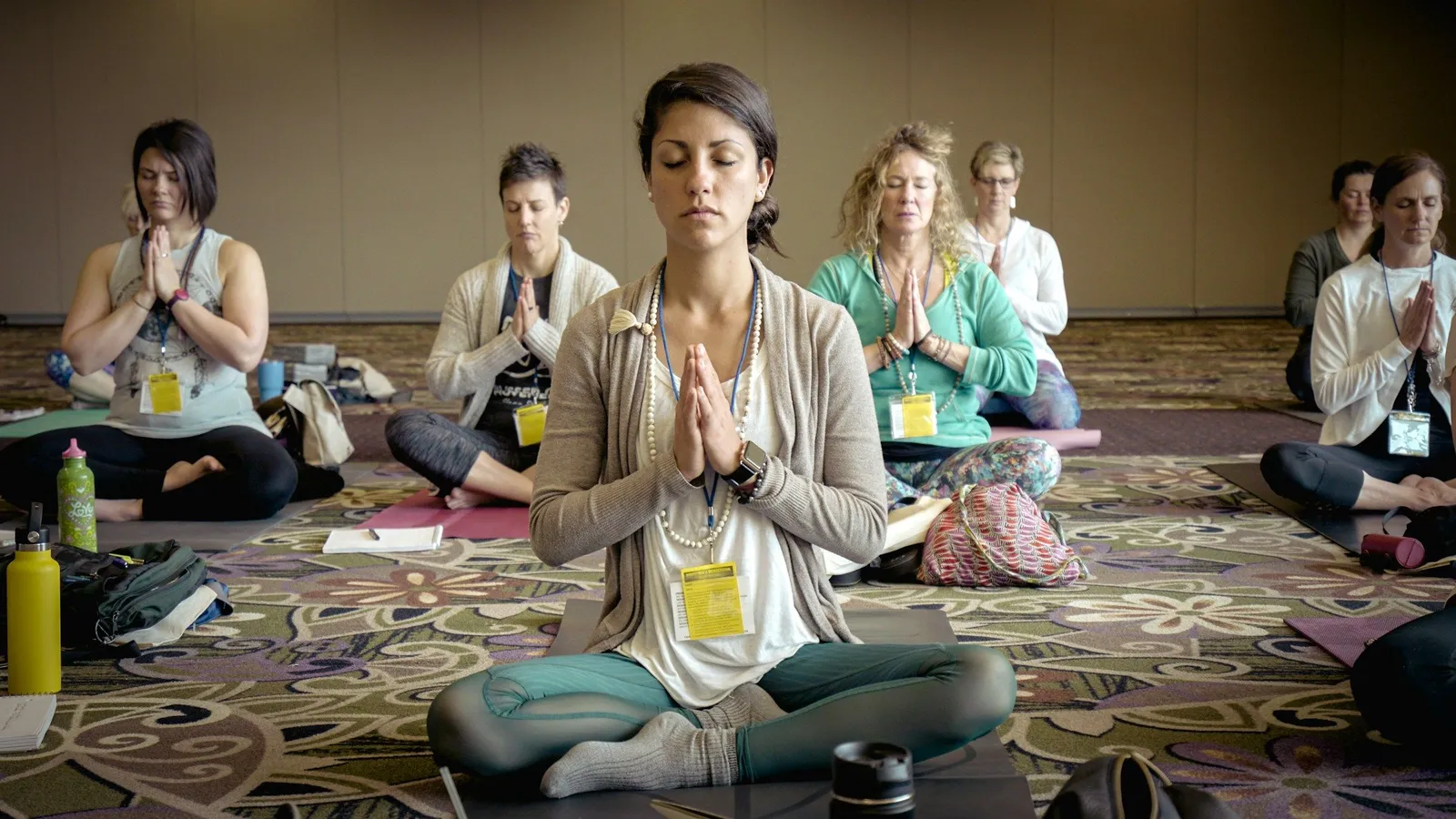
Secular mindfulness-based (3 to 7 days, guided format). A facilitator leads sessions; dharma talks are replaced by psychology-informed presentations on mindfulness and nervous system response. Noble silence usually applies during formal practice and meals; some programs relax eye contact rules and permit journaling. Better fit for practitioners with some prior experience who want a secular, evidence-based container.
Yoga-integrated silence (3 to 7 days, mixed modality). Morning and late-afternoon asana sessions punctuate seated meditation. Noble silence applies during formal practice and meals; some formats allow brief social time. Better fit for practitioners who find extended sitting difficult. The silent yoga retreat guide goes into the specific dynamics of this format.
Nature-based and contemplative (2 to 5 days, less structured). Walking meditation, outdoor sitting, and nature immersion make up the bulk of the schedule. Silence applies during practice blocks. Some programs integrate somatic or creative practices. Format suits readers who respond more to movement and environment than to formal seated periods.
What the research shows
Evidence on silence meditation retreats is growing. A 2024 editorial review in Cureus (PMC11626984) summarized findings across residential retreat studies and concluded that "retreat benefits exceed those of vacations or outpatient mindfulness programs." The gains are documented across emotional regulation, attentional control, and fatigue reduction. Importantly, the effects appear to require the residential container: the combination of silence, sustained practice, structured schedule, and removal from daily cues. A brief weekend of at-home meditation produces measurable but smaller and shorter-lived effects.
For readers coming from a burnout or high-stress baseline, the research is particularly relevant. Burnout recovery retreats covers the specific clinical evidence for that audience, but the core finding applies broadly: the residential immersion format is what produces the results, not meditation instruction alone.
One practical implication of the research is that duration matters. The first 24 to 48 hours of noble silence are consistently reported as the hardest phase. Programs shorter than three days often end before the most useful phase begins. Benefits typically emerge in days three and four, which is why most serious practitioners regard a five-day format as the minimum for a genuine silence meditation experience.
What to expect: the honest version
A sketch of day three at a five-day format, not day one (which is harder):
Morning bell before 6:00 a.m. You have learned not to rush to the bathroom door. Sixty to ninety minutes of sitting, guided in secular formats and unguided in traditional ones, and on day three the instruction to follow your breath does not feel like a riddle. Breakfast in the silent dining hall. A walking meditation period outdoors, thirty to sixty minutes, where the gravel underfoot sounds different than it did at the same time yesterday. Late-morning sitting. Lunch. A rest or free-practice period that is harder than the sitting sessions because there is nothing to do. Afternoon sitting, optional teacher meeting. Dinner. Evening talk. Final sitting. Lights out by 9:30 or 10:00 p.m.
The hard parts are predictable: the first 24 to 48 hours produce what practitioners describe as the mind getting louder. Thoughts, to-do lists, minor irritations, and imaginary conversations with people at home all surface with unusual force when they have no conversational outlet. This is not a malfunction. It is what happens when the primary mechanism for externalizing mental activity is removed.
By day three, most participants report a shift: a quality of attention that is difficult to describe from the outside. Sensory perception often becomes sharper. Time moves differently. The discomfort of proximity with other retreatants without language typically becomes neutral or comfortable by mid-retreat.
Practical expectations: vegetarian meals are the norm at most programs, though not all. Shared accommodation is standard in entry-tier formats. Devices are collected at registration or voluntarily surrendered. Basic medical conditions are disclosed at registration. Strict physical daily schedules are not appropriate during active illness. Most programs also screen for active mental health crises at intake; the format is not appropriate as a primary intervention for acute depression or active trauma processing.
How to choose the right format for your practice level
Every person booking their first silence meditation retreat gets this decision wrong in the same direction: they choose based on location and dates, and work backward to whether the format fits. The framing that actually holds up is the reverse: start with what format you can realistically handle, then filter by location.
Practice baseline. No prior meditation practice: choose a guided secular format, three to five days, where a facilitator leads each session and a teacher is accessible daily. Do not start with a 10-day strict noble silence intensive; that format is built for people with an established sitting practice, and first-timers tend to white-knuckle through it rather than benefit from it. An established daily sit (fifteen minutes or more per day, three months or more): a secular mindfulness-based or yoga-integrated silence format in the five to seven day range is the natural next step. The 3-day silent retreat format is the most accessible entry point. Week-long programs are the step after that.
Goal. Rest and nervous system reset: any well-run secular format for three to five days will deliver this. Deepening a specific practice tradition (insight meditation, Zen, contemplative Christian): choose a format explicitly aligned with that tradition, not a generic "mindfulness" program. Exploration across modalities: a yoga-integrated or nature-based format gives you the broadest exposure without requiring you to commit fully to any one tradition.
Structure preference. How much unguided time can you sit with comfortably? Beginners usually prefer highly guided schedules with short unguided blocks. More experienced practitioners often do better in formats with longer unguided periods and less hand-holding. Read the day-by-day schedule on any program listing before booking. The actual schedule tells you more about the format than the headline description does.
Reading program listings: phrases that signal a suitable beginner format include "guided throughout," "teacher available daily," "flexible schedule," "journaling encouraged." Phrases that signal an intensive include "noble silence from arrival to closing," "no reading materials permitted," "4:30 a.m. start," "meals in silence, no exceptions."
For a first experience at a lower entry point, a secular short-format program at a regional holistic center or a donation-based center in the tradition-based intensive model is the practical starting point.
Ready to filter by format? Browse curated meditation retreat programs at retreat-vacation.com, or use the silent retreats filter for programs running full noble silence throughout.
Frequently asked questions
What is the difference between a silent retreat and a meditation retreat?
A meditation retreat has formal meditation sessions as the primary activity; conversation may be permitted outside practice periods. A silent retreat enforces noble silence as the primary container; meditation is one of several activities within that silence. A silence meditation retreat does both: formal meditation is the core daily schedule, and noble silence applies throughout. The phrase "silence meditation retreat" specifically means a program where the two rules operate together, each reinforcing the other.
Can beginners do a silence meditation retreat?
Yes, with the right format. The key variable is structure. A beginner should choose a guided secular program, ideally three to five days, where a facilitator leads sessions and a teacher is accessible for daily check-ins. First-timers should avoid 10-day strict noble silence intensives designed for practitioners with established sitting experience. A well-run five-day guided silence meditation retreat is accessible to beginners with no prior formal practice, as long as the program is genuinely designed for that level.
How long does a silence meditation retreat usually last?
Common formats run from a weekend (two to three days) to 10 or more days. Most first-timers attend three to five day programs. Because the first 24 to 48 hours are consistently the hardest phase, programs shorter than three days often close before the useful work begins. For practitioners with prior retreat experience, seven to 10 days is where deeper shifts typically become available.
What are the rules of a silent retreat?
Core rules at most programs: no verbal speech with other participants, no personal devices, no reading unrelated to the program, limited or no eye contact in stricter formats, and no written communication with fellow retreatants. Specific rules vary significantly by tradition and intensity level. Always read the full participant guidelines before arriving. The practical details page of a program listing, not the marketing description, is what tells you how the rules actually work.
What happens if you break the silence?
In most programs, accidental speech is common and handled with a gentle acknowledgment, not a penalty. Intentional, extended conversation is rare and is usually addressed in a one-on-one meeting with a teacher. Most programs designate daily times when participants can speak briefly with teachers or coordinators about their practice, medical needs, or urgent practical questions. The silence is a tool, not a test.
How much does a silence meditation retreat cost?
The range is wide. Donation-based programs in the strict-noble-silence tradition charge nothing for the program itself, covering operational costs through contributions from past participants. Residential secular programs run from roughly $500 to $2,000 or more per week depending on accommodation standard, location, and duration. Premium formats with private rooms and smaller group sizes sit toward the top of that range. Regional holistic centers and shorter secular formats tend to be the most accessible entry points by price.
Find your format and book it
Browse over 1,000 curated programs at retreat-vacation.com. Filter by duration, format, accommodation tier, and region to narrow the options to your practice level and goals. For programs running full noble silence throughout, the silent retreats filter gives you the stricter subset. Autumn and early-winter residential availability tends to fill first; if your calendar has a window in the second half of the year, filter by travel date now.