

Table of Contents
- What a corporate retreat is (and why companies invest in them)
- Define your goals before anything else
- What a corporate retreat actually costs
- Choose a location that serves the objective
- Build an agenda that does not overprogram
- Plan activities that work for your actual team
- Handle logistics before they become incidents
- The post-retreat follow-through (where most retreats fail)
- Common planning mistakes to avoid
- Frequently asked questions
- What is a corporate retreat?
- How much does a corporate retreat cost?
- How far in advance should I plan a corporate retreat?
- What activities should a corporate retreat include?
- What is the ideal length for a corporate retreat?
- How do you measure the success of a corporate retreat?
- Plan your next retreat
The bus parks at the edge of a lake property two hours from the office. Phones drop to silent. By the second coffee break on day one, people are talking to colleagues they have emailed for three years and never actually met. That shift, from transactional to genuinely human, is the one thing a well-planned corporate retreat does that no Tuesday afternoon meeting ever will.
This guide is for the person responsible for making that happen: the HR manager, operations lead, or founder who owns the retreat from objective to outcome. It covers what corporate retreats actually are, what they cost, how to plan one without the common failures, and how to turn the energy from day three into something that lasts longer than a shared photo album.
What a corporate retreat is (and why companies invest in them)
A corporate retreat is a structured offsite: a team leaves the office environment for one to five days to focus on goals that the day-to-day setting makes difficult. Strategy alignment, team cohesion, professional development, or genuine recovery from a high-pressure sprint. The location is external. The agenda is intentional. The outcomes are defined before anyone packs.
Two basic formats exist. An on-site retreat uses an external venue while the team commutes from home, usually a single day with a focused objective. An off-site retreat adds overnight accommodation, creating the immersion and energy shift that makes multi-day strategy work possible.
The 2026 context matters: remote and hybrid teams have made the annual corporate retreat the primary in-person touchpoint for many companies. For teams that otherwise meet only on video calls, it carries more organizational weight than it ever did. For on-site teams it has become an investment in retention more than a perk. The backdrop: Gallup's 2026 State of the Global Workplace found that global employee engagement fell to 20% in 2025, the lowest level in five years. A well-run offsite is not a guaranteed fix for that, but it is one of the few tools that can shift team-level dynamics in a measurable way. For the broader landscape of retreat formats beyond the corporate category, see types of retreats.
Define your goals before anything else
Ask ten companies why they are planning a corporate retreat and six will say "team building." Ask what that means specifically and three will say the same thing twice. The goal-definition step is not about picking a category from a list. It is about naming the actual problem you need to solve, because that problem determines every downstream choice: venue type, program length, activity format, budget.
Three goal types cover most corporate retreats honestly:
Team bonding. You have people who work alongside each other but do not actually know each other. Remote growth, fast hiring, or years of asynchronous collaboration have created a team of email addresses more than people. Programs built around shared experience (outdoor challenges, group cooking, creative workshops) tend to land better than structured presentations here. The point is proximity, not productivity.
Strategic planning. You need the full team in the same room to make a decision that videoconference keeps avoiding. A quarter's roadmap, a company reset, a pivot conversation. Programs with clear deliverables: decisions on paper, priorities ranked, roadmap signed off. Requires more facilitation structure and less forced fun than bonding retreats.
Skill development. A specific capability gap: leadership, communication, conflict resolution, a technical training need. Programs with a named facilitator and a concrete take-home practice. The retreat compresses what would otherwise be scattered half-day workshops into a focused block.
Most retreats blend all three in some proportion. That is fine. The ratio matters: a retreat trying to be equally bonding, strategic, and developmental tends to do none of them well. Pick one primary objective, let the rest support it, and say that out loud to anyone who tries to add more agenda items.
Involve the right stakeholders before you book anything. Managers who feel the agenda was handed to them from above will not model the engagement you need from their teams.
What a corporate retreat actually costs
Budget is where planning optimism collides with reality. Costs vary significantly by format, group size, and destination, but three working bands help anchor a planning conversation:
Single-day local retreats: roughly $55 to $70 per person for a group of 20 to 50, covering a venue hire, catering, and basic facilitation. This figure appears consistently across corporate travel and venue-sourcing resources. It is the floor for a focused day retreat with no overnight component.
Multi-day overnight retreats: roughly $250 to $400 per person per night at a mid-range venue with accommodation, meals, and basic programming. Purpose-built retreat centers with dedicated facilitation sit in this range; self-catered rural properties can come in lower.
Large-group destination retreats (50 or more people, multi-day, external location): budget planning often runs into the thousands per person once you add flights, accommodation, facilitation fees, and evening programming. The variance is high by destination, season, and accommodation tier.
Build the budget across five buckets:
- Venue hire (meeting rooms, common spaces, grounds)
- Travel and transport (flights or coach, or local transport for day retreats)
- Accommodation (per night per person, with room-type tiering if relevant)
- Meals and catering (breakfast through dinner, plus dietary accommodations)
- Activities and facilitation (external facilitators, workshop materials, evening programming)
Add a 10 to 15 percent contingency buffer. The things that always come up: a dietary restriction not captured at registration, a last-minute attendee change, an evening social that runs longer than planned.
Choose a location that serves the objective
Venue selection is the decision most planners get backward. They find a venue they like, then try to fit an objective around it. The correct sequence: goal first, location type second, specific venue third.
For bonding retreats, the best venues create natural shared experience: outdoor grounds, a communal kitchen for group cooking, open social spaces. Distance from the office helps. Three hours on a coach together is itself part of the program.
For strategy retreats, the best venues provide a proper meeting room with whiteboard space, natural light, and good food. A conference hotel works. A converted rural property works. What does not work: an open-plan space that fragments concentration, or a beautiful destination property that makes people feel they should be outside when they need to be in the room.
For skill development, venue quality is largely secondary as long as it has reliable AV, workable internet, and a managed break schedule. Concentrate budget on the facilitator, not the view.
On timing: book destination venues 6 to 12 months in advance. The best ones fill quickly, especially for groups of 20 or more. Day retreats and local venues typically need 6 to 8 weeks minimum. For a group of 50 or more, 12 months is not excessive for a multi-day destination program.
For what dedicated retreat facilities offer versus general venues, what is a retreat center covers the practical differences.
Once you have a clear objective and a rough location type, browse group retreat programs by format and budget at retreat-vacation.com to build a venue shortlist before committing to anything.
Build an agenda that does not overprogram
The most common retreat failure is a schedule that fills every hour, leaves no white space, and exhausts people by day two. Engagement drops in proportion to how trapped the agenda makes people feel.
A workable rule: structured programming should fill no more than 60 to 70 percent of available hours. The rest is meals, transitions, unstructured time, and genuinely optional activities.
A sample three-day structure:
Day one: arrive and orient. Travel in the morning. Afternoon: a single welcome session (one to two hours) establishing goals and walking through the agenda. Evening: unstructured social, shared dinner. The evening is part of the program; do not overplan it.
Day two: the working day. Morning and afternoon: the primary programming (strategy sessions, workshops, skill training). One break of at least 90 minutes mid-afternoon. Evening: one shared activity, then dinner together, early finish.
Day three: integration and close. Morning: review and action-planning session (not a repeat of day two's content but consolidation of it). Midday: close and logistics. Depart by early afternoon.
Plan for introverts and different working styles: not everyone recovers from group settings by doing more group activity. Build in quiet spaces and optional rather than mandatory evening events. The planner who insists everyone attends the group activity is planning for the company brochure, not for the team. A quiet walk, a book on the terrace, or 30 minutes of solo time is not a failure of the program.
Plan activities that work for your actual team

Activities fall into three categories. Know which fits your team culture before booking:
Collaborative. Group problem-solving formats, hackathons, escape rooms, shared cooking challenges. Builds the joint-ownership dynamic that carries back to the office. Best fit for teams whose daily work is genuinely collaborative.
Active and outdoor. Hiking, kayaking, cycling, outdoor challenges. Energizes naturally sedentary office teams. Confirm actual physical ability ranges before booking anything that requires fitness levels you do not know your team has.
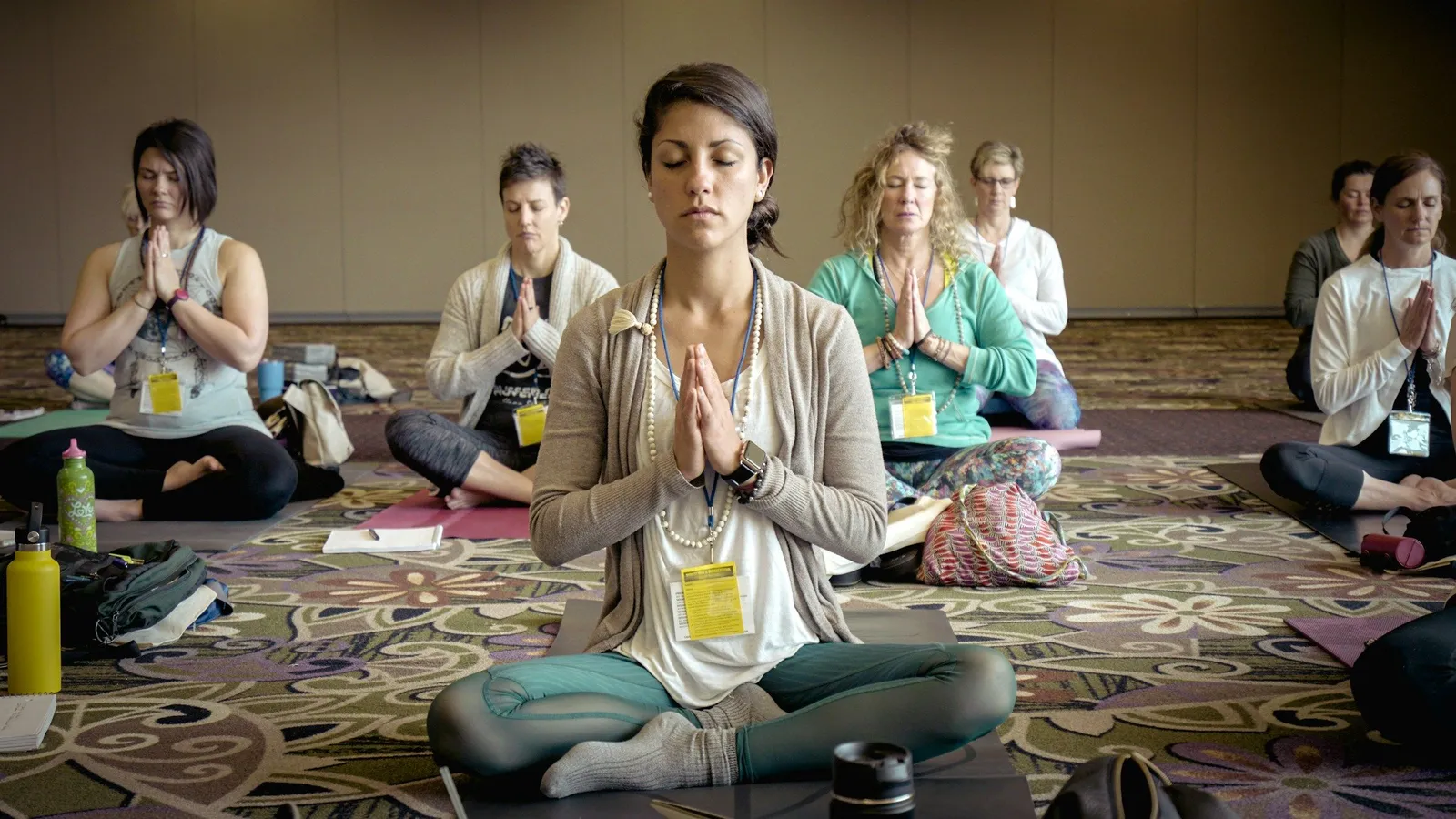
Relaxed and creative. Cooking classes, pottery, painting, music workshops. Lower-intensity, still shared. Useful when the team is post-sprint tired and the primary objective is recovery rather than competitive bonding. Wellness components, yoga, guided meditation, and nature walks now appear at corporate retreats across all industries and company sizes, not just in tech or wellness sectors. They tend to raise post-retreat satisfaction when offered as genuinely optional, well-run sessions rather than mandatory programming.
The activities that most reliably disappoint: mandatory team-building exercises with heavy-handed metaphors, anything requiring public vulnerability in front of the full group on day one, and physically demanding activities where a meaningful portion of the team will struggle and cannot easily opt out.
For broader activity and format inspiration, retreat ideas and staff retreat ideas cover options organized around different team objectives.
Handle logistics before they become incidents
The practical checklist that most planning guides underemphasize:
Dietary accommodations. Collect these at registration, not the week before the retreat. A team of 40 typically includes vegan, gluten-free, nut allergy, and various cultural food observances. A caterer who hears about them the day before will not manage them well.
Distributed and remote attendees. For hybrid teams where some members genuinely cannot travel (visa constraints, caregiving responsibilities, health), a hybrid access setup for the key sessions is better than excluding those people. It requires a dedicated tech support person on the day, a camera that actually faces the room, and explicit facilitation of remote participants in small-group exercises. A large-screen grid of muted faces that nobody looks at is not a hybrid setup.
Welcome packet essentials. Printed agenda with session descriptions, venue map, wifi details, emergency contacts, and dietary notes for each meal. The planner who assumes everyone read the pre-travel email will spend day one answering the same six questions.
AV and tech setup. Confirm with the venue: screen size, projector or LED panel, connector types, whiteboard markers that actually work, spare presentation remote. If the morning session depends on a live demo or video, test everything the evening before. Do not assume the venue's in-house tech matches your equipment.
For a deeper dive on pre-retreat coordination, retreat planning covers the process end to end.
The post-retreat follow-through (where most retreats fail)
The retreat ends. Energy is high. Commitments are made. Then everyone lands back in full inboxes and those commitments silently expire over the next two weeks.
This is not a motivation problem. It is a systems problem. The retreat produced the energy. The follow-through produces the change. And the follow-through has to be designed before the retreat closes, not discovered as an absence three weeks later.
Three things that actually hold:
Survey within 48 hours. Not a week out, not a month. Right now, while the experience is fresh. Four questions: What worked? What would you change? What was the most valuable session? What should we carry forward? Short, fast, specific. The signal degrades quickly.
Shared recap document. Circulate within five business days: the goals the team defined at the start, key decisions made, open questions parked for later, and action items with named owners and deadlines. Not a session summary. The document of what changed and who owns what next.
30-day check-in. A single calendar block, 60 minutes, one month out. The purpose is not performance review. It is to surface the blockers that were predictable but went unspoken. The retreat gave people the language to name those blockers. The 30-day meeting gives them the forum to say them out loud without the retreat adrenaline gone flat. This is the meeting that determines whether the retreat produced anything lasting.
For retreats designed specifically around recovery from sustained overwork rather than strategy or bonding, burnout recovery retreats covers the format and what distinguishes it.
Common planning mistakes to avoid
Starting with the venue. The most consistent failure mode. A planner finds a beautiful property, books it, then tries to fit an objective around what the venue offers. It always produces an agenda that serves the venue rather than the team. Objective first. Always.
Overprogramming. Every unscheduled hour feels like money not spent. But the conversations in the coffee queue on day two are often where the real alignment happens, where someone finally says the thing they have been avoiding for six months. You cannot program those moments. You can only give them room.
The goal step looks obvious, so it gets skipped. "Team building" is not a goal. Neither is "strategy" without a specific decision to make. The retreat that starts without a concrete primary objective is the one that ends with "it was nice but I'm not sure what we accomplished."
The retreat ends and that is the plan. If you have not calendared the 30-day check-in before people leave the venue, it will not happen. The energy is real in the moment. It is also genuinely temporary without a system to hold it.
Mandatory group activities. Not everyone in your company thrives in enforced vulnerability or physical challenge. The person who finds the ropes course humiliating is not failing to engage with the retreat. They are just not a ropes course person. Optional, enthusiastically recommended is better than mandatory for anything outside the core sessions.
Building for the median. The median attendee does not exist. Real teams have people who cannot eat gluten, cannot hike steep terrain, cannot travel due to visa or caregiving constraints. The HR manager who discovers this on day one will spend the morning managing logistics rather than the actual retreat.
Frequently asked questions
What is a corporate retreat?
A corporate retreat is a structured offsite that takes a team away from the daily work environment for one to five days. The goal is to focus on objectives that the office setting makes difficult: strategy alignment, team cohesion, professional development, or recovery from a high-pressure period. Formats range from a single-day local focus session to a multi-day destination program with accommodation, facilitation, and evening programming.
How much does a corporate retreat cost?
Costs vary significantly by format and group size. Single-day local retreats run roughly $55 to $70 per person including venue and catering. Multi-day overnight retreats at mid-range venues typically average $300 to $350 per person per night, all-inclusive. Destination retreats for larger groups generally land between $2,500 and $5,000 per person once flights, accommodation, facilitation, and evening programming are included. Build a 10 to 15 percent contingency buffer into any budget.
How far in advance should I plan a corporate retreat?
For a multi-day destination retreat, 6 to 12 months in advance is the safe planning window. Good venues for groups of 20 or more fill quickly. For a single-day local retreat, 6 to 8 weeks is the practical minimum for venue booking and logistics coordination. For groups over 50 people, 12 months is not excessive for any multi-day destination program.
What activities should a corporate retreat include?
Activities should match the primary goal. Bonding retreats work best with collaborative and creative formats (group cooking, shared problem-solving, outdoor challenges). Strategy retreats need working sessions with clear outputs, supported by lighter social programming in the evenings. Development retreats center on workshops with named facilitators and take-home practice plans. Wellness components (yoga, meditation, nature walks) now appear across all retreat types and consistently improve post-retreat satisfaction when offered as optional, well-facilitated sessions.
What is the ideal length for a corporate retreat?
For genuine cohesion work or multi-day strategy programming, three to five days works well. Two days can serve a focused single objective. A single day produces a reset but limited relationship depth: useful for a specific focus session, less so for building the human connections that change how people work together over months. Longer than five days strains attendance for people with active work and caregiving responsibilities.
How do you measure the success of a corporate retreat?
Run a short survey within 48 hours covering session value, logistics, and open feedback. Track action item completion at the 30-day check-in. For team cohesion goals, a brief engagement pulse at 60 days tells you whether the retreat effect held. The honest measure is not whether people said they enjoyed it, but whether the objectives defined before the retreat were actually met.
Plan your next retreat
Whether your team needs a focused strategy offsite, a wellness reset after a demanding season, or an outdoor experience that turns email addresses into actual colleagues, the options are there.
Browse over 1,000 curated retreat programs at retreat-vacation.com. Filter by location, duration, program style, and group size to surface the options that match your team's objective. The catalog covers programs across formats and price tiers, with operator-direct rates. Start with your travel window, then narrow by format.