

Table of Contents
- What Makes a Retreat Center Different from a Hotel?
- Types of Retreat Centers (and Who Each One Suits)
- What Actually Happens at a Retreat Center
- How to Choose the Right Retreat Center
- Common Misconceptions About Retreat Centers
- Frequently Asked Questions
- What does a retreat center do?
- How is a retreat center different from a hotel?
- What types of retreat centers are there?
- How much does it cost to stay at a retreat center?
- Do I need experience to attend a retreat center?
- How long do retreats at a retreat center last?
- Plan your next retreat
The staff member who greets you at the door of a retreat center does not ask for your credit card and point you to your room. She asks what brought you here. That question - what brought you here - is the product. Everything else, the room, the meals, the mountain views, sits around it.
A retreat center is not a hotel with yoga classes. It is a different category of place. Understanding that distinction upfront shapes every booking decision after it.
What Makes a Retreat Center Different from a Hotel?
A hotel sells a room. The transaction ends at check-in. Quiet corridors, room service, gym access: these are amenities you use at your own pace, for your own reasons. The hotel has no stake in what you do with your time or what you leave with.
A retreat center sells a program. The accommodation is the container; the program is the point. Most retreat centers build their schedule around a specific intention: morning meditation, group meals eaten together, afternoon yoga, an evening talk. You can arrive a stranger to all of it. What you cannot do is opt out of the structure without opting out of the retreat.
Three structural differences that show up in every category of center:
Meals are shared, not room-serviced. Communal dining is not an aesthetic choice. It builds the informal community that supports the formal program. Breakfast with eight strangers becomes lunch with eight people who understand why you are here. That shift is part of what retreat centers deliver and hotels cannot replicate.
Facilitation is built in, not purchasable as an add-on. At a hotel spa, you book a massage separately. At a retreat center, facilitation - whether a yoga teacher, a therapist, a mindfulness guide, or a ceramics instructor - is the structural center of the experience. The program does not work without it.
The environment is curated for one intention. A hotel accommodates business travelers, families, honeymooners, and tourists simultaneously. Its atmosphere is designed to be neutral enough for all of them. A retreat center is designed around one mode: intentional focus. Device-free zones, early lights-out, quiet hours: these are features, not inconveniences.
For context on how different retreat types live inside this model, types of retreats covers the full taxonomy.
Types of Retreat Centers (and Who Each One Suits)

Seven types account for most of what you will find when searching. Each has a distinct audience and program logic.
Wellness centers. Health and restoration as the focus: nutrition, movement, stress reduction, sleep. Programs range from structured fitness schedules to loosely guided spa-and-yoga formats. Wide tier range, from budget shared-accommodation properties to resort-grade facilities. For a deeper read, see what a wellness retreat is.
Yoga centers. Daily practice as the spine of the schedule. Typically includes morning and afternoon sessions, meals aligned with yogic principles, and workshops on philosophy or sequencing. A good entry point for beginners and the format for serious practitioners doing teacher training intensives.
Silent and meditation centers. The format with the sharpest program discipline. Meals in silence, device-free policy, no social conversation between sessions. The structure is what makes it work. Beginners do fine; the discomfort is predictable and temporary. Read what a silent retreat is before booking this type for the first time.
Spiritual centers. Program draws from a specific tradition - Buddhist, Vedic, Christian, or secular contemplative. Some are directly affiliated with a lineage; others use traditional frameworks without formal religious affiliation. Useful for practitioners who want their practice rooted in a clear teaching context.
Corporate centers. Structured for teams: strategy off-sites, leadership development, and team cohesion programs. Different room configuration (breakout spaces, presentation setups), different meal style, and usually a professional facilitator running the program.
Creative centers. Writers' retreats, artist residencies, and craft-focused programs. The shared denominator: dedicated daily time in your chosen form, a peer community, and an environment stripped of the interruptions that kill creative work. Short programs (four to seven days) and longer residencies (four to twelve weeks) both exist.
Detox and recovery centers. Nutrition-focused and often medically supervised. Programs range from dietary cleanses with coaching support to clinical environments with medical staff. These centers require the most careful vetting: check credentials and intake policies before booking anything with a clinical claim.
Looking for program inspiration within any of these types? Browse retreat ideas for a starting point.
What Actually Happens at a Retreat Center
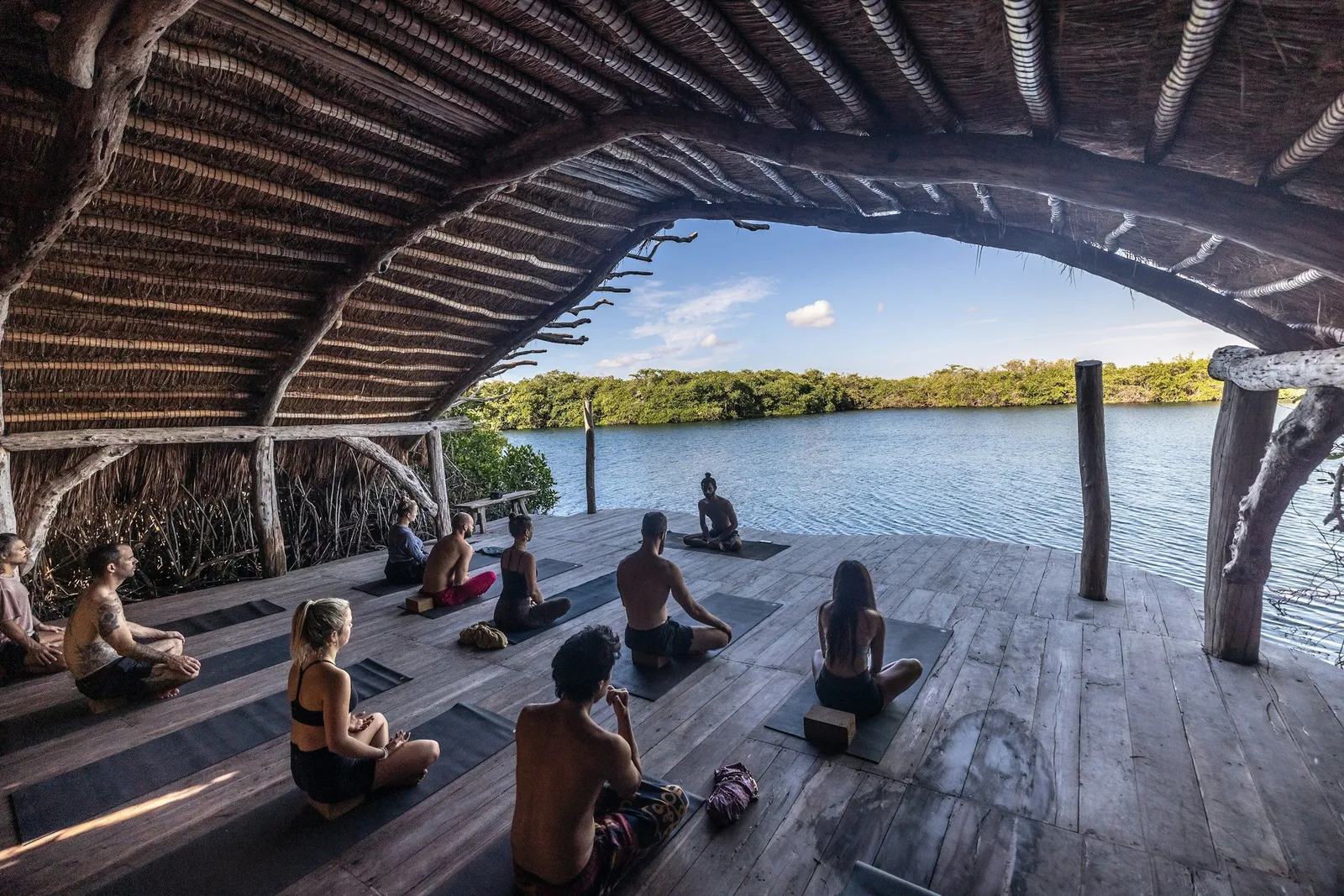
First-timers often ask: what does a day actually look like? Most centers follow a loose rhythm that changes less than you might expect, whatever the type or tradition.
The morning starts early. 6 to 7 a.m. for the first session - yoga, meditation, qigong, or a silent walk, depending on the center's focus. Some centers observe silence through breakfast. That sounds austere on paper. In practice, sitting with a bowl of oatmeal without checking your phone is the first thing that feels genuinely different from ordinary life.
Mid-morning is where the substance is. A structured program block: workshops, therapeutic sessions, group discussions, or continued practice. This is the part of the day the center is actually built around. Ninety minutes to three hours, depending on format.
Afternoons tend to open up. Free time, optional individual sessions, outdoor activities, or rest. Some centers run a second workshop here. Others leave it empty on purpose. Integration is the word retreat centers use for this. It means letting the morning settle before layering more on top.
Evenings close softly. Communal dinner, sometimes a talk or sharing circle, then quiet hours. Most centers wind down by 9 or 10 p.m. The rhythm feels strange for two days. By day three, it stops feeling strange.
The wellness activities listed on a program itinerary look like simple line items. They land differently when you do them in sequence for three days.
How to Choose the Right Retreat Center
Five decision levers. Work through them in order and you will narrow a wide field to two or three candidates.
1. Goal clarity. What do you want to come home with? Rest, a reset from burnout, a deepened practice, a creative breakthrough, or team cohesion? The goal determines the center type. A corporate team-building center is the wrong venue for personal grief work. A meditation center is the wrong venue for a company strategy off-site.
2. Program type fit. Read the daily schedule, not just the landing page copy. Is the core practice something you actually want to do twice a day? If the center builds its schedule around silent sitting and you have never meditated, that is not automatically a problem. It is, however, good to know before arrival rather than after.
3. Location and accessibility. Remote mountain properties deliver a different experience than peri-urban day-program centers. Neither is better; they serve different needs. Also practical: how long is the journey, and can you reach it by public transport? Long travel days eat into short retreats disproportionately.
4. Group size. Intimate groups (eight to twenty people) create different dynamics than larger programs (fifty or more). If you are socially cautious, smaller is better. If you draw energy from shared experience, a larger residential program may suit you. Ask before booking.
5. Budget and what is included. Retreat center pricing is almost always all-inclusive: accommodation, all meals, and the full program. Compare on a per-night all-in basis, not on room rate alone. A $180 per night retreat center that includes meals and the program often represents better value than a $120 hotel where those costs come separately.
Once you have a shortlist, retreat planning covers the logistics of locking in dates, deposits, and what to prepare. Ready to browse programs now? Filter retreat centers by type and region at retreat-vacation.com.
Common Misconceptions About Retreat Centers

"Retreat centers are only for spiritual seekers." A corporate center running leadership workshops and a detox facility running nutrition programs are both retreat centers. The format - dedicated facility, structured program, residential setting - is the common element, not the content.
"You need to be experienced to attend." Most programs explicitly welcome beginners. Many are designed for first-timers who have never meditated, done yoga, or been on any wellness program. The only programs that genuinely require prior experience are advanced teacher trainings and clinical programs with medical intake criteria.
"It is like a luxury spa weekend." Some retreat centers are luxurious. Most are not, and that is not the point. A spa sells treatments you book separately. A retreat center sells a program you participate in together. A well-facilitated program at a modest property often produces more lasting impact than a five-star property with weak programming.
Frequently Asked Questions
What does a retreat center do?
A retreat center provides the accommodation, meals, facilitation, and structured schedule that together create conditions for intentional change. Unlike a hotel, which provides rooms and services without a program, a retreat center's core product is the experience the program creates: rest, practice, skill-building, healing, or connection, depending on the type.
How is a retreat center different from a hotel?
A hotel sells rooms and comfort. A retreat center sells a program and an environment designed for intentional change. Facilitation, shared meals, structured schedules, and quiet policies are built into the model, not add-ons you purchase separately. Many retreat centers are physically comfortable, but comfort is the container, not the product.
What types of retreat centers are there?
The main categories:
- Wellness centers (health, nutrition, movement, stress reduction)
- Yoga centers (daily practice, teacher training)
- Silent and meditation centers (structured silence, device-free)
- Spiritual centers (tradition-rooted programs)
- Corporate centers (team-building, leadership development)
- Creative centers (writers' retreats, artist residencies)
- Detox and recovery centers (nutrition-focused, often medically supervised)
Each targets a different audience and builds its program around a different intention. See the types of retreats guide for the full breakdown.
How much does it cost to stay at a retreat center?
The range is genuinely wide. Budget-end centers - working ashrams, karma-yoga programs, and basic facilities in developing markets - can run well under $100 per person per night all-inclusive. Mid-range established centers in the US, Europe, or Southeast Asia sit comfortably above that. Premium centers with licensed therapeutic staff or destination-grade properties command significantly more. Pricing almost always includes accommodation, all meals, and the full program, which makes retreat centers a different comparison than hotels where those costs come separately. For a fuller picture on what shapes the price, see affordable wellness retreats.
Do I need experience to attend a retreat center?
No. Most centers welcome beginners and many programs are specifically designed for first-timers. The exceptions are advanced teacher training intensives (which require a documented practice history) and clinical programs with medical intake criteria. If a program's prerequisites are unclear, call and ask before booking.
How long do retreats at a retreat center last?
Weekend programs (two to three days) and week-long programs (five to seven days) are the most common formats. Some centers offer single-day programs for local participants. Long-stay residencies of four weeks or more exist at creative, training, and some therapeutic centers. The right length depends on your goal: a reset works in a weekend; building a new practice or working through something substantial usually needs a week or more.
Plan your next retreat
Browse over 1,000 curated retreat programs at retreat-vacation.com. The catalogue spans wellness centers, yoga programs, silent meditation intensives, creative residencies, and corporate formats across every price range and region. Filter by program type, location, and length to narrow from the full range to the center that matches what you actually need. Week-long programs at established properties in fall 2026 tend to fill several months ahead, so filtering by your travel window first saves time.