
Table of Contents
- What does a yoga retreat actually cost?
- The five factors that move the price
- Budget, mid-range, and premium: what each tier actually buys
- Hidden costs to factor in before you book
- Is a yoga retreat worth the cost?
- How to spend less without changing the experience
- Frequently asked questions
- How much does the average yoga retreat cost?
- Are yoga retreats worth the money?
- What is included in a yoga retreat?
- How much does a typical yoga session cost at a retreat?
- How far in advance should I book a yoga retreat?
- Can I find yoga retreats under $500 for a week?
- Plan your next yoga retreat
A week in Rishikesh. Six hours of practice a day, three vegetarian meals, a shared room with two other women you have never met. Total cost: around $350. A week at a yoga property on the Costa Rica Pacific coast, private bungalow, smaller group, morning ocean view. Total cost: around $2,200. Both are yoga retreats. Neither is wrong. The price tells you about the format, not the value.
The range is genuinely that wide. This guide maps it honestly, from what moves the number up or down to what you actually get inside each tier, so you can make a decision based on what you are shopping for, not on marketing copy. Price ranges below are based on programs currently bookable on retreat-vacation.com and reflect the 2026 market; exact rates vary by season and accommodation type.
What does a yoga retreat actually cost?
The short answer by duration:
| Duration | Price range |
|---|---|
| Weekend (2-3 days) | $200-$700 |
| Short retreat (4-5 days) | $350-$3,000 |
| Week-long (6-7 days) | $700-$3,000+ |
| 10 days or more | $900-$4,000+ |
The longer answer: within each duration, the spread is wide. Budget programs share accommodation and communal meals; premium programs give you a private villa and a specialist instructor for a group of six. The tier table shows where each price goes:
| Duration | Budget | Mid-Range | Premium |
|---|---|---|---|
| Weekend (2-3 days) | $200-$400 | $400-$700 | $700+ |
| Short retreat (4-5 days) | $350-$700 | $700-$1,400 | $1,400-$3,000 |
| Week-long (6-7 days) | $700-$1,200 | $1,200-$2,500 | $2,500+ |
| 10 days or more | $900-$1,800 | $1,800-$4,000 | $4,000+ |
These are ranges, not quotes. The actual price at any specific program depends on destination, accommodation type, and season.
Budget tier: shared accommodation, dorm or twin rooms, communal meals, standard morning and evening classes. Mid-range: semi-private rooms, a curated daily schedule, often a group of 8 to 15 people. Premium: private rooms or villas, specialist instruction, smaller groups, all-inclusive packages that cover excursions and spa access.
For how these numbers compare against the broader wellness retreat market, affordable wellness retreats under $2,500 puts yoga into context alongside other retreat types.
The five factors that move the price

The numbers tell part of the story. What shapes them tells the rest.
Location. The same caliber of instruction costs four to five times less in India or Southeast Asia than in the US, Europe, or Australia. A week-long immersion at an ashram in Rishikesh runs $300 to $600 all-inclusive. A comparable week in California or Switzerland starts at $1,500 and rises quickly. Labor, accommodation, and local living costs at the destination set the price floor. This is not about quality: the teaching lineages in India are often older and deeper than what you find at a resort in Malibu.
Accommodation type. Most programs tier their pricing by room type. Shared dorm or tent: the cheapest option. Twin shared with one other person: a moderate step up. Private room: premium. Private villa or bungalow: at the top. The difference between a dorm bed and a private room at the same program can be $50 to $150 per night. For a week, that adds $350 to $1,050 to the total before you change anything else about the program.
What is included. The all-in package model is standard at retreats: accommodation, meals, and daily classes in one price. But the inclusions vary. Some programs cover two classes per day; others offer a schedule from 6 a.m. to 8 p.m. with optional workshops throughout. Spa treatments, one-on-one adjustments, and excursions are almost always extra. Ask specifically what is in the daily rate before you compare two programs by price alone.
Instructor credentials and group size. A retreat led by a teacher with 20 years of practice and a recognized lineage in a group of eight people costs more than a class-based program with 40 participants and a rotating instructor team. This is not always a quality signal in either direction, but it is a price driver. Smaller groups with specialist instruction consistently sit in the mid-to-upper tier.
Timing. High season for yoga retreats in warm destinations (Bali, Thailand, Mexico, Costa Rica) roughly matches Northern Hemisphere winter, when demand peaks and prices rise. Shoulder season, typically April through June and September through October, cuts rates at many programs by 15 to 25 percent for the same accommodation and instruction. Winter yoga retreats in warm destinations are the budget-conscious reader's best seasonal play.
Budget, mid-range, and premium: what each tier actually buys
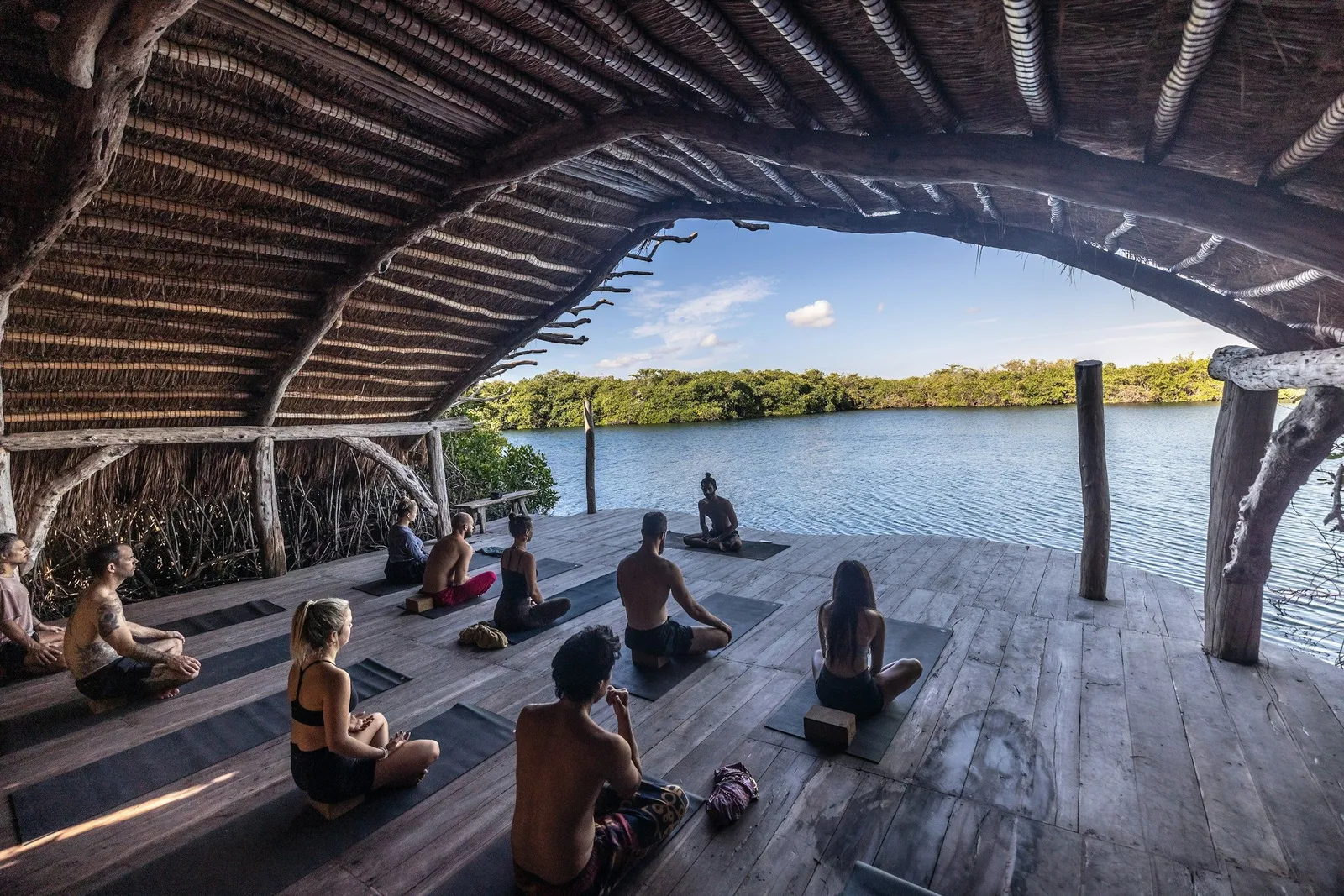
Budget (under $700 per week). Working ashrams and volunteer-exchange programs deliver the lowest all-in weekly rates in this category, typically under $500 in India, Bali, and parts of Central America. The format is the affordability. Two daily practices, communal vegetarian meals, a dorm or shared room, and community life. You are not paying for architecture or service. You are paying for practice and structure, and if that is what you came for, the value is real. Some of the most rigorous teaching environments in the world run at this price point.
Midwest US retreat centers and Caribbean ashrams also operate in the lower part of this tier, in the $400 to $1,200 range for a weekend to week-long stay with shared accommodation.
Mid-range ($700 to $1,500 per week). Smaller programs with 8 to 20 participants, semi-private accommodation, and a curated weekly schedule. Morning and afternoon classes, often with themed workshop content in the evenings. The instruction quality at this tier is typically high: smaller groups allow for more hands-on guidance. Destinations include Mexico, Costa Rica, Portugal, the Canary Islands, and mid-tier venues in Southeast Asia that lean toward comfort without going full-luxury. This is where most first-time retreat-goers land. The yoga retreats for beginners guide covers what to look for at this tier if you are doing this for the first time.
Premium ($1,500 and up per week). All-inclusive property with a private room or villa, a small group, and an instruction team with specialist credentials. The premium is paid for the accommodation and the teacher-to-student ratio, not for a fundamentally different yoga experience. If the practice is your priority, the mid-range tier typically outperforms on the instruction dimension. If the setting and comfort matter as much as the practice, premium delivers both. At this tier, a single-supplement for traveling alone (vs. sharing) is common; couples yoga retreats sometimes offer better two-person value than booking a solo premium spot.
Ready to filter by tier and travel dates? Browse yoga retreats at retreat-vacation.com to find programs across all price bands. Shoulder-season spots for fall 2026 are already filling, so filtering by your travel window first saves the most time.
Hidden costs to factor in before you book
The program price is not the total cost. A realistic budget adds these on top.
Getting there. Flights are the largest variable for international programs. A $700 week in Bali costs $1,800 all-in from the US East Coast once you add the return flight. Domestic US programs have no flight cost but may have a rental car or shuttle expense depending on the location.
Ground transport. Airport transfers are sometimes included in the program price, often not. Ask before booking. A taxi or shuttle from a remote destination airport can add $30 to $100 per direction.
Travel insurance. Retreat programs typically do not cover trip cancellation, medical, or baggage. For international retreats, insurance adds $50 to $150 depending on the length and destination.
Gratuities. Smaller programs and ashrams typically do not have a tipping culture. At higher-tier properties, expect gratuities for service staff, similar to a hotel stay. Budget $20 to $50 per day at the upper tiers.
Optional add-ons. Spa treatments, private sessions, and excursions are almost always outside the retreat price. A single massage at a mid-range Mexican program runs $60 to $120. A guided surfing or hiking excursion adds another $50 to $150 per person.
Pre and post-retreat nights. If your arrival flight lands late or your departure leaves early, an extra hotel night at the destination is a common hidden cost. Budget one to two nights at local hotel rates depending on your travel schedule.
For a fuller picture of what belongs in the planning calculation, yoga activities and scheduling breaks down what a typical retreat day includes.
Is a yoga retreat worth the cost?

The honest answer depends on what you are comparing it to.
The DIY math. Seven nights at a mid-range hotel in a beach destination runs $700 to $1,400. Add a daily drop-in yoga class at $20 to $30 per session, two per day for seven days: $280 to $420. Add three restaurant meals per day at $60 to $80: $420 to $560 for the week. Total DIY equivalent: $1,400 to $2,380. A mid-range yoga retreat at the same destination runs $1,200 to $2,500 and includes all of that in one price, with a structured schedule that holds you to the practice you went there to do.
The retreat format wins on structure. Most people who book a yoga retreat do not end up doing two sessions per day on a hotel beach holiday. They do one session, then drift into tourist mode. The retreat schedule is the product as much as anything on the accommodation side.
What it does not do. A yoga retreat will not fix burnout in 72 hours. It will not replace therapy for clinical stress. The programs that disappoint are almost always the ones chosen for the setting rather than the schedule. If you will not genuinely do two yoga sessions a day for a week, the retreat format is not the right fit. If stress or burnout is what is driving you toward a retreat, burnout recovery retreats looks at the more clinical end of this category.
How to spend less without changing the experience
Shoulder season. April through June and September through October cut rates at most international destinations by 15 to 25 percent. Bali, Mexico, and Central America all follow this pattern. The weather at these destinations is typically fine and the programs are less crowded. A good shoulder-season week in Costa Rica costs what a peak-season weekend does in Hawaii.
Budget-friendly regions. The same caliber of instruction costs a fraction in India, Thailand, Indonesia, and Eastern Europe compared to the US, UK, or Switzerland. If your schedule allows for an international flight, the cost differential is often larger than the flight itself for a week-long retreat.
Longer stays. The daily rate drops consistently as you extend. A week almost always costs less per day than two consecutive weekends at the same property. Ten-day programs are often priced to be only 20 to 30 percent more than the week, with more practice hours included.
Shared accommodation. Choosing a shared or twin room instead of a private room saves $50 to $150 per night at most programs. For a week, that is $350 to $1,050 off the total with no change to the instruction or program quality.
Early-bird rates. Most programs discount 5 to 15 percent for bookings made three to six months in advance, particularly for peak-season programs and in-demand teachers. Booking direct with the operator also typically avoids the 5 to 10 percent markup that aggregator platforms add to the consumer price.
Off-peak timing in warm destinations. Programs in warmer climates tend to fill peak slots first, but the shoulder months around those peaks carry early-bird pricing. See winter yoga retreats for destination options that work in colder months without the peak price tag.
Frequently asked questions
How much does the average yoga retreat cost?
Weekend retreats (2 to 3 days) run $200 to $600 in budget to mid-range tiers. Week-long retreats run $700 to $3,000 depending on destination and accommodation. International retreats in Southeast Asia and India sit at the lower end; US domestic, European, and premium Caribbean programs sit at the upper end. Shared accommodation can put a week-long program below $1,000; a private room at the same program typically adds $350 to $1,050 to the total.
Are yoga retreats worth the money?
For most people who choose a program that matches their actual interest in the practice, yes. The retreat format delivers structured daily yoga, meals, and a break from routine at a price that is roughly comparable to, or cheaper than, assembling the same components independently at a travel destination. The retreats that disappoint are almost always the ones chosen for the setting rather than the daily schedule.
What is included in a yoga retreat?
Standard inclusions at most programs:
- Accommodation (dorm or shared at budget tier, semi-private at mid-range, private at premium)
- Three meals daily (almost always vegetarian or vegan)
- One to two daily group yoga sessions
What is usually extra:
- Spa treatments and massage
- One-on-one private sessions
- Excursions and guided activities
- Airport transfers
- Specialty workshops outside the core schedule
Read the inclusions list carefully before comparing two programs by headline price.
How much does a typical yoga session cost at a retreat?
When you work backwards from retreat pricing, a single group session at a mid-range retreat is equivalent to roughly $15 to $25 per class, which is at or below the drop-in rate at most city studios. The retreat format bundles accommodation, meals, and instruction in one daily rate, which means the per-session comparison tends to favor the retreat for stays of five days or more.
How far in advance should I book a yoga retreat?
For popular destinations and well-known teachers, three to six months ahead for peak-season programs. Shoulder-season programs often have availability with four to six weeks notice. Early-bird discounts, where offered, typically expire two to three months before the start date.
Can I find yoga retreats under $500 for a week?
Yes, primarily at ashrams in India (Rishikesh, Kerala) and at karma-yoga work-exchange programs in various countries. These programs cover accommodation and three meals in exchange for a few hours of daily work alongside the practice schedule, and the all-in weekly cost can run $200 to $500. The format is communal and the accommodation is basic, but the teaching lineages are often long-established. If that trade works for you, the value is exceptional.
Plan your next yoga retreat
Browse over 1,000 curated yoga retreats at retreat-vacation.com. Filter by duration, destination, accommodation tier, and group size to narrow the field to programs that match your budget and practice goals. The catalogue covers ashram-format immersions, mid-range small-group programs, premium all-inclusive retreats, and beginner-friendly options across every price tier, with operator-direct rates that typically beat aggregator pricing. Shoulder-season spots for fall 2026 tend to fill three to four months ahead, so filtering by travel dates first saves time if your calendar is set.