
Retreat Urlaub - Urlaubsangebote für Körper, Geist und Seele.

Active Holidays in Germany

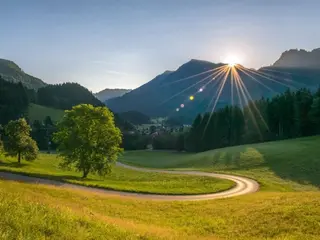
Alpine panoramas in the south, gentle low mountain ranges in the centre, heath and coastal landscapes in the north — Germany offers active travellers a variety that few other European countries pack into such short distances. From hiking in the Black Forest and Allgaeu to cycling tours along the Danube and yoga weeks on the Baltic coast, almost any form of movement can be paired with a real break, without long flight times and in a climate that reliably supports outdoor practice from May through October.
35 curated retreats 4.8 (104 reviews) from €92

New retreats straight to your inbox?

So you always stay up to date.

We take data protection very seriously. Further information

Frequently asked questions

What does an active holiday in Germany cost?
The typical price range runs from around six hundred euro for a five-day stay in a simple house with shared rooms up to roughly two thousand two hundred euro for a week in a single room at a higher-end house. Most stays fall between nine hundred and one thousand seven hundred euro per week in a double room. Four factors shape the price most strongly: region, season, room category and programme depth. Alpine houses in the Allgaeu, Werdenfelser Land or Berchtesgaden region tend to sit slightly higher on average than low-mountain houses in the Black Forest, Eifel or Harz. May, June, September and October are more expensive than the shoulder months of March and November. Houses with sauna, spa or massage offerings charge a premium. What is not included is usually the journey itself, travel insurance, additional massages and optional excursions. When comparing offers it is worth calculating the real daily price including full board, the movement programme and guided hiking, since that gives a more realistic picture than the headline weekly rate.
When is the best time for an active holiday in Germany?
The best time to travel for an active holiday in Germany is May, June, September and early October. In these weeks pleasant weather — sixteen to twenty-four degrees during the day, cool nights, low humidity — combines with long daylight windows and a stable trail condition in the low mountain ranges and the alpine foothills. May and June are especially beautiful in terms of landscape: mountain meadows are in flower, wild herbs shape the atmosphere, the days are long. September and early October are considered strong for deeper stays — the air is clear, the light golden, and the stages are comfortable to walk. July and August can be warm for pure mountain programmes; for hikes in these months an early start or a higher-altitude choice helps. For cycling tours and stays at lakes or on the Baltic, high summer is ideal. November to March carries snowshoe and ski-touring programmes at higher altitudes. The focus then shifts to indoor movement with snowshoe segments, sauna and stillness — a quieter, more inward phase.
Which activities are especially popular in Germany?
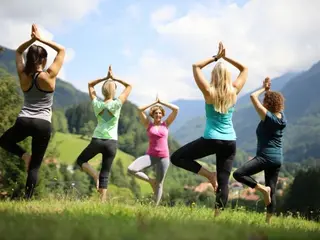
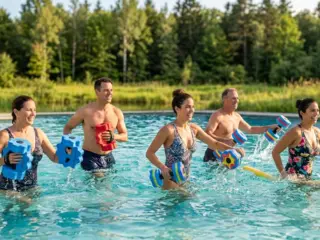
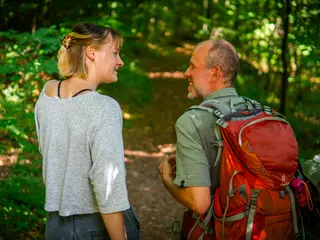
Hiking is by far the strongest form of movement in the German active-holiday landscape. Multi-day stages on well-known long-distance trails — Schwarzwaldsteig, Rheinsteig, Eifelsteig, Goldsteig in Bavaria, Heidschnuckenweg in northern Germany — form the backbone. Alongside this, shorter day stages combined with yoga or mindfulness segments are very popular: two to three hours of movement in the morning, stillness and practice in the afternoon. Cycling tours along the rivers — Danube, Moselle, Elbe, Rhine, Werra — are the second major form. Stages of thirty to sixty kilometres per day, well-developed cycling paths, overnight stays either in changing houses along the route or as a base stay with day trips. Yoga-with-movement stays are especially common in the low mountain ranges and at lakes: hatha or yin in the morning, hiking or swimming during the day, restorative in the evening. Sauna, Kneipp hydrotherapy and wellness segments are often part of the package. Climbing, via ferratas and water sports — surfing, windsurfing, stand-up paddling on the Baltic — are more specialised formats that have their place in specific regions (Franconian Switzerland, Danube Valley, Berchtesgaden region for climbing; the Baltic for water sports).
Which region in Germany fits me?
If high alpine landscape, real elevation gain and an immersive nature experience matter to you: the Allgaeu, the Werdenfelser Land, the Berchtesgaden region and the Chiemgau in Bavaria. Expect more demanding stages, cooler temperatures at altitude and a strong mountain-yoga and hiking infrastructure. If you want moderate elevation, good accessibility and a relaxed hiking atmosphere: the low mountain ranges — Black Forest in Baden-Wuerttemberg, Eifel and Sauerland in NRW, Harz on the border of Lower Saxony and Saxony-Anhalt, Erzgebirge in Saxony. Seven-day formats blending yoga and hiking are densest here. If you prefer water, level stages and a calmer climate: the Mecklenburg Lake District, Lake Constance, Tegernsee and the Baltic coast. The focus lies on cycling, canoe and yoga-with-water practice. If you are looking for silence, long paths and a meditative character: the Lueneburg Heath, the Spreewald, the Uckermark and the Schorfheide. Very flat, very quiet, with a focus on forest and heath mindfulness, yin and long walking.
What is the best way to travel for an active holiday in Germany?
For most active destinations in Germany, the train is the easiest way to arrive. The major active regions — Black Forest, Allgaeu, Bavarian Forest, Harz, Eifel, Baltic coast — are reachable via ICE and IC connections plus regional links. Travel times from Berlin, Hamburg, Cologne, Munich or Frankfurt sit between three and seven hours. Many active houses organise transfer from the nearest station. When booking, it is worth asking whether a group shuttle is in place — that saves on rental costs and makes the journey less stressful. For stays in more remote micro-regions such as the Lueneburg Heath, the Uckermark or the Bavarian Forest, a rental car can be useful because the final leg from the station via public transport can be long. For purely hiking-based stays with a fixed base accommodation, you usually do not need a car on site. Flights are only relevant for active holidays in Germany if you are travelling from overseas — within central Europe the train is faster, lower-impact and usually more comfortable.
What is usually included in the price?
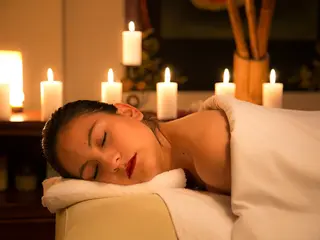
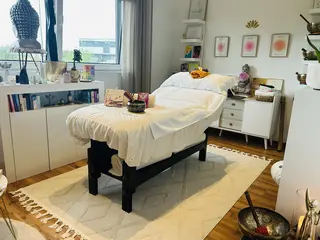
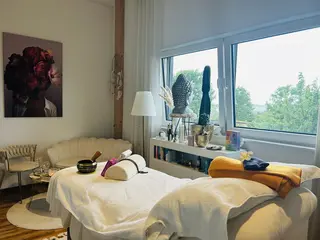
The price of an active holiday usually includes four components: accommodation, full board, the movement programme (hiking, cycling, yoga or movement practice) and supporting activities such as meditation, breath work or guided walks. Accommodation usually means a room in double or single occupancy. Some houses also offer shared rooms for travellers on a tighter budget. Full board typically consists of three meals a day, vegetarian or vegan, with seasonal regional ingredients. Water, tea and often coffee are included. The movement programme usually includes one guided main stage per day (a hike, a cycling tour or a guided movement practice) plus a softer morning or evening session. Guided meditation and an introduction to breath work are often part of the programme. Not included are usually the journey itself, travel insurance, alcoholic drinks, additional massages and optional excursions. For wellness-oriented stays, sauna and spa components may be included or charged separately depending on the house — worth checking specifically before booking.

Are active holidays in Germany also suitable for beginners?
Yes. A large share of German active holidays is explicitly designed for mixed groups and is accessible for beginners. Most houses work with clearly tiered stages — a moderate main route with a shorter variant and a gentler alternative. Teachers usually offer several variations, so that people returning to movement after a long pause and trained hikers can share the same group without anyone being left behind. For a genuinely relaxed entry, low-mountain-range stays with small group sizes (typically six to twelve people), daily stages of three to four hours and a clear daily structure work best. This format makes it easier to settle into practice without overextending the body. For high-alpine stays — multi-day hikes with hut overnights, via ferratas, ski tours — an honest self-check is worth the time: these formats require base fitness and sure-footedness and are less suitable for complete beginners. Descriptions using terms such as 'gentle', 'mixed groups', 'returning to movement' or 'yoga-with-hiking' signal that the teachers actively work with different backgrounds.