

Monastery time-out in North Rhine-Westphalia: Eifel silence and Lower Rhine cloister garden

North Rhine-Westphalia carries two anchor monastery houses that hold the format consistently. Kloster Steinfeld in the Eifel, and the Nikolauskloster in Jüchen on the Lower Rhine. Three nights behind thick walls, simple food from the monastery kitchen, a clear daily rhythm, long quiet courtyards, a cloister garden for slow walks, and a kind of silence that does not have to be staged because it belongs to the house. Single houses in the Sauerland, the Münsterland and the Eifel foothills round out the picture.

Discover Our Most Popular Offer

View all offers

New retreats straight to your inbox?

So you always stay up to date.

We take data protection very seriously. Further information

What sets a monastery time-out in NRW apart

What sets a monastery time-out in NRW apart

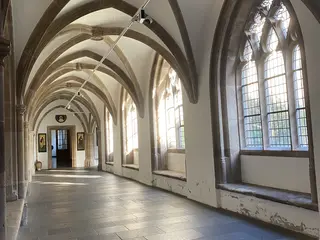
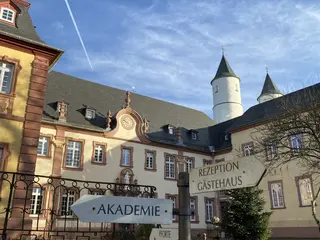
North Rhine-Westphalia does not carry a monastery landscape on the scale of Bavaria, but it does have two anchor houses that have run the format consistently for years. Kloster Steinfeld in the Eifel village of Kall sits in a former Premonstratensian complex with a wide courtyard, a wrought-iron gate, high cool rooms and a garden that opens straight into the Eifel hills. The Nikolauskloster in Jüchen on the Lower Rhine, west of Mönchengladbach, opens onto a large cloister garden and the avenue atmosphere around the nearby Schloss Dyck. What both houses carry is not a particular programme, but the monastery frame itself: thick walls that keep outside noise out, a kitchen that cooks simply and serves at fixed times, a daily rhythm given by the house, and silence that is house standard at meals and during breaks. The Eifel around Steinfeld is a soft mid-mountain landscape with rolling hills and dense forests, ideal for long walks between sessions. The Lower Rhine around Jüchen is flat, with cloister gardens and avenue atmosphere. The houses work with external guides who carry each weekend, while the monastery provides the walls, the silence and the food. Beyond these, occasional weekend formats run in the Sauerland, the Münsterland and the Eifel foothills. In total, 17 programmes are bookable right now.
What a typical day in an NRW monastery looks like

What a typical day in an NRW monastery looks like

A typical weekend at the Nikolauskloster in Jüchen or at Kloster Steinfeld in Kall follows a calm frame, less strict than a classic silent retreat, but clearer than a hotel stay. Most guests arrive on Friday afternoon, gather for a group welcome, then sit down to a simple dinner from the monastery kitchen, often with a short reading or in silence. Saturday begins around seven or eight with the first session of roughly 90 minutes. Breakfast follows, simple, with bread, muesli, fruit and tea. Across the day the rhythm stays similar: longer practice in the morning, free time for a walk in the monastery garden or through the Eifel hills around Steinfeld, lunch at noon, a quiet stretch, and a second session in the late afternoon. At Steinfeld, a half-day hike in the Northern Eifel around Schleiden and Hellenthal often joins the day. At Jüchen, the day stays more between the monastery walls and in the cloister garden, with walks along the avenue toward Schloss Dyck. Phones stay off in most programmes, talking happens in the breaks, while meals are often kept silent in both houses. The evening offers an optional closing session or stretch of silence. Sleep is early, lights out between ten and eleven.
Travel, season and who NRW as a monastery destination suits

Travel, season and who NRW as a monastery destination suits

Both anchor houses sit within two to three hours of Germany's densest urban region. The Nikolauskloster in Jüchen lies between Mönchengladbach and Düsseldorf right on the A46 motorway, about 45 minutes from Cologne and Düsseldorf, an hour from Aachen, just under two hours from Frankfurt or Hannover. Kloster Steinfeld in Kall sits in the heart of the Eifel, just over an hour southwest of Cologne via the A1 and B266, two and a half hours from Frankfurt, three hours from the Ruhr area. Both houses are reachable by train and bus, Steinfeld via Kall on the RE22 line plus a connecting bus, Jüchen via Mönchengladbach plus a short taxi ride. In terms of season, both run year-round, with a slight emphasis on spring and autumn, the calmest months for time-out and silence. The Eifel around Steinfeld is at its quietest from April to June and September to October, with long walking days without midsummer heat. In winter, weekend formats run across the turn of the year as a quiet counter to New Year's busyness. The format fits especially solo travellers looking for a long weekend without large travel overhead, and couples wanting a calm shared retreat without hotel scenery. Search data shows a clear female lean, both houses take solo women as a core group, with proper single rooms. Across all 17 NRW programmes, the typical price is €333 for three nights including simple board.

Frequently asked questions

Which monasteries in NRW offer time-out stays?
The NRW offer rests on two anchor houses that together hold the bulk of all programmes. The Nikolauskloster in Jüchen on the Lower Rhine, west of Mönchengladbach, with a large cloister garden and avenue atmosphere around the neighbouring Schloss Dyck. And Kloster Steinfeld in the Eifel village of Kall, a former Premonstratensian complex with a wide courtyard and a direct opening into the Eifel hills. Both houses carry a series of weekend formats across the year, with a clear daily rhythm, simple food from the monastery kitchen and silence as house standard. Beyond these, occasional weekend formats run in the Sauerland, the Münsterland and the Eifel foothills. In total, you will find 17 monastery time-out programmes in NRW.
How much does a monastery time-out in NRW cost?
Prices in the NRW offer mostly sit in the typical weekend frame with three nights, including simple food from the monastery kitchen and usually two sessions a day. Across all 17 NRW programmes, the typical price is €333, with the range running from €220 for shorter weekends up to €550 for slightly longer formats. Weekends typically sit in the lower to middle part of this range, longer stays toward the upper end. What drives the price is usually not the programme share but room category (single vs. double) and length. Individual compact courses are certified as prevention courses under section 20 of the German social code: statutory health insurers and civil-service aid then refund 75 to 100 percent of the pure course fee. Which date runs as a prevention course is shown in the respective listing.
What is the best way to reach the NRW monasteries?
Both anchor houses sit within two hours of the Rhine-Ruhr metropolitan region. The Nikolauskloster in Jüchen lies between Mönchengladbach and Düsseldorf right on the A46 motorway, around 45 minutes from Cologne and Düsseldorf, an hour from Aachen, just under two hours from Frankfurt or Hannover. By train, head to Mönchengladbach main station and take a taxi for the final 15 minutes. Kloster Steinfeld in the Eifel village of Kall sits in the heart of the Eifel, just over an hour southwest of Cologne via the A1 and B266, almost two hours from Düsseldorf, two and a half hours from Frankfurt, three hours from the Ruhr area. By rail, take the RE22 from Cologne main station to Kall, where a connecting bus runs to the monastery, or the house arranges a shuttle on request. The Sauerland, Münsterland and Euskirchen programmes are reachable directly via the regional express through Bestwig, Warendorf or Euskirchen.
Which formats are offered in NRW monasteries?
The NRW monastery offer is clearly weekend-oriented. Three nights from Friday afternoon to Sunday noon are the standard in both anchor houses, with a clear daily rhythm, fixed meal times from the monastery kitchen and a mix of guided sessions and free time for walks in the cloister garden or through the Eifel hills. Beyond that there are longer formats of four to five days, mainly at Kloster Steinfeld, intended for a more extended time-out. Silence and stillness are explicit format components in individual weekends, in many others, silence at meals and during breaks is house standard without separate announcement. Traditional liturgy of the hours as a live-along format is not part of the NRW offer: the programmes are time-outs in a monastery setting, not a shared life with the monastic community. Prior religious experience is not required, the houses welcome non-denominational guests as readily as church-affiliated ones.
When is the best time for a monastery time-out in NRW?
Both anchor houses run year-round, with a slight emphasis on spring and autumn, the calmest months for silence and time-out. The Eifel around Kloster Steinfeld is at its quietest from April to June and September to October, with long walking days without midsummer heat. The monastery garden and the Schloss Dyck surroundings at the Nikolauskloster Jüchen are most striking in spring and early autumn. In high summer (July and August) both houses run, but the heat fits indoor-only formats better than hiking in the Eifel. In winter, both houses keep clearly framed weekend formats, especially across the turn of the year as a quiet counter to New Year's busyness. Booking lead times typically run four to eight weeks, longer in the spring and autumn high seasons, many Jüchen weekends fill up two to three months ahead.
Are monastery time-outs in NRW suitable for beginners?
Yes, most NRW monastery programmes are designed for mixed groups and are beginner-friendly without being branded as pure beginner courses. The weekend formats at the Nikolauskloster in Jüchen and the stays at Kloster Steinfeld follow a gentle, accessible style. If you have never been on a monastery weekend, both houses are easy to follow. The daily rhythm is calm, sessions are framed in a way that works without prior experience, and the monastery kitchen serves at a pace that does not create pressure. If unsure, a short email to the house helps, both monasteries give concrete advice on whether a given weekend fits your experience. Questions about dietary wishes or physical limits are usually answered directly and matter-of-factly. Prior religious experience is not required, the programmes are designed as spiritual rather than denominational time-outs.
What is typically included in the price of an NRW monastery time-out?
The standard price for NRW monastery programmes usually covers accommodation in a single or double room in the guest wing, simple full board from the monastery kitchen with bread, muesli, fruit and tea at breakfast plus warm lunch and dinner, and the full programme with two sessions a day. Smaller modules like an evening stretch of silence, guided sitting times or walks in the monastery garden are usually included. The longer stays at Kloster Steinfeld include a half-day hike in the Northern Eifel around Schleiden and Hellenthal as part of the programme. What is extra: single-room supplements, individual coaching and occasionally a small local visitor's tax. Travel and insurance are not included. Among the 17 NRW programmes, it pays to check the details, the range from €220 to €550 is usually explained by length and room category. Where a compact course is certified as a prevention course, German statutory health insurance refunds 75 to 100 percent of the pure course fee.