Retreat Urlaub - Urlaubsangebote für Körper, Geist und Seele.

Active Holidays in Morocco

The High Atlas with peaks above four thousand metres, the red desert plains south of the Draa Valley, the long Atlantic coast between Essaouira and Taghazout and the cooler mid-range landscapes of the Rif — Morocco is one of the most landscape-intense active-holiday destinations in North Africa. From hiking through Berber villages and surf stays on the Atlantic to yoga and meditation retreats in the Atlas mountains, movement can be paired with a culture that feels both unfamiliar and intense for European travellers.
5 curated retreats from €320

Discover Our Most Popular Offer

View all offers

New retreats straight to your inbox?

So you always stay up to date.

We take data protection very seriously. Further information
What makes active travel in Morocco distinctive

Morocco brings together three qualities that rarely combine on this scale in Europe. First, a very wide landscape range on a comparatively small area: from snow-covered Atlas peaks to ocean cliffs and sand deserts, every landscape is within a few hours' drive. Second, a cultural experience that offers a clear contrast for central European travellers — Berber villages in the Atlas valleys, the old urban cultures of Marrakech and Fes, the Atlantic harbour town of Essaouira with its Portuguese history. Third, a climate that supports active programmes year-round outside the high summer. The most obvious advantage is climate variety. In the high altitudes of the Atlas it is markedly cooler than in the desert, the Atlantic coast has its own breeze and stays bearable even in high summer, the Rif mountains in the north are greener and damper than the south. This range makes Morocco a destination where you can collect very different climate and landscape experiences in a single stay. The second point is the well-grown hiking infrastructure in the High Atlas. For decades, Berber mountain guides in the villages around Imlil, in the Atougha Valley and in the Mgoun massif have worked with international groups. The trails are experienced, overnight stays in simple Berber guesthouses (Gites d'Etape) are organised, and multi-day treks with mules as pack animals are an established form. If you are looking for an intensive mountain experience beyond the Alps, you find it here. The third, often underestimated factor is the quiet Atlantic coast south of Agadir. Taghazout, Imsouane and Tamraght have developed in recent years into surf and yoga destinations that carry year-round programmes — mild temperatures, consistent waves, a relaxed atmosphere and an international scene. This region works particularly well for winter active stays when Europe is cold.

Which outdoor formats the Moroccan regions support

Active holidays in Morocco distribute across three clearly distinguishable landscape spaces, and each carries its own focus. The High Atlas south of Marrakech carries the strongest mountain formats. Imlil is the starting point for tours up the Toubkal — at four thousand one hundred and sixty-seven metres the highest peak in North Africa — and for multi-day Berber treks through the high valleys. Yoga-hiking stays in the villages of Imlil, Aroumd, Tacheddirt and in the Ourika Valley combine daily hiking stages with yoga in the morning and evening. The high altitudes stay cool enough in high summer for intensive movement; in winter the Toubkal itself becomes a serious high tour with snowshoes or skis. The Atlantic coast south of Agadir — Taghazout, Tamraght, Imsouane — carries the strongest surf and yoga line. Europe's nearest neighbour to its surf beginner camps is concentrated here: mild water temperatures, wide beach areas for first-time surfers, alongside more advanced spots for experienced surfers. Yoga weeks often combine surf in the morning with yoga and breath work in the afternoon. Essaouira further north is a slightly cooler, windier variant with a focus on kitesurfing and windsurfing. The desert and semi-desert regions — the Antiatlas, the Draa Valley, the region around Ouarzazate and the deserts of Erg Chebbi and Erg Chigaga — carry the contemplative, meditative formats. Desert retreats with silent segments, yoga and meditation programmes in quiet oases, and Berber tent stays have their place here. This form is intense: extreme silence, wide horizons, clear night skies. The season is shorter — from October to April; high summer is too hot. The Rif north — the region between Chefchaouen, Tetouan and Tangier — is quieter and less touristically developed. Small, isolated yoga and hiking stays are found here, with a focus on Mediterranean atmosphere and quiet practice.

When to travel for an active holiday in Morocco

Unlike most European active destinations, Morocco has four clearly recognisable seasons with markedly different characters. The spring season from mid-March to late May is considered by many the most beautiful window. The days lengthen, the land blooms after the winter rains, the Atlas mountains still carry residual snow, wild herbs and almond blossoms dominate the atmosphere. Daytime temperatures sit between eighteen and twenty-six degrees on the coast and in the Atlas, and between twenty-four and thirty degrees in the desert regions. This phase suits all formats. High summer from June to mid-September is climatically demanding. In the deserts and in Marrakech, Fes and Ouarzazate, temperatures reach forty degrees and more — active programmes in this phase happen almost exclusively in the high Atlas (cooler) or on the Atlantic coast (made bearable by the breeze). Surf and yoga stays in Taghazout and Imsouane are particularly popular in this phase — water temperatures between twenty and twenty-two degrees, mild airflow, long daylight windows. The autumn season from mid-September to late November is the second major window. Clear, golden light, lower temperatures, the sea is still warm, the deserts become walkable again. Daytime temperatures sit between ten and twenty degrees in the Atlas, between twenty-one and twenty-six degrees on the coast, between twenty and twenty-eight degrees in the desert regions. Most Berber treks and desert retreats traditionally happen in this phase. The winter season from December to mid-March is its own active world in Morocco. The High Atlas becomes a ski-touring and snowshoe region (Oukaimeden has a small high-altitude ski area). The deserts are pleasantly warm during the day (eighteen to twenty-three degrees) and clear and cool at night — the best phase for desert retreats. The Atlantic coast at Taghazout carries year-round: in winter mild sixteen to twenty degrees, best wave season, international surf community on site. Yoga-hiking stays in the Antiatlas and in the Argan hinterland are a quiet alternative to central European winter weeks during this phase.

What a typical active day in Morocco looks like

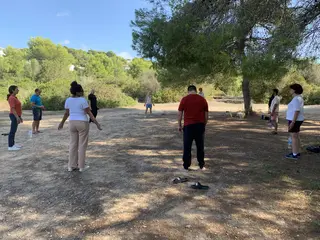
A typical active day in a Moroccan stay varies by region — the Atlas daily structure differs from the Atlantic coast, and both differ from a desert retreat. What they share is a relationship with light: practice starts early, before the heat, and ends quietly after sunset. In an Atlas yoga-hiking house the day usually starts around seven with a morning practice: hatha, breath work or meditation in a yoga room with a valley view or under a Berber tent roof. After a shared breakfast — bread, honey, dates, eggs, fresh fruit, mint tea — the hiking stage starts between half past eight and nine. Four to six hours of guided hiking through Berber villages, walnut and olive groves, high valleys. Lunch often in a Berber household with traditional tagine. In the late afternoon a second, gentler yoga or meditation session, then dinner and a calm evening. On a surf-yoga stay in Taghazout the day starts with a short morning yoga session around six-thirty, then breakfast and departure for the beach. The surf session lasts three to four hours depending on tides and conditions, with a break. Lunch break at the beach or in the camp, then a second surf or yoga session in the afternoon, or an extended rest phase with breath practice. Dinner usually shared in the camp, often with Moroccan-Mediterranean cuisine. In a desert retreat the rhythm is even quieter. Early-morning practice during the cool hour, a long midday halt during the hot phase with a focus on stillness, a late-afternoon walk into the dunes, evening meditation at sunset, shared dinner around a campfire. The nights are clear — observing the stars and meditating under the open sky are part of the programme in this format. Food culture is its own active component in all three formats: Moroccan cuisine is vegetable- and spice-focused, vegetarian and vegan are well possible, with long, shared meals as a social anchor.

Frequently asked questions

When is the best time for an active holiday in Morocco?
The answer depends on the format. For mountain and hiking stays in the High Atlas, the best months are April, May, September and October. In these weeks the daytime temperatures in the high altitudes sit between sixteen and twenty-four degrees, the high paths are snow-free, the nights are cool but not frosty. For desert retreats and stays in the Antiatlas, the best months are October to April. In this phase daytime temperatures sit between twenty and twenty-eight degrees — well walkable, with clear nights and starry skies. High summer is too hot (forty degrees and more). For surf and yoga stays on the Atlantic coast (Taghazout, Imsouane, Essaouira), year-round programmes are possible. The best wave season runs October to April; the milder wave season for beginners runs May to September. Water temperatures sit between sixteen degrees (winter) and twenty-one degrees (high summer). For ski touring on the Toubkal: January to March, with established routes starting from the Refuge Toubkal.
Which activities are especially popular in Morocco?
Berber trekking in the High Atlas is the strongest form of movement. Multi-day treks with Berber mountain guides, mules as pack animals and overnight stays in Berber guesthouses or simple tents. Classic routes lead up the Toubkal (with or without summiting), through the Mgoun massif or through the Atougha Valley. Surfing is the second major form. The beach region between Agadir and Imsouane is an established surf destination for all levels. Beginner camps in Taghazout, Tamraght and Imsouane work with small groups, safe shorebreaks and several week formats per season. Yoga retreats are the third line. Yoga-hiking stays in the High Atlas, yoga-with-surf stays on the coast and yoga-with-meditation retreats in desert and Atlas villages form the main categories. Silent retreats find their niche especially in the quieter desert and Antiatlas regions. Desert stays with Berber tent camps, camel rides, sand-dune hikes and silence sessions around a campfire are a distinctive, intense form — often focused on meditation and nature experience under a clear night sky. Cycling tours, climbing, kitesurfing (especially in Essaouira) and horse-based active holidays complete the spectrum.
Which region in Morocco fits me?
If mountains, Berber culture and multi-day treks matter to you: the High Atlas south of Marrakech, focused around Imlil, Ourika and Tacheddirt. Expect intensive hiking days, overnight stays in simple Berber guesthouses, cool nights and a very distinctive cultural atmosphere. If you want surf, a mild Atlantic atmosphere and sun: the region between Agadir and Imsouane — Taghazout, Tamraght, Imsouane. Expect mild temperatures, a relaxed international atmosphere, many beginner camps and year-round programmes. If you are looking for silence, wide horizons and a meditative character: the desert and Antiatlas regions south of Ouarzazate — Erg Chebbi (near Merzouga) or Erg Chigaga (near M'Hamid), along with the Draa Valley and the villages around Tafraoute. The most intense desert retreats and silent stays live here. If you want to combine a city experience with active segments: Marrakech as a base for Atlas tours, or Essaouira as a base for surf, wind and coast. Both cities are culturally intense and well connected. For a first Morocco experience with moderate demands, the Atlantic coast or a yoga-hiking stay in the Atlas with a base accommodation (rather than a multi-day trek) is the most accessible option.
What is usually included in the price?
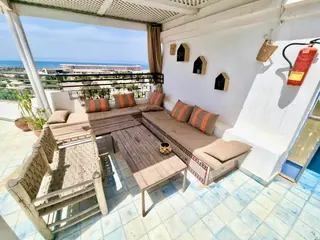
The price usually includes four components: accommodation, full board, the movement programme (hiking, surfing, yoga or a combination) and supporting activities such as meditation, breath work or guided walks. On Atlas treks, Berber guiding and mule transport are usually included. Accommodation usually means a room in double or single occupancy. On Berber treks accommodation is simpler (Gite d'Etape or Berber family house). On desert stays Berber tents or simple lodge rooms. In surf camps shared rooms are often the standard. Full board typically consists of three meals a day, with Moroccan cuisine at the centre — couscous, tagine, bread, dates, mint tea, fresh fruit, plenty of vegetables. Vegetarian and vegan tracks are well possible in nearly every house but should be flagged at booking. The movement programme usually includes one guided main stage per day plus a softer morning or evening session. On surf stays, surf equipment (board, wetsuit) and surf teachers are usually included. Not included are usually the international flight, travel insurance, tips for Berber guides and pack animals (customary), alcoholic drinks and optional excursions (hammam visits, city tours, camel rides outside the standard programme).
Are active holidays in Morocco also suitable for beginners?
Yes — for a large share of stays. Surf beginner camps in Taghazout, Tamraght and Imsouane are explicitly designed for first-time surfers: small groups, calm shorebreaks, plenty of equipment and safety briefing, several week formats per season. Morocco is among the most internationally established beginner surf destinations. For yoga-hiking stays in the High Atlas: stays with a base accommodation (without a multi-day trek) are accessible for beginners. Daily stages of four to six hours at moderate altitudes, with yoga in the morning and evening. This format suits people returning to movement. For multi-day Berber treks with hut or tent overnights an honest self-check is worth the time: these formats require base fitness, daily stages can cover six to eight hours, elevation gains are real, accommodation is simple. For the Toubkal ascent, good fitness and sure-footedness are prerequisites. Desert retreats are scenically demanding but technically accessible — the paths through the dunes are not mountain stages but long, even walks. Descriptions using terms such as 'gentle', 'all levels' or 'yoga-with-hiking' signal that the teachers work with different backgrounds.
What does an active holiday in Morocco cost?
The typical price range runs from around six hundred euro for a seven-day stay in a simple Berber guesthouse or a surf camp with shared rooms up to roughly two thousand one hundred euro for a week in a single room at a higher-end house. Most stays fall between eight hundred and one thousand seven hundred euro per week in a double room. Four factors shape the price: region, season, room category and programme depth. Surf-yoga stays on the Atlantic coast tend to sit slightly lower than Atlas treks with mountain guiding. Desert retreats with Berber tent overnights often have their own price structure — the logistics (travel to remote camps, mule transport) make them somewhat higher. October, November, February, March and April are high season for the Atlas and the desert; July and August high season for surf. May, June and September are shoulder phases with often more favourable rates. What is not included is usually the international flight, travel insurance, the visa (not required for EU citizens for stays up to 90 days), tips for Berber guides and pack animals, and optional hammam visits.
What is the best way to travel to Morocco?
For all active guests, the journey is by plane. Four airports cover most active destinations: Marrakech (RAK) as the central hub for the Atlas and the desert, Agadir (AGA) for the Atlantic coast and surf region, Essaouira (ESU) for the northern Atlantic coast, and Casablanca (CMN) as the country's main hub with onward connections. From Germany, Austria and Switzerland there are year-round direct flights to Marrakech, Agadir and Casablanca. Flight times sit between three and a half and four hours. Essaouira is reached seasonally on direct flights from a few European cities; otherwise via Marrakech with an onward transfer. The transfer from the airport is organised by practically all active houses — either as a group transfer or as an individual shuttle, often included in the price. Marrakech-Imlil takes about two and a half hours, Marrakech-Taghazout about three hours, Marrakech-desert (Erg Chebbi) eight to ten hours including an overnight stop. Rental cars are possible but rarely necessary for pure yoga-surf or trek stays. Desert tours are not recommended without experience driving in desert conditions — the houses usually organise a guided transfer. Visa: For EU, Swiss and UK citizens, no visa is required for stays up to 90 days — the passport must be valid for at least six months from the date of entry.