The best retreat vacations in Portugal February 2026

Find the best vacation offers for body, mind and soul in Portugal in February 2026. You have a choice of different areas: Yoga and detox, creative living or detoxifying activity. It's all about your well-being.

7 curated retreats from €690

New retreats straight to your inbox?

So you always stay up to date.

We take data protection very seriously. Further information
What sets Portugal apart as a retreat destination

What sets Portugal apart as a retreat destination

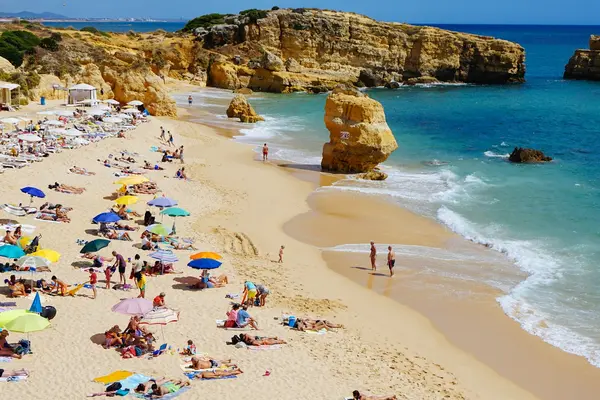
Portugal is not a yoga hotspot the way Bali is, and not a mass-wellness market the way Tuscany is. Three sober factors make the country interesting for retreats: climate, coastline and price level. The climate is mild year-round. On the Algarve in the south, January still holds 15 to 17 degrees Celsius. In the north, temperatures rarely fall below 10. Outdoor yoga, walking practice and breathwork stay viable in months that rule them out in Bavaria or Brandenburg. That matters for anyone planning an off-season stay. The coastline runs 1,793 kilometres and faces the Atlantic almost entirely. The Atlantic delivers consistent swell for surf programs, cooler water than the Mediterranean and a different rhythm from tourist beach holidays. The current inventory uses this in two ways: along the Algarve west coast for yoga-walking-detox weeks with cliff paths and outdoor practice, and along the northern coast for surf-and-yoga combinations. Madeira and the Azores extend the picture with volcanic island formats. The price level sits below the German one. Seven-day programs in the active inventory start at 1,199 euros and reach 2,990 euros, full board and usually transfer included, with selected premium coaching stays on Madeira reaching higher. Comparable stays in South Tyrol or the Allgäu cost between 1,800 and 3,500 euros. The gap reflects lower local living costs and a smaller retreat-house industry without a premium markup. Standards are not lower: most operators are family-run quintas, meaning country estates with a converted guest wing, or surf camps with the owner on site, not chain hotels.
What types of retreats actually run in Portugal

What types of retreats actually run in Portugal

The Portugal inventory in the catalogue covers eight focal areas, clearly ordered by inventory depth. Detox retreats are by far the largest segment. Detox here does not mean Buchinger-style fasting, meaning a medically supervised liquid phase, but a food-aware week without alcohol and without processed food. Yoga retreats follow closely and almost always run as combinations: yoga plus walking on the Algarve, yoga plus surfing on the northern coast, yoga plus coaching on Madeira. Pure asana weeks, meaning stays exclusively built around physical yoga practice, are rare. Active holidays and meditation form the third and fourth focus. Active holiday here means programs with daily movement at the core: walking, surfing, Qigong or trekking, often paired with yoga. Meditation usually runs as one element inside multi-format weeks rather than as a stand-alone program. Yin yoga, meaning long-held floor positions focused on fascia, is well represented with fifteen listings and is mostly placed as an evening practice after physically demanding daytime sessions. Surfing and coaching share sixth and seventh place. Surfing concentrates around the Goodtimes surf camp in Gelfa on the northern coast, with Vinyasa in the morning and Yin in the evening framing the surf lessons. Coaching is mostly found on Madeira as a one-on-one format with stress reduction and work-life balance as recurring themes. Walking, finally, is the most traditional format on the Algarve west coast with cliff routes, running either as a yoga-and-walking combination in Alvor and Monchique or as detox-walking in Aljezur.
Regions and travel logistics

Regions and travel logistics

Portugal looks small on a map, but distances are longer than they suggest. Four regions carry the current retreat inventory, each with its own travel logic. The Algarve is the central region. Roughly half of all Portugal retreats run here, with Aljezur and Budens on the west coast as the main hubs and Alvor, Burgau, Monchique and Silves as further locations. The profile ranges from Qigong-and-detox in Aljezur to yoga-and-walking weeks in Alvor and yoga-and-surf in Budens. Travel: direct flight to Faro (FAO), the Algarve hub, from Frankfurt, Munich, Berlin, Vienna and Zurich, around three hours. From the airport it is 60 to 90 minutes to the west coast and an hour inland to Monchique. The northern Atlantic coast, Minho region, is the second cluster with eight listings around Caminha and the village of Gelfa. The Goodtimes surf camp runs its yoga-and-surf weeks here. Travel: fly to Porto (OPO), then 90 minutes by car or transfer along the coast. The Atlantic delivers consistent one-to-two-metre waves suitable for beginners and intermediates year-round. Madeira is the third cluster, with coaching and detox programs around Prazeres on the western side of the island. Travel: direct flight to Funchal (FNC) from several German airports, then 50 minutes to the retreat. Madeira is subtropical, 18 to 25 degrees year-round, volcanic with laurel forest. The Azores, specifically Faial with Cedros on the north side, complete the picture as a niche cluster. Faial sits roughly 1,500 kilometres west of the mainland. Travel: fly to Lisbon (LIS), then a two-hour onward flight on SATA Air Açores to Horta-Faial, plus a 20-minute transfer. Total travel time Frankfurt to Cedros runs to about nine hours including the connection.
Language, season and who this works for

Language, season and who this works for

Language. English is spoken at native level in retreat houses and surf camps across Portugal. German-language guidance exists with individual operators, usually when teachers from Germany or Austria are on site, which happens regularly at the Goodtimes surf camp and at several Algarve houses. Anyone wanting to practice in German should confirm this in advance directly with the operator, since it is not the default and program descriptions do not always state it explicitly. Season. Portugal is usable year-round, but the emphasis shifts. April to June and September to October are the strongest booking windows: warm enough for outdoor practice, calmer than August, often better value. July and August fill up, prices rise and the coast carries more tourist traffic. November to March stays mild in the south, making it the main season for Algarve detox weeks. Madeira holds steady year-round. The Azores get windier and more variable with frequent rain, while surfing on the northern coast runs through every month and waves are more consistent in winter. Who this works for. Detox weeks on the Algarve and Madeira suit people looking for an alcohol-free, food-aware break without medical fasting, often combined with yoga or coaching. Yoga stays here function mostly as combination formats with walking, surfing or coaching, rather than as pure asana weeks. Active programs like surf-and-yoga in Gelfa or walking on the Algarve suit people who want a physically active stay, who do not equate relaxation with sitting still. Both offer lines typically run seven days, the typical value across the inventory. Shorter trips are difficult for Portugal, because travel alone can take up to a day and a half each way, especially to the islands.

Frequently asked questions

What types of retreats are offered in Portugal?
The Portugal inventory covers eight focal areas, clearly ordered by frequency. Detox retreats are by far the largest segment and do not mean medical fasting here, but food-aware weeks without alcohol and without processed food. Yoga retreats follow closely and almost always run as combinations: yoga plus walking on the Algarve, yoga plus surfing on the northern coast, yoga plus coaching on Madeira. Active holidays and meditation form the third and fourth focus, followed by Yin yoga with long-held floor positions, often placed as an evening practice after physically active days. Surfing concentrates on the northern coast, coaching mostly on Madeira, walking on the Algarve west coast. In total you will currently find 38 retreats in Portugal.
Which regions in Portugal are most relevant for retreats?
Four regions carry the current Portugal inventory. The Algarve in the south is by far the central region; roughly half of all Portuguese retreats run here, with Aljezur and Budens on the west coast as the main hubs and Alvor, Burgau, Monchique and Silves as further locations. The second cluster is the northern Atlantic coast around Caminha and Gelfa in the Minho region, with yoga-and-surf weeks as the core format. Madeira is the third cluster, with coaching and detox programs around Prazeres on the western side of the island. The Azores, specifically Faial with Cedros, complete the picture as a niche cluster. Those wanting beach yoga and walking gravitate to the Algarve; those after surfing to the northern coast; those looking for quiet island formats to Madeira or the Azores.
When is the best time to travel for a retreat in Portugal?
Portugal is usable year-round, but the emphasis shifts with the season. April to June and September to October are the strongest booking windows: warm enough for outdoor practice, calmer than August, often better value. July and August fill up, prices rise and the coast carries more tourist traffic. November to March stays mild in the south, making it the main season for Algarve detox weeks, with January still holding 15 to 17 degrees Celsius. Madeira is subtropical and stays at 18 to 25 degrees year-round, so there is no classic off-season. The Azores get windier and more variable with frequent rain in winter. On the northern coast, surfing runs through every month and waves are actually more consistent in winter.
What is the best way to reach a retreat in Portugal?
Travel logistics depend clearly on the region. For the Algarve, fly direct to Faro (FAO), the Algarve hub, from Frankfurt, Munich, Berlin, Vienna or Zurich; about three hours flight time, then 60 to 90 minutes by rental car or transfer to the west coast. For the northern Atlantic coast around Gelfa, fly to Porto (OPO), then 90 minutes by car or transfer along the coast. Madeira is reached by direct flight to Funchal (FNC) from several German airports, then 50 minutes to the retreat. For the Azores it is a connecting flight: Lisbon (LIS), then two hours onward on SATA Air Açores to Horta-Faial, plus a 20-minute transfer. Total travel time Frankfurt to Cedros runs to about nine hours including the connection.
Are Portuguese retreats taught in German?
English is spoken at native level across retreat houses and surf camps in Portugal. German-language guidance exists with individual operators, mostly when teachers from Germany or Austria are on site. This happens regularly at the Goodtimes surf camp on the northern coast and at several Algarve houses, but it is not the default. Anyone wanting to practice or be coached in German should confirm this directly with the operator before booking, since German-speaking dates are often tied to specific teachers and therefore specific weeks, and program descriptions do not always state this explicitly. Those comfortable in English have the full Portugal inventory open to them; those insisting on German narrow the choice noticeably and should plan ahead.
How much does a retreat in Portugal cost?
The price level in Portugal sits below the German one. Seven-day programs in the current inventory start around 1,199 euros and reach 2,990 euros, full board and usually transfer included, with selected premium coaching stays on Madeira reaching higher. Comparable stays in South Tyrol or the Allgäu cost 1,800 to 3,500 euros. The gap reflects lower local living costs and a smaller retreat-house industry without a premium markup, not lower standards. Across all 38 Portugal retreats, the average sits at €1.656, with the range running from €599 for shorter or simpler formats up to €5.688 for longer premium programs. What usually drives the price is room category, island location and the scope of treatments or coaching hours, rather than the yoga or surf share itself.
Are retreats in Portugal suitable for beginners?
Yes. Most Portugal programs are designed for mixed groups and are beginner-friendly without being branded as pure beginner courses. In practice, teachers offer variations for different levels of mobility and experience; the Yin- and Hatha-heavy weeks especially are easy to follow as a beginner. For surfing on the northern coast around Gelfa, the Atlantic delivers consistent one-to-two-metre waves suitable for beginners and intermediates year-round; surf lessons at the Goodtimes surf camp are explicitly split by skill level. Detox weeks do not require prior knowledge, only the willingness to spend a week without alcohol and processed food. If unsure, a short email to the house helps; most hosts give concrete advice on whether a given format fits your experience level.