Surf Camps in Portugal

Portugal is the most accessible surf destination in Europe: roughly 850 kilometres of Atlantic coast, year-round waves and a density of surf spots that you will not find on any other part of the continent. You currently have 8 camps to choose from, spread across the Algarve in the south, the Ericeira and Peniche region north of Lisbon, the Costa Vicentina in the west, plus Madeira and the occasional camp in the Azores. The wave season is more reliable than on the Mediterranean, because the open Atlantic delivers swell on almost any day; water sits at 18 to 21 degrees in summer and 14 to 17 degrees in winter, so you surf in a wetsuit year-round. Camps cover every level, from your first whitewater session to coaching on point breaks. Prices start at €1.099, the average is €1.352, and longer camps reach up to €1.990.

Discover Our Most Popular Offer

View all offers

New retreats straight to your inbox?

So you always stay up to date.

We take data protection very seriously. Further information

What sets Portugal apart as a surf destination

Portugal sits right in the swell corridor of the North Atlantic. The waves arriving here are the same ones that built up days earlier far out on open ocean, and that is exactly what separates Portugal from a Mediterranean season. Along the Portuguese Atlantic coast, you have surfable conditions on almost every day of the year, because the coastline runs for several hundred kilometres and holds a sheltered or exposed spot for every wind and swell direction. When the Algarve west coast goes too big, Sagres and the south coast are often in the lee, and conversely, spots around Peniche and Ericeira deliver clean waves even when conditions further south are flat. For you as a traveller this means your surf camp will almost always find waves, even in a difficult weather week. The journey itself is short: about three hours of direct flight from Germany to Faro, Lisbon or Porto, four hours to Funchal on Madeira. On top of that comes seasonal variety: summer brings smaller, clean waves perfect for beginners, autumn and winter deliver bigger swells for advanced surfers, spring is consistent and mild. The water sits between 14 and 21 degrees, so you need a 3/2 or 4/3 wetsuit, which is usually included in the camp price. This combination of reliable waves, short travel and every skill level within a tight area makes Portugal the default choice for a first surf camp as much as for a more advanced one.

Surf regions: Algarve, Ericeira, Lisbon coast, Madeira, Azores

Each surf region in Portugal has its own character, and it pays to match your choice to your level and preferences. The Algarve in the south splits into two worlds: the sheltered south coast around Lagos and Albufeira with smaller, beginner-friendly waves, and the wild west coast around Sagres and Aljezur that leads into the Costa Vicentina. Here you find longer beaches, more powerful waves and exposed spots, where beginners surf on calmer days and advanced surfers find their sessions when it picks up. North of Lisbon lies the densest surf region in the country. Ericeira has been a World Surfing Reserve since 2011, with seven recognised waves within a few kilometres, from reef breaks to beach breaks. A bit further north, on the Peniche peninsula, beginner beaches gather on one side and classic beach breaks on the other. The Lisbon coast itself, from Costa da Caparica to Cascais, works well for city-and-surf combinations. Madeira plays in a league of its own. The island is rocky, the waves break over volcanic reef, and the north coast holds some of the biggest waves in Europe. Madeira is clearly an advanced destination, beginner-friendly spots are rare. In the Azores, far out in the Atlantic, surfing happens on São Miguel and Santa Maria, with far fewer camps but a more untouched atmosphere. Most travellers stay on the mainland for their first trip and return for Madeira or the Azores later.

Surf and yoga or surf and wellness: the combo programs

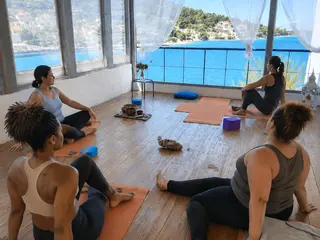
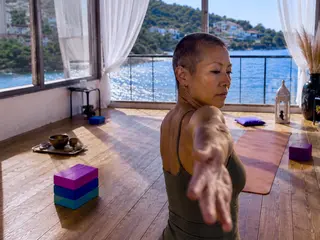
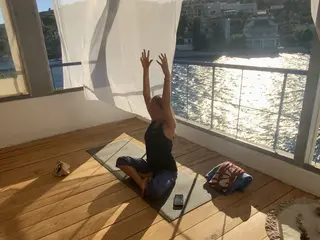
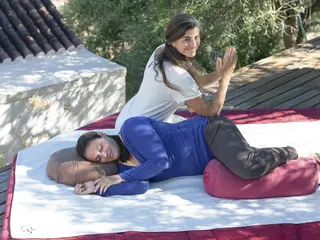
When you choose a surf camp in Portugal, you will quickly notice that many houses offer not only waves but a second element as well. The combination of surf and yoga is the most common, especially in the Ericeira region and along the Costa Vicentina. The daily flow follows a clear logic: a gentle Vinyasa or Hatha session in the morning to open your body for the surf, two hours in the water at midday, a restorative Yin class in the evening that releases tired muscles and shoulders. Yoga and surfing complement each other almost perfectly in anatomical terms, because surfing demands the posterior chain and shoulders, while yoga builds exactly the mobility and breath control you need on the board. The surf-and-wellness or surf-and-coaching combination is one step calmer and addresses travellers looking for more deceleration. These camps integrate massages, sauna, guided breath sessions or occasional coaching modules. They tend to run in the Algarve hinterland or in the hills around Aljezur, where houses sit in olive groves or on old quintas. In practical terms: if you travel alone and want company, surf-and-yoga camps are usually the most social choice, because something shared happens twice a day. If you prefer quiet, the calmer surf-and-wellness houses suit better. If you want a purely technical focus on the board, you can also find pure surf camps without extras, especially in Peniche, Sagres and at selected spots along the west coast.

Best time to travel and a bit of wave knowledge

Which travel period suits you depends almost entirely on what you want to experience in the water. Summer from June to September is the classic beginner season. The Atlantic swells are kept smaller by the consistent northerly wind known as the Nortada, the waves are clean and slow, the water at 18 to 21 degrees is comfortable. If you stand on a board for the first time or are just stepping out of the whitewater, summer offers the most accessible conditions, and long days give you room for two sessions a day. Autumn and winter are the season for advanced surfers. From October onwards, the first serious Atlantic lows roll in, the swell grows, the waves become more powerful, and spots on the west coast and Madeira reach their best days. Water gradually drops to 14 to 17 degrees, you will need a 4/3 wetsuit and often booties. This season is not for first-contact surfers; but if you already paddle reliably and stand up on a green wave, November through February brings the most exciting waves of the year. Spring from March to May is the underrated shoulder season. Waves are consistent, size is moderate, camps are less crowded, prices often softer than in high summer. You currently have 8 programs to choose from, with prices starting at €1.099 and an average of €1.352; the range extends to €1.990. For choosing your travel period: pick the region by your desired surf level, not the other way around.

Frequently asked questions

How much does a surf camp in Portugal cost?
Prices for a surf camp in Portugal start at €1.099 and reach up to €1.990. The average is €1.352 for a week, usually with shared room, breakfast, surf equipment, wetsuit and, depending on the camp, three to five guided surf sessions. What drives the price is mostly room category, beach proximity and the scope of extras such as yoga, half-board or one-on-one coaching. Simple surf houses on the west coast and in Peniche sit at the lower end, boutique camps on the Algarve and programs with substantial yoga or wellness content rather at the upper. Across all 8 programs, the range is wide because Portugal covers everything from a backpacker surf base to a quiet quinta with coaching.
When is the best time for a surf camp in Portugal?
If you are a beginner, June to September is the most reliable period. The summer northerly wind keeps the waves small and clean, the water at 18 to 21 degrees is warm enough for long sessions, and the long days give you room for several hours in the water. If you already paddle confidently and can surf simple green waves, autumn and winter from October through February are the more exciting season; bigger Atlantic lows arrive, waves become more powerful, water drops to 14 to 17 degrees. Spring from March to May is the underrated shoulder season with consistent waves, fewer crowds and often softer prices. Madeira runs year-round but only for advanced surfers; in the Azores, summer is the most reliable.
What is the best way to get to a surf camp in Portugal?
Direct flights from Germany reach Lisbon and Faro in 2.5 to 3 hours, Porto similarly, Funchal on Madeira in around 4 hours. Faro is the natural airport for the Algarve and the Costa Vicentina, Lisbon the anchor for Ericeira, Peniche, Sintra and the Lisbon coast, Porto a sensible option for the northern Atlantic coast, Funchal the only option for Madeira. From the airport, most camps are reachable in 30 to 90 minutes by rental car, shuttle or organised transfer. Many camps offer airport transfer as part of the package; this is shown in each listing. If you would rather not drive, the Rede Expressos bus network connects Lisbon, Peniche, Ericeira and the Algarve well; the final kilometres to the camp are then handled by the provider.
Is Portugal suitable as a surf camp for beginners?
Yes, Portugal is one of the most beginner-friendly surf countries in Europe. Most camps on the Algarve south coast, in Peniche and in Lagos have dedicated beginner beaches with long, flat sand, slowly breaking whitewater waves and surf instructors who work with first-contact travellers. You need no prior experience, no own equipment and no special fitness; a basic level of swimming and a willingness to be tired on day one are enough. Camps provide soft-top boards, wetsuit, leash and wax; the theory part happens on the beach, the first standing attempts in waist-deep water. If you go in summer, June to September, conditions are at their friendliest. Autumn and winter bring bigger waves; some camps still run beginner programs then but pick out sheltered spots specifically. Before booking, it pays to ask the camp by email whether they explicitly take beginners.
What surf equipment do I need, and what is provided?
You need almost nothing. Camps provide surfboard, wetsuit and leash as standard, matched to your level: soft-top boards between 7 and 9 feet for beginners, harder mid-length or shortboards for advanced surfers. The wetsuit is almost always included in the camp price, typically a 3/2 in summer and a 4/3 with booties in the cooler months. What you should bring yourself: sunscreen with a high SPF, ideally reef-friendly, a reusable water bottle, a quick-drying towel, swimwear that holds firmly and a lycra rash guard for sun protection under the suit. If you already own boards and want to bring them, choose a board bag with extra padding; the majority of travellers leave the board at home and use the camp gear, which is tuned to local conditions anyway.
How does the surf and yoga combination work?
The surf and yoga combination is so widespread in Portugal that it almost counts as its own format. The day is clearly structured: a 60 to 90 minute yoga session in the morning, often Vinyasa or Hatha, that warms up and mobilises your body; two hours of surf at midday; a calmer Yin or restorative session in the evening that releases tired shoulders, back and hips. You need neither yoga nor surf experience, both elements meet you at your level. The houses offering this combination cluster in the Ericeira region, the Costa Vicentina and the Algarve hinterland. The combination is not a trend but anatomically useful: surfing demands the posterior chain, shoulders and breath control, yoga builds exactly the mobility you need on the board and accelerates recovery between sessions.
How warm is the water, and do I need a wetsuit?
You need a wetsuit in Portugal year-round, because Atlantic water never really gets warm. In summer from June to September, water temperature on the Algarve and the Lisbon coast sits at 18 to 21 degrees; a 3/2 wetsuit is enough here even for longer sessions. In autumn and winter, October through March, water drops to 14 to 17 degrees, you then need a 4/3 wetsuit, plus booties and occasionally a hood in the coldest months. On Madeira the water is slightly warmer year-round because the island lies further south; you often get by with a 3/2 even in winter there. Most camps provide the right wetsuit for your travel period, so you do not need to bring your own. If you have material sensitivities or prefer your own fit, bring your own suit; otherwise the camp gear is sufficient.