
Table of Contents
- What is a yoga retreat, exactly?
- How a yoga retreat is different from a yoga class
- What happens at a yoga retreat: a typical day
- Types of yoga retreats: which format suits you?
- The benefits of a yoga retreat
- How to choose a yoga retreat: the short version
- Frequently asked questions
- What is the purpose of a yoga retreat?
- What happens at a yoga retreat?
- What is the difference between a yoga retreat and a yoga class?
- Can beginners go on a yoga retreat?
- How long is a typical yoga retreat?
- How much does a yoga retreat cost?
- What is the difference between a yoga retreat and a wellness retreat?
- Plan your next yoga retreat
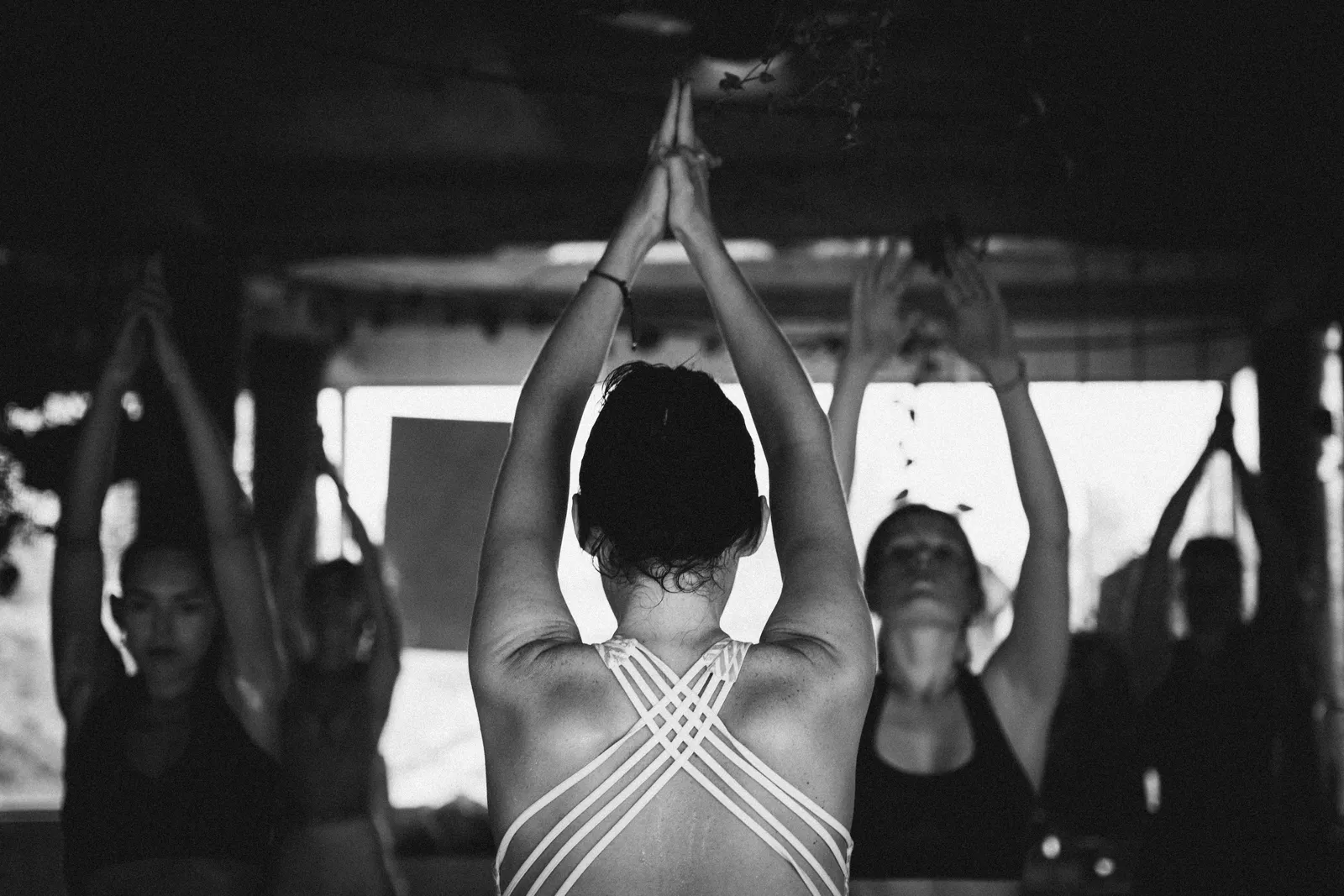
A yoga retreat is a residential, multi-day stay organized around daily yoga practice, meditation, and structured rest. You leave your usual environment, move into a setting designed for the practice, and spend the days doing yoga, eating communally, and sleeping without your usual inbox. That is the basic definition, and the reason it works differently from a studio class comes down to structure.
This article is the foundational guide for the full yoga retreat cluster. For the first-timer choosing guide, see yoga retreats for beginners. If you are wondering how yoga retreats compare to wellness retreats more broadly, what is a wellness retreat covers the overlap.
What is a yoga retreat, exactly?
A yoga retreat is a residential, multi-day program with daily yoga at its center, typically held at a dedicated retreat center, eco-lodge, or quiet residential property away from cities. The program is designed: you arrive, and the structure handles the rest. Morning yoga, communal meals, afternoon sessions, evening meditation. You do not plan your day; the day is planned for you.
The setting is not incidental. Coastal cliffs, mountain forests, converted farmhouses, quiet jungle properties. Each reinforces what the schedule reinforces: a slower pace, less stimulus, more space for the practice to settle.
Most yoga retreats run between three days and two weeks. A weekend is the most accessible entry point. A full week is where real rhythm starts to form.
How a yoga retreat is different from a yoga class
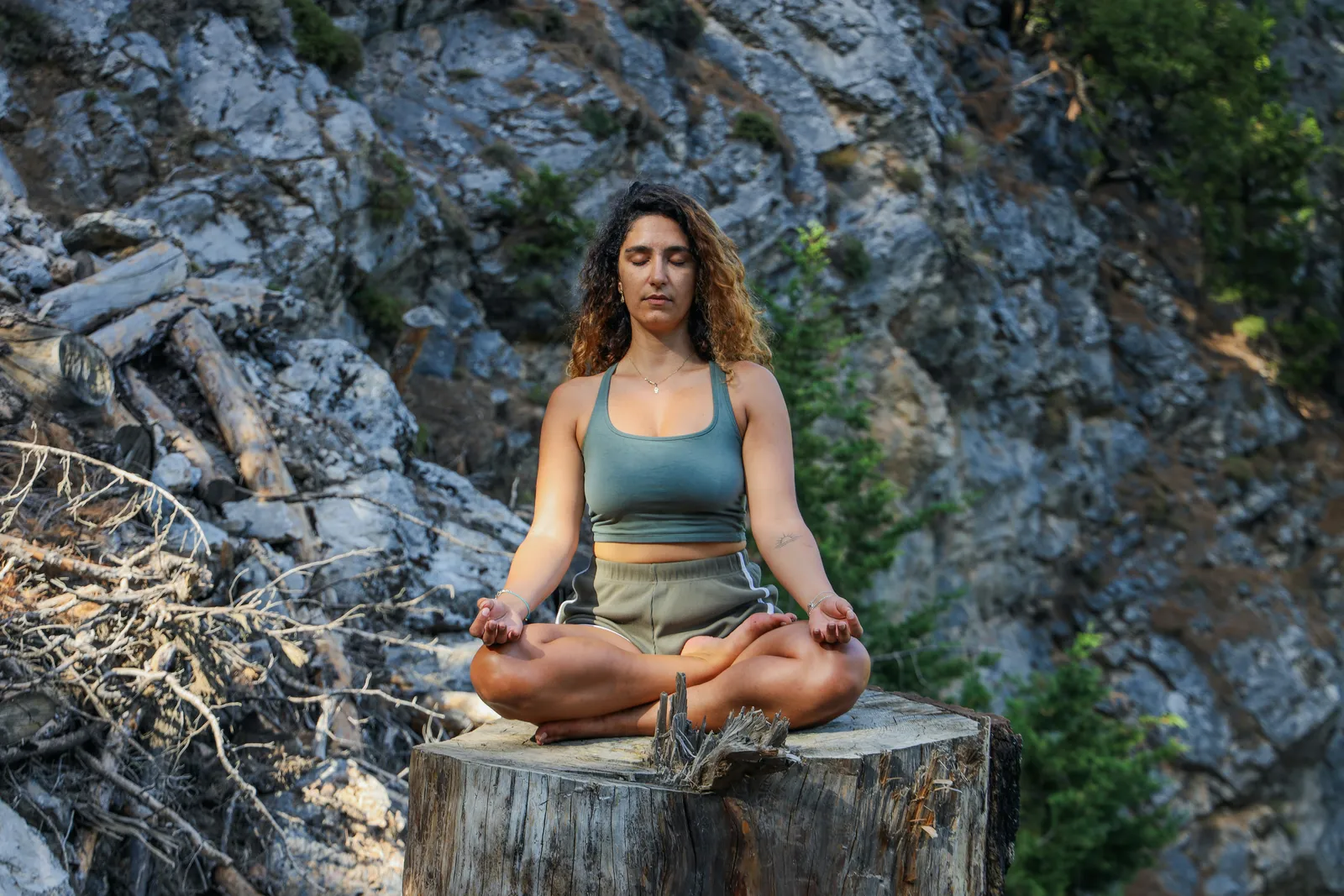
A studio class gives you 60 to 90 minutes of yoga per week. You commute to it, change, practice, change back, commute home. The rest of your day continues unchanged: the work, the decisions, the screen time, the diet you have not reconsidered. A weekly class is a good addition to a normal routine. It is not a structural change to how that routine works.
A retreat removes the commute, the decisions, and the daily friction. For three to seven days, every variable in your environment, including meals, sleep schedule, and community, is organized to support the practice. That is the structural difference. The yoga is available in a studio. The removal of daily friction is not.
The first difference is volume. Two to three sessions per day instead of one per week. Physical changes that might take months in a weekly class can begin to happen inside a single week of daily practice.
The second is environment design. No commute means no transition cost. You wake up inside the practice context. The setting, the schedule, the quiet before breakfast, all of it forms one container. This is not incidental to the outcome; it is the mechanism.
The third is less expected: the social texture. Retreats generate fast, genuine connection among strangers with a shared goal. You are not your usual social role here. Many returnees describe the community as one of the more surprising elements of their first program.
What happens at a yoga retreat: a typical day
The exact schedule varies by format, but most yoga retreats follow a similar arc:
6:30 a.m. Wake. Shorter formats may start at 7:00.
7:00 a.m. Morning yoga, 60 to 75 minutes, usually the most physically active session of the day. Vinyasa flows, Hatha sequences, or sun salutations.
8:30 a.m. Communal breakfast. Plant-forward, usually vegetarian or vegan. Served at a shared table.
10:00 a.m. Optional workshop or free time. Breathwork, yoga philosophy, journaling, a guided walk, or simply rest. Not all programs fill this block.
12:30 p.m. Lunch.
2:00 p.m. Free time. Personal practice, a swim, a walk, reading. Integration time, not scheduling gaps.
3:30 p.m. Afternoon session, 45 to 60 minutes, slower. Yin yoga, Restorative, or guided meditation.
6:30 p.m. Dinner.
8:00 p.m. Evening meditation or group circle, 20 to 30 minutes.
9:00 p.m. Wind-down. Most programs have an informal lights-out culture around 10.
The free time blocks are not filler. They are how practice integrates. Participants who expect a packed itinerary sometimes find themselves restless in the first afternoon. By day three, most stop looking at their phones during those windows.
For a full hour-by-hour breakdown across different formats and lengths, see the yoga retreat itinerary guide.
Types of yoga retreats: which format suits you?
Programs split along four dimensions: yoga style, audience, setting, and duration. Understanding the distinctions makes it easier to filter toward what you are actually looking for.
By yoga style
Hatha is foundational, deliberate, and accessible for all levels. It is the best starting point for first-timers. Vinyasa is a dynamic flow linking breath to movement, more physically demanding. Yin holds postures for three to five minutes, targeting connective tissue, and is deeply restorative. Kundalini combines breathwork, movement, mantra, and philosophy; it is more spiritually framed than other styles. A silent yoga retreat applies a silence rule to the whole program, combining yoga and meditation in a more contemplative format.
By audience
Solo travelers make up the majority at most retreats. Couples yoga retreats integrate partner yoga and shared practice elements. All-women formats are common. Beginners-only programs exist at most major retreat regions.
By setting
Beach yoga retreats offer outdoor practice by the ocean, typically in tropical or Mediterranean locations. Mountain and forest centers have colder mornings and a more austere setting. Ashram-format programs lean toward a simpler residential setup and a more traditional schedule. Cold-climate options, including winter yoga retreats, run in mountain regions with indoor warmth as the counterpoint to the outdoor environment.
By duration
Weekend formats (two to three days) are the most accessible entry point for a first experience. Week-long programs (five to seven days) are where real rhythm forms. Extended formats (10 to 21 days) are typically teacher training or deep-immersion programs that require a higher level of prior practice.
This article covers definitions and formats. For the full decision guide on choosing the right type for your level, goals, and budget, see yoga retreats for beginners.
The benefits of a yoga retreat
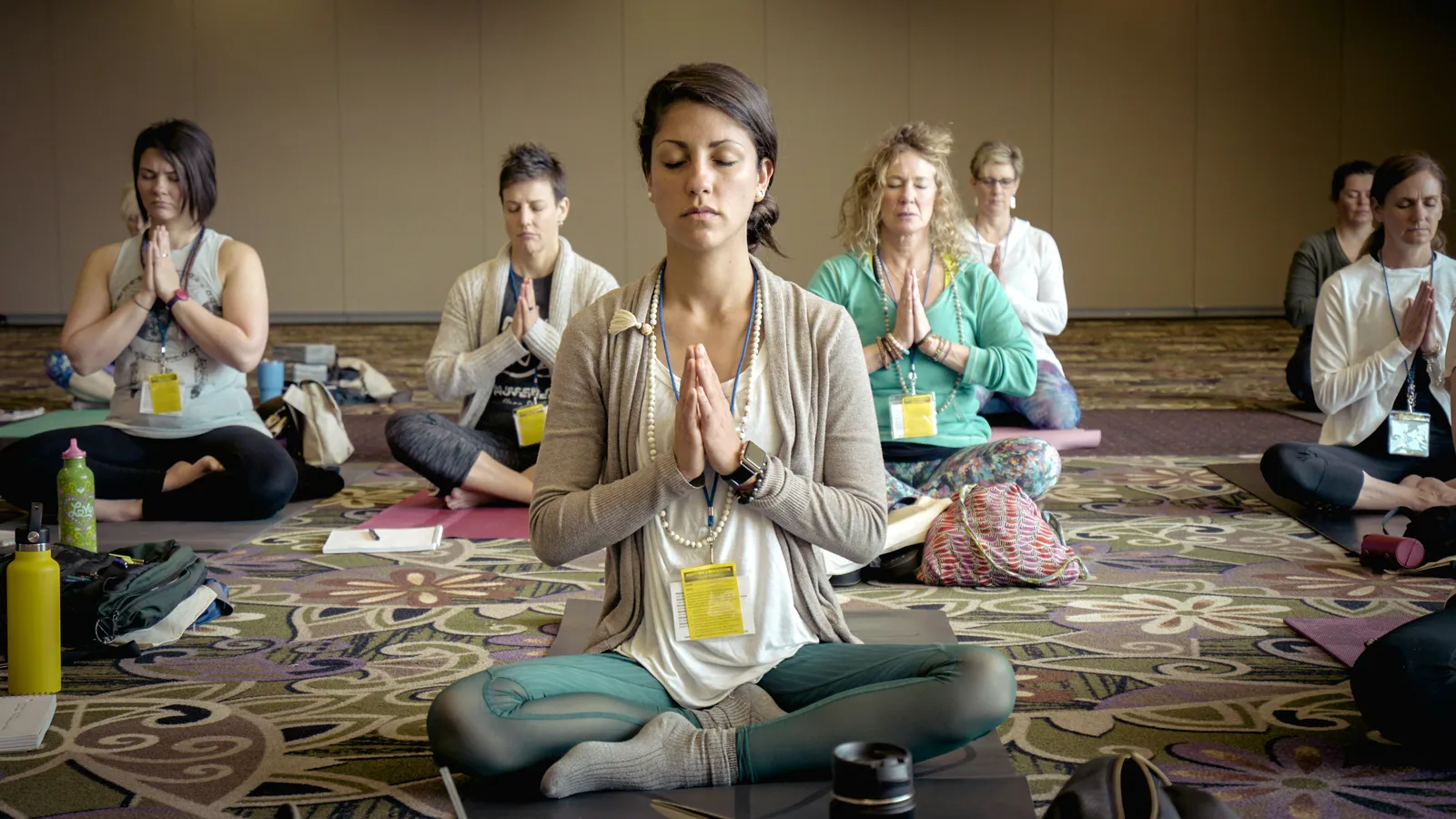
The benefits come from the combination of concentrated practice, environmental change, and sustained removal from daily noise, not from any single one of those elements.
On the physical side: daily practice across multiple sessions accelerates gains in flexibility, strength, and body awareness compared to weekly classes. Sleep quality typically improves from the first night, and plant-based communal meals reset the body's baseline in a way that a single-day diet change cannot.
The mental shift is better documented. A review published by the National Institutes of Health, Residential Meditation Retreats: A Promise of Sustainable Well-Being?, found that "meditation retreats confer substantial and enduring benefits that exceed those of vacations or outpatient mindfulness programs." The residential container is the variable: brief holidays do not produce the same carry-over effect because they do not remove the decision-making load that generates the stress in the first place.
A third category of benefit is harder to anticipate: the sense of reset you carry home. Participants consistently note that the quiet, the structure, and the distance from their usual context give them a clearer read on what they want to change, even when the retreat itself makes no therapeutic claim.
Ready to find a program? Browse yoga retreats at retreat-vacation.com and filter by style, duration, and price band.
How to choose a yoga retreat: the short version
Three filters narrow the field quickly:
Match style to your goal. Stress reduction and rest: Yin or Hatha. Physical deepening: Vinyasa. Quiet and contemplation: silent yoga format. First time and unsure: Hatha is the most broadly accessible entry point.
Match duration to your tolerance. A first retreat of three to four days is a lower-risk test of the format than committing to two weeks. If the format works, book longer next time.
Match price to budget. Budget programs (under $1,000 per week) exist at ashrams and developing-market centers. Mid-range ($1,000 to $2,500) covers most established programs in North America, Europe, and tropical destinations. For a full price breakdown by tier and region, see the yoga retreat cost guide. For the broader affordable category, affordable retreat options covers the full price landscape.
For the complete first-timer framework covering yoga style, group size, food, accommodation type, and how to evaluate a specific program, see yoga retreats for beginners. For a practical pre-trip checklist, see what to pack for a yoga retreat.
Frequently asked questions
What is the purpose of a yoga retreat?
A yoga retreat creates space for sustained practice away from the daily context that makes sustained practice difficult. The residential setting, the structured schedule, and the communal environment all serve that same goal. People come for different reasons: physical deepening, stress relief, a break from routine, or all three at once.
What happens at a yoga retreat?
Most programs run two to three yoga sessions per day, morning and afternoon, with communal meals and optional workshops in between. The exact schedule depends on format and length. For a detailed breakdown by day and format type, see the yoga retreat itinerary guide.
What is the difference between a yoga retreat and a yoga class?
A yoga class is 60 to 90 minutes in a studio you commute to. A retreat is a multi-day residential experience where the schedule, environment, meals, and community are all organized to support the practice. The structural difference, not the yoga itself, is what makes the outcomes different.
Can beginners go on a yoga retreat?
Yes. Most yoga retreats welcome all levels, and many explicitly cater to first-timers. If you are new to yoga, look for Hatha or all-levels formats and avoid advanced Vinyasa or Kundalini intensives as your first experience. The yoga retreats for beginners guide covers what to look for and how to evaluate a specific program.
How long is a typical yoga retreat?
It depends on what you are looking for. A weekend (two to three days) is the lowest-commitment way to test the format. Five to seven days is the most common length for established programs, and where real practice rhythm tends to form. Programs of 10 to 21 days are usually teacher training or certification tracks that assume ongoing prior practice.
How much does a yoga retreat cost?
Costs range from a few hundred dollars per week at ashrams in India or Southeast Asia to several thousand at premium properties in Europe or North America. Most established programs land between $1,000 and $2,500 per week, all-inclusive. For a full breakdown by tier, region, and format, see the yoga retreat cost guide.
What is the difference between a yoga retreat and a wellness retreat?
A yoga retreat is centered on yoga practice as the primary daily activity. A wellness retreat is a broader term that may include yoga but can equally center on spa treatments, nutrition programs, detox protocols, or mindfulness without a yoga component. The overlap exists: many wellness retreats include yoga classes. The distinction is whether yoga is the organizing structure or one option among several. For a full comparison, see our guide on what is a wellness retreat.
Plan your next yoga retreat
Browse over 600 curated yoga retreats at retreat-vacation.com. Filter by style (Hatha, Vinyasa, Yin, silent), duration, region, and price band to find the format that fits your goals and schedule. Programs range from weekend formats for first-timers to week-long and extended immersions. Fall 2026 shoulder-season slots at the most-reviewed programs are booking out now, so filter by your travel dates first if your calendar is fixed.