
Silent Retreats in Germany

A silent retreat in Germany can be a Zen sesshin in the Allgäu mountains, a contemplative monastic week in the Eifel, a Vipassana week in Brandenburg or a silent weekend on the Baltic. 38 active programs, five to ten days as the typical duration, in small groups, with a clear daily structure, guided practice and the discipline of letting go of speaking for the length of the stay.
9 curated retreats 5.0 (12 reviews) from €190

New retreats straight to your inbox?

So you always stay up to date.

We take data protection very seriously. Further information

What sets a silent retreat apart from a yoga retreat

What sets a silent retreat apart from a yoga retreat

A silent retreat is not a yoga retreat without talking. The difference runs deeper. In a silent retreat, silence is the central practice, not a side condition. You spend three, five or ten days without small talk, without reading, without a smartphone, often without eye contact at the table, sometimes without writing either. What remains is the meeting with your own thoughts, the breath, the body and an attention that rarely settles in everyday life. The second difference is the daily structure. While a yoga retreat combines two practice sessions with plenty of free time, a silent retreat often has five to seven practice blocks per day that carry the silence. These can be sitting periods, walking meditation, mindful meals, short work blocks like gardening or chopping vegetables. There are barely any classical breaks, because the silence itself is the break from speaking. The third difference is the effect. Most silent practitioners report two phases. In the first one to three days the inner noise grows loud: lists, plans, memories, worries push to the surface. From day three or four onwards, a silence arrives that cannot be forced; it sets in once attention has not been fed by language for a while. It is this second phase that motivates people to do a silent retreat — not for the idea of silence, but for the experience of an attention rarely glimpsed in daily life.
Traditions that carry the German silent offering

Traditions that carry the German silent offering

Three lines carry the German silent offering. The Christian contemplative tradition stretches from the Benedictine monasteries in the Eifel and Sauerland to the retreat houses of the Jesuits and Franciscans. Silence is practised here as shared discipline, often with brief scriptural readings, the canonical hours and a companion talk every one or two days. The houses have been in this practice for centuries; the frame is Christian but open to non-religious guests. The second line is Zen, mainly from the Soto school. A sesshin, the Japanese word for an intensive practice period, usually lasts five to seven days. You sit facing a wall, observe the breath or a koan question and stand up between sitting blocks for walking meditation. The order is strict, the silence total, the teacher gives only one or two short talks a day and offers an individual interview, called dokusan, where you can pose a question or articulate an experience. The third line is Vipassana and secular mindfulness. Vipassana, a method from the Theravada tradition, works with precise observation of breath and bodily sensation. The Goenka line is the best known here and offers ten-day silent retreats with a clearly defined program. Secular silent weeks, often as MBSR follow-up retreats, are the most everyday form, with the advantage that no religious or Buddhist frame is needed to carry the practice. Which tradition fits you depends less on the method than on the desired frame.
Daily rhythm and what to expect

Daily rhythm and what to expect

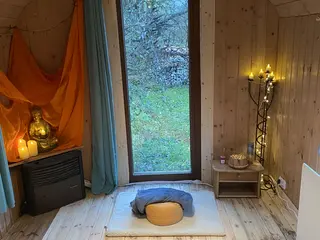
The day in a silent retreat follows a fixed rhythm, similarly built across most lines. Wake-up at five-thirty or six, often with a bell. A first sitting period before breakfast. Breakfast at seven or seven-thirty, in silence, often without eye contact. The morning brings two to three sitting blocks of thirty to forty-five minutes each, with walking meditation in between, slowly across courtyard, garden or forest. Lunch is simple and vegetarian at noon, followed by a longer midday rest. The afternoon brings one to two more sitting blocks, plus in most programs a short talk or teaching that deepens an aspect of the practice. In monastic houses these can be scriptural readings, in Zen houses a teisho by the teacher, in Vipassana houses a brief instruction for the next phase. Dinner is early and light, then a final sitting block, often by candlelight; by nine or ten the house is quiet. What to expect is different from a yoga or wellness retreat. The smartphone stays off, often handed in at reception on arrival. Reading is usually not on the program, in some lines even forbidden, because reading pulls attention out of silence. Writing is handled differently; some houses allow a short journal, others ask for writing to be left aside as well. You will not starve and you will not disappear, but you will go through phases where silence is hard and phases where it has its own ease. Both belong to it.
Regions, duration, prices and preparation

Regions, duration, prices and preparation

Silent retreats are distributed differently in Germany from other retreat types. Bavaria leads with the monastic houses around Würzburg and Niederalteich and the Zen houses in the Chiemgau and Allgäu. NRW follows with the Eifel, Sauerland and Niederrhein, a high density of Benedictine and Franciscan monasteries. Brandenburg, Mecklenburg-Vorpommern and Schleswig-Holstein offer Vipassana, MBSR and secular silent weeks, often in old farmsteads or seminar houses, close to Berlin or Hamburg. Baden-Württemberg and Hesse round out the picture with smaller houses in the Black Forest and the Taunus. The duration depends on the tradition. Christian monastic weeks usually run three to seven days, Zen sesshins five to seven days, classic Goenka Vipassana retreats are strictly ten days. Weekend silent formats of two to three days work as a good taster but do not replace longer practice. For a first attempt, a three- to five-day monastery week or an MBSR silent weekend often serves better than a ten-day Vipassana week, which assumes prior experience. Prices are moderate. Across all 38 active programs, the average is €706. Weekend formats start at €190; a five- to seven-day monastery week or sesshin typically sits between 350 and 800 euro including full board and guidance; longer formats with single rooms can reach €2.999. Many houses, especially in the Buddhist and contemplative Christian traditions, work with donation or self-assessment models; a Dana offering to the teachers is customary. Preparation: a week in advance, reduce speaking, scale down smartphone use, ideally sit for about ten minutes a day, so the first days are not spent on cushion pain instead of practice.

Frequently asked questions

Why is Germany a good place for a silent retreat?
Germany offers numerous quiet, nature-close retreats – from secluded seminar houses in the Bavarian Forest to silent centers on the Baltic Sea. The well-developed retreat infrastructure and short travel distances make Germany ideal for a time of silence. At Retreat Vacation you'll find 38 silent retreats in Germany.
What does noble silence actually mean?
Noble silence, a term from the Buddhist tradition, goes beyond merely being quiet. It means not speaking, but also not seeking eye contact, not reading, not using a smartphone and in many houses not writing either. The goal is not to bind attention with language, images or interpersonal signals but to leave it with breath, sensation and present experience. In Christian monastic houses this is often called silence of attention or recollection, in Zen houses mokuyo, in Vipassana houses noble silence. The exact practice varies: some houses allow short factual exchanges with the housekeeping, others insist on complete silence except in teachings. The ground rules are explained clearly at the start.
How much does a silent retreat in Germany cost?
Silent retreat costs in Germany range from €190 to €2.999, with an average of €706. The price usually includes accommodation in single rooms, vegetarian meals, and course instruction. Some Vipassana centers operate on a donation basis.
How much does a silent retreat in Germany cost?
Across all 38 active programs, the average is €706, with a range from €190 for weekend formats to €2.999 for longer monastic stays or ten-day Vipassana retreats. A five- to seven-day monastery week or sesshin with a double room, vegetarian full board and guidance typically sits between 350 and 800 euro. Many houses, especially in the Buddhist and contemplative Christian traditions, work with donation or self-assessment models; in the Goenka line, ten-day retreats run entirely on a Dana basis without a set price. Travel and insurance are not included.
When is the best time for a silent retreat in Germany?
Silent retreats take place year-round. Many participants appreciate autumn and winter for the natural quiet and darkness that support inner reflection. In spring and summer, you'll benefit from walking meditations in nature and long daylight hours.
How long should my first silent retreat be?
For a first attempt, a weekend silent retreat of two to three days or a three- to five-day monastery week works well. You get a feel for sitting positions, daily structure and silence without running into the sesshin discipline that is hard to carry without experience. Five- to seven-day sesshins and monastery weeks are a good second step. Ten-day Vipassana retreats are demanding and not recommended as a first-time experience, because the full silence, long sitting blocks and strict daily order ask for prior experience. After every silent retreat, a transition day before returning to everyday life is advisable.
Where do silent retreats take place in Germany?
Popular locations include the Allgäu, the Black Forest, Lüneburg Heath, Brandenburg, and the Baltic Sea coast. Many centers are deliberately located in secluded natural settings to ensure an atmosphere of silence. Some monasteries in Bavaria and North Rhine-Westphalia also offer silent formats.
Which tradition fits me?
Those looking for a religiously carried frame and familiar or open to Christian language are well placed in the Benedictine or Franciscan-shaped monastic houses in the Eifel, Sauerland and Bavaria. Those wanting a clear, methodical practice with longer sittings find a sharp profile in the Zen line, especially Soto, with sesshin weeks. Vipassana fits anyone who wants to engage consistently with the observation of breath and sensation; the Goenka line is particularly strictly structured. MBSR silent weekends are the lowest-threshold, secular variant, good for those trying the format for the first time or wanting to practise without a religious frame.
What types of silent retreats are available in Germany?
Offerings range from classic Vipassana courses (10 days) and Zen sesshins to shorter mindfulness retreats with silent components. Some formats combine silence with gentle yoga or walking meditation. Weekend formats with guided silence are particularly suitable for beginners.
What if I cannot bear the silence?
The first one to three days are often the hardest. Inner noise grows loud, thoughts circle, sometimes restlessness or sadness surfaces. That is normal and belongs to the practice. The houses are prepared for this and most programs offer an individual conversation with the teacher in which you can discuss what is coming up without breaking the silence entirely. If silence becomes truly unbearable, you can leave at any time; nobody is held back. In practice this is rare, because from day three or four a noticeable settling sets in. A small help: in the days before the retreat, reduce speaking and scale down smartphone use so the jump is not too large.
Are silent retreats in Germany suitable for beginners?
Yes, many organizers in Germany offer special beginner formats – often as weekend retreats with 2–3 days of silence and guided instruction. Teachers provide clear structures, so you can participate well even without meditation or silence experience.
What is typically included in the price of a silent retreat?
The standard price of a German silent retreat usually covers accommodation in a double or shared room, vegetarian full board and guided practice. Teachings and one-on-one interviews with the teacher are part of most programs. What can come on top: single-room supplements; in the Buddhist and contemplative Christian traditions, a Dana offering to the teacher; in some houses, a small material fee for reading texts or sitting cushions. Travel and insurance are not included. Among the 38 programs, the range from €190 to €2.999 is wide; a detailed comparison before booking pays off.
What should I bring to a silent retreat in Germany?
Pack comfortable, inconspicuous clothing in layers (temperatures can vary in seminar houses), warm socks, a meditation cushion if you have one, and a journal. Electronics are usually handed in. Many centers provide blankets and meditation supplies.
Can I leave the grounds during a silent retreat in Germany?
That depends on the specific format. In stricter Vipassana courses, you typically stay on the premises. In freer formats, walks in nature are often encouraged and part of the program. House rules are clearly communicated at the beginning of the retreat.