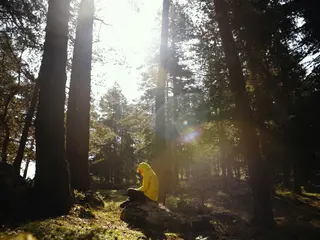
Silent Retreats in Austria

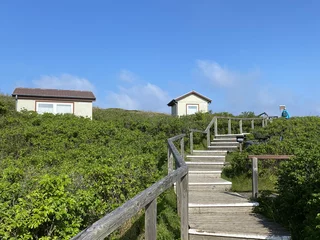
Silent retreats in Austria mean: mountains as a sounding board, small houses as a protected space, clear guidance as an anchor. 14 programs between the Mühlviertel, Tyrol, Salzburg and Styria, with prices from €260 to €2.960 euros. Three to ten days is the typical duration. Most houses offer Vipassana, Zen or Christian contemplative lines, often combined with hiking and simple vegetarian catering.

Discover Our Most Popular Offer

View all offers

New retreats straight to your inbox?

So you always stay up to date.

We take data protection very seriously. Further information

What characterises a silent retreat in Austria

What characterises a silent retreat in Austria

Silent retreats in Austria have a different feel from those in Germany or southern Europe. Three particularities shape the picture. The first is geographic clarity. Almost all houses sit so that mountain or forest dominates the surroundings. Anyone coming from a high-frequency working life feels it on arrival: the noise backdrop falls away, movement slows, the inner follows. The second particularity is group size. Austrian silent retreats typically work with eight to sixteen participants, significantly smaller than the large Vipassana centres in Germany or Asia. This gives guidance room to notice individual participants and protects against the pull that can arise in larger groups. The third particularity is tradition. Austrian houses less often belong to a single school but work in a mixed form. Vipassana (a Buddhist mindfulness practice over 2500 years old), Zen elements, Christian contemplative silent exercises and secular mindfulness practice in the MBSR line (Mindfulness-Based Stress Reduction, the program developed by Jon Kabat-Zinn) are combined more often in Austria than in Germany. This suits guests who do not want to enter a religious system but want to benefit from a centuries-old tradition.
How a typical silent day in Austria unfolds

How a typical silent day in Austria unfolds

The day in an Austrian silent retreat is clearly structured. Early start, often between six and seven, with a first sitting meditation of thirty to forty-five minutes. Then breakfast in silence, with simple, mostly vegetarian food. The morning brings two further meditation units, often alternating between sitting and slow walking meditation. A short outdoor walking phase belongs to many houses. Lunch in silence, then a longer break. This midday phase is important: it prevents the mind from tiring too early and gives room for movement in nature or rest in the room. The afternoon brings two to three further meditation units, sometimes with a short teacher impulse (Dharma talk in Buddhist language, Conferentia in Christian), which is the only spoken phase of the day. Dinner in silence, a final meditation, then nightly rest usually around nine or ten in the evening. What surprises most participants is not the silence itself but the effect of structural clarity. Anyone spending a week this way comes back different: calmer, clearer, with a different relationship to their own thought patterns. The effect often carries on for several weeks.
Which traditions Austria's houses cultivate

Which traditions Austria's houses cultivate

Three traditions carry the Austrian silent offering. The first is the Vipassana line from the Theravada Buddhist tradition. This form works with Anapana (conscious breath observation) and body scan (systematic perception of body sensations). Teachers are usually trained in a line such as that of S. N. Goenka or Joseph Goldstein and Sharon Salzberg. Programs last between four and ten days. The second tradition is Zen, in the line of Soto or Rinzai Zen. This form works more strongly with sitting (Zazen) as the sole practice and with physical uprightness as posture. Sesshin weeks, intensive sitting enclosure, typically last five to seven days. Especially in Lower Austria and Tyrol there are small but deeply rooted Zen houses. The third tradition is the Christian contemplative line, often in monasteries or in houses with Benedictine or Ignatian shaping. This form works with silent exercises, spiritual reading, and partly with the Jesus prayer as a breath exercise. This line often connects with spiritual one-to-one guidance, which is rarer in the Buddhist lines. Alongside these three main lines there are secular mindfulness weeks in the MBSR line, often without any religious reference, for guests wanting to learn the tool of silence without tradition.
Who a silent retreat in Austria fits

Who a silent retreat in Austria fits

A silent retreat in Austria fits particularly well for three profiles. The first is people with high professional speaking and thinking loads: executives, consultants, therapists, journalists, doctors. Here silence works like a conscious pause from the main work tool. Three to five days are usually enough to bring noticeable clarity home. The second profile is practitioners with an existing mindfulness or meditation practice who want to go a step further. Here longer programs of seven to ten days make sense because the effect of silence usually only takes hold from day four. For this group, Vipassana or Zen houses with a clear tradition are the right choice. The third profile is people in an inner transition phase that is hard to sort in normal surroundings: after a loss, after a separation, before a major decision. Here silence is less a practice than a protected space. Christian contemplative programs or MBSR weeks with additional guidance often fit this group better than pure Vipassana courses. Anyone with acute psychological symptoms such as severe depression or anxiety should speak with a therapist before booking; a silent retreat does not replace therapy and can even strain in acute phases.

Frequently asked questions

How long should my first silent retreat in Austria last?
For a first silent retreat, three to five days is a good length. That gives two full days in the silent structure without the first difficulties of silence becoming overwhelming. Anyone with prior meditation experience benefits from seven to ten days because the depth of practice usually only takes hold from day four. Longer Vipassana courses like the classical ten-day Goenka course are demanding and not the entry choice. A weekend from Friday evening to Sunday lunch is possible too but gives only a short foretaste.
How much does a silent retreat in Austria cost?
Prices currently range from €260 to €2.960 euros, with an average of around €837 euros. Vipassana courses in the Goenka line are often on a donation basis and thus nominally free; a donation at the end of the course is customary. Other Vipassana, Zen and MBSR programs work with fixed prices that include accommodation, catering and guidance. Christian contemplative programs in monasteries usually sit in the lower price range because no profit margin is included. Longer ten-day programs sit in the upper range because they carry guidance and catering throughout.
Do I need meditation experience for a silent retreat?
No, for many programs no prior experience is required. Vipassana introductory courses, MBSR weeks and Christian contemplative silent weekends are built so that the first steps are guided. Important is willingness to keep the structure: fixed sitting times, silence outside teacher impulses, no phone or reading. Anyone who brings a daily sitting practice of at least ten minutes will enter the longer sitting phases more easily. However, ten-day Goenka courses require participants not to mix other meditation practices in parallel.
Which Austrian state suits my first silent retreat?
For a first silent retreat, the Mühlviertel in Upper Austria is often the most accessible choice. Houses are small, travel from Linz, Passau or Vienna is short, the landscape gentle. Tyrol fits a landscape-wise more intense variant with mountain views and clear alpine air but is somewhat more suited to practitioners with prior experience. Lower Austria with the area around the Vienna Woods is the choice for anyone travelling from Vienna and seeking short distances. Salzburg combines both worlds: small houses in the Pinzgau or Salzburger Land, well reachable by train from Munich or from the city of Salzburg.
What happens if silence becomes too much for me?
Most Austrian houses have a clear protocol for such moments. Every participant can request a conversation with the companion at any time, without stigma. In intensive programs such as Vipassana or Sesshin weeks, a short speaking phase with the teacher is usually scheduled daily. Anyone noticing that tiredness, physical pain or inner tension is becoming too much can adjust the program rhythm, for example replace a sitting unit with walking meditation. The houses work respectfully with individual limits; an early departure is always possible and not seen as failure.
What do I bring to a silent retreat?
The kit is deliberately small. Comfortable, plain clothing in layers (meditation rooms are often cooler than the living room), warm socks or slippers, your own blanket or scarf for longer sitting phases. Sturdy shoes and a weatherproof jacket for outdoor walking phases. Toiletries and personal medication. What you leave behind: books, notebooks with your own texts, mobile phones (some houses take them into safekeeping on arrival, others just ask for abstention), and elaborate, attention-getting outfits. Some houses provide sitting cushions and blankets; for Vipassana courses your own cushion is often recommended. The program notes usually give clear instructions on this.