Travel, season, daily rhythm and price
Travel to Austria is well solved by rail and airport. Vienna, Salzburg, Innsbruck, Linz and Klagenfurt are the five main anchors. From Germany, the ICE runs directly to Salzburg and Vienna, the night train to Vienna is a comfortable option for long trips. Within the country, rail coverage is dense; Wörthersee, Mühlviertel and Salzkammergut are all directly reachable by ÖBB. Many houses pick up from the nearest station. A car on site is not necessary, because yoga houses almost always sit within walking distance of trails or the nearest lake.
Seasons are clear. May through October is high season, with June to September as the core. The weather is mild enough for outdoor practice, hikes without snow and longer days. Shoulder months April and November are calmer, often cheaper, but cooler and more changeable. In winter, clearly framed formats continue, such as silent Christmas, year-end yoga or January yoga weeks as a reset; with more indoor practice and a sound bowl or sauna focus. The lake houses in the Salzkammergut and on the Wörthersee are strongest in summer, as are the mountain houses in Tyrol and Vorarlberg.
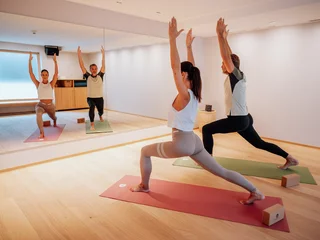
A typical day starts at six-thirty or seven with the first yoga session on an empty stomach, often Hatha or Vinyasa. Vegetarian breakfast at eight or eight-thirty. The morning brings modules like breathwork, sound bowls or a short meditation, but in many programs also a free morning. Lunch at twelve-thirty, then a long break with the option to hike or swim. Second yoga session in the late afternoon, often Yin or a quiet hybrid. Dinner at six-thirty or seven, vegetarian and light. Across all 114 active programs, the average is €6.551; week formats typically sit between 700 and 1,400 euro with full board. Weekend yoga starts at €220; premium programs with hotel comfort, spa and medical support can reach €525.000.