Ayurveda Kur February 2026

Ayurveda Kur is a great change from a regular vacation.
Here are great offers that take place February 2026.
9 curated retreats from €496

New retreats straight to your inbox?

So you always stay up to date.

We take data protection very seriously. Further information
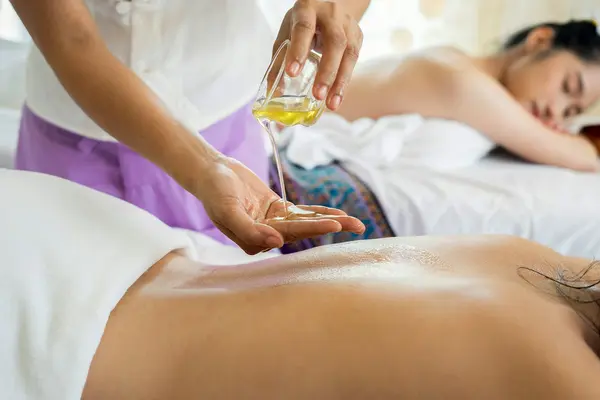
What an Ayurveda cure looks like in retreat format

What an Ayurveda cure looks like in retreat format

Ayurveda translates from Sanskrit as the science of life and is a health system practised in India for more than two thousand years. Its central concept is the three doshas: Vata, Pitta and Kapha. Doshas are bioenergies that combine in different proportions in every person and govern digestion, metabolism, sleep and emotional balance. An Ayurveda cure works on bringing this balance back when daily life has shifted it out. The retreat format with us differs from a classic clinical stay. Instead of two or three weeks of medically supervised cleansing, most programmes run between three and eight days, six days on average. The focus sits on regeneration and balance rather than on a doctor-prescribed detox plan. Yoga and meditation are part of almost every programme, paired with daily Ayurvedic treatments such as warm-oil massage, food cooked according to the guest's constitutional type, and Pranayama: guided breathing exercises in the morning. Most guests booking an Ayurveda cure are not looking for a multi-week diagnosis and treatment plan. The more common need is recovery of the nervous system, time away from a tightly scheduled daily life, and an entry point into routines that can carry on after the retreat. The programmes here are designed exactly for that. They deliver the felt effect of a cure inside a bookable holiday window, from €130 up to €3.290.
From early yoga to a light dinner: how a day in an Ayurveda retreat is structured

From early yoga to a light dinner: how a day in an Ayurveda retreat is structured

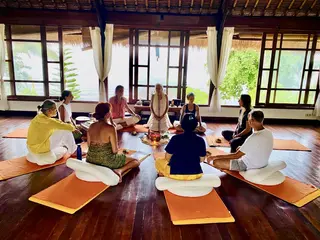
The daily structure across most programmes shares a common shape because it is drawn from the Ayurvedic theory of the day. Wake-up is early, often between six and seven. The morning starts with a yoga session, usually gentle Hatha or Yin Yoga, combined with Pranayama. Pranayama refers to the conscious breathing techniques from the yoga tradition that regulate the nervous system and bring circulation up without straining the body. After breakfast comes the treatment block. A single Ayurvedic application typically takes 60 to 90 minutes and includes warm-oil massage, a forehead-pour treatment or a herbal-poultice massage, depending on the programme. The constitutional type is usually determined in a consultation at the beginning of the stay, so the treatments can be tuned to it. In longer programmes, two daily applications add up across the week. Across nearly every programme, the day follows this rhythm with small shifts house by house. Lunch is cooked in Ayurvedic style. That means warm, vegetarian, easy on digestion, with the six tastes that the Ayurvedic dietary tradition treats as a complete meal. The afternoon leaves room for rest, walks or a second yoga session. The evening typically closes with meditation and a light meal. The effect of the programme builds through this repetition rather than through single highlights.
Oil, yoga, food: the treatments at the core of every cure

Oil, yoga, food: the treatments at the core of every cure

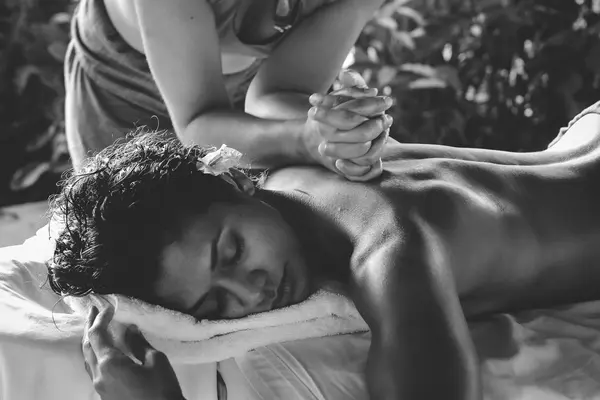
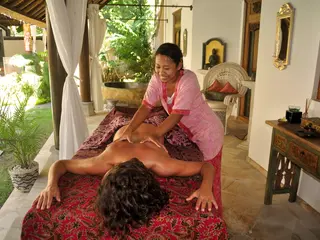
The programmes with us consistently combine yoga and Ayurveda: pure clinical cures without a yoga element are the exception here. This mix is the actual character of the offer and the reason most guests find what they came for. The centre of the Ayurvedic applications is the warm-oil massage. It releases tension, calms the nervous system and supports digestion. In nearly every programme, the oil massage is a fixed daily application. It is regularly complemented by Ayurvedic food included in full board, herbal teas and individual recommendations from the opening consultation. On the yoga side, the calmer styles dominate, especially Yin Yoga and gentle Hatha Yoga, because they match the regenerative aim of the cure. Pranayama breathing exercises accompany the asana practice in the morning. For guests looking for a more intensive classical cure, a small number of programmes include Panchakarma elements, for example in Goa. Panchakarma is the classical Ayurvedic cleansing therapy that runs over several days as a staged procedure, with us it appears rarely and is usually embedded in a retreat rather than offered in a clinical setting. Anyone targeting it specifically can find the few corresponding listings through the detailed descriptions. For most guests, the combination of daily oil treatments, yoga, Ayurvedic food and meditation already covers what they understand by a cure, and it unfolds its effect in the six-day window.
Mallorca, Bali, Goa, DACH: which place fits which need

Mallorca, Bali, Goa, DACH: which place fits which need

The choice of location shapes the experience more than the choice of method, because climate and travel time set the character of the cure. Three settings appear most often in our selection. Most programmes sit on Mallorca and in the DACH region, complemented by a handful of Bali and India addresses. Mallorca is the Mediterranean centre. Several houses in the island's interior run one- to two-week programmes with two daily treatments, Ayurvedic full board and a specific focus on topics such as women's health, perimenopause or nervous-system regulation. The short flight from Germany makes the format workable even in six-day slots. Bali attracts guests who trade longer travel for tropical climate and deeper cultural grounding. The Bali programmes frequently combine Ayurveda with Balinese ceremonies, breathwork and a strong yoga focus: a programme for travellers who treat the retreat as a journey. India itself, especially Goa and Kerala, has fewer entries in our selection but those that exist lean more strongly traditional, with Ayurvedic resorts that run year-round. For short-notice bookings and anyone who prefers not to fly, programmes in the German-speaking region cover the same ground: Bavaria and the Allgäu with houses in Bad Wörishofen and the Chiemgau, Brandenburg with week-long programmes around the Schorfheide and Strausberg, Austria in Upper Austria's Mühlviertel. The journey is short, the format compact. Three to seven days are enough to feel the effect of a cure without giving up the entire vacation for it.

Frequently asked questions

What is an Ayurveda Yoga retreat?
An Ayurveda Yoga retreat combines the ancient Indian healing tradition of Ayurveda with the practice of yoga. The focus is on determining your individual dosha type (Vata, Pitta, or Kapha), tailored yoga sessions, Ayurvedic nutrition, and nurturing treatments such as oil massages, Shirodhara (warm oil forehead pouring), and herbal therapies. The goal is to restore balance to body, mind, and spirit and to activate your natural self-healing powers. At Retreat Urlaub, you'll currently find 38 Ayurveda Yoga retreats.
What is an Ayurveda cure and how does it differ from a yoga retreat?
An Ayurveda cure is a multi-day application of the Indian health system Ayurveda, aimed at bringing the body and nervous system back into balance. At its core sit daily Ayurvedic treatments such as warm-oil massage, food adapted to the guest's constitutional type and a clearly structured daily rhythm. The classical version is a two- to three-week clinical therapy, often a Panchakarma cleansing programme under medical supervision. In retreat format, the cure runs more compactly, usually three to eight days, and combines the Ayurvedic treatments with yoga, meditation and Pranayama breathing exercises. A classical yoga retreat, by contrast, places the yoga practice at the centre and adds Ayurvedic elements only occasionally. If you are looking for a classical Ayurveda cure, make sure that daily Ayurvedic treatments and an opening constitutional consultation are fixed parts of the programme, not just bookable extras. In our selection of 38 programmes, this is the case for the majority.
Who is an Ayurveda Yoga retreat suitable for?
Ayurveda Yoga retreats are suitable for anyone seeking a holistic break – whether you're a beginner or an experienced yogi. They are especially beneficial for people suffering from stress, exhaustion, digestive issues, or sleep disorders. If you're looking to sustainably change your lifestyle, detox, or simply relax deeply, an Ayurveda Yoga retreat is the perfect choice. Prior experience in yoga or Ayurveda is usually not required.
Which treatments are part of an Ayurveda cure?
At the centre of an Ayurveda cure are the daily warm herbal-oil massages, which calm the nervous system, release tension and support digestion. A single Ayurvedic application typically takes 60 to 90 minutes, and longer programmes add up to two treatments per day across the week. The treatments are paired with full-board Ayurvedic cuisine, cooked warm, vegetarian and tuned to the guest's constitutional type, plus herbal teas and individual recommendations from the opening consultation. Yoga and meditation are part of almost every programme in our selection, usually gentle Hatha or Yin yoga in the morning, complemented by Pranayama breathing exercises. Classical cleansing procedures such as Panchakarma are the exception in the selection and mostly appear in the India-based programmes. Most houses work with the regenerative approach: oil, diet, yoga, rest, enough across the week to genuinely feel the effect of a cure.
How much does an Ayurveda Yoga retreat cost?
Prices for Ayurveda Yoga retreats vary depending on duration, accommodation, meals, and the scope of treatments included. At Retreat Urlaub, prices range from €130 to €3.290, with an average price of around €1.306. Many retreats already include accommodation, full Ayurvedic meal plans, yoga sessions, and selected Ayurveda treatments in the price.
What are the doshas and why do they matter for your cure?
The doshas are Ayurveda's constitutional concept and the key to every cure. The system distinguishes three bioenergies: Vata governs movement, breath and the nervous system, Pitta governs metabolism, digestion and heat, Kapha governs structure, stability and fluid balance. Every person carries all three in an individual proportion, which shapes sleep, digestion, emotional state and response to stress. An Ayurveda cure works on bringing your own balance back when daily life has shifted it out. In practical terms: an opening consultation on arrival reads pulse, tongue and lifestyle questions to show the current dosha state. From there, the daily treatments, oils and diet are tuned to the constitution across the week. If you arrive with sleep issues, tension or digestive complaints, you therefore receive not a standard programme, but a cure adapted to your type. In all 38 programmes in our selection, the consultation is part of the arrival day.
What can I expect at an Ayurveda Yoga retreat?
A typical day at an Ayurveda Yoga retreat often begins with a morning yoga and meditation session, followed by an Ayurvedic breakfast. During the day, you can look forward to individual Ayurveda treatments such as Abhyanga oil massages, Shirodhara (warm oil forehead pouring), or herbal stamp massages. The program is complemented by workshops on Ayurvedic nutrition, dosha consultations, breathing exercises (Pranayama), and relaxation techniques. The day usually winds down with a gentle evening yoga session and a light Ayurvedic dinner.
Where do the Ayurveda cures in our selection take place?
The choice of location shapes the character of a cure more than the choice of method. Mallorca is the Mediterranean centre in our selection: several houses in the island's interior run one- to two-week programmes with two daily treatments, full-board Ayurvedic cuisine and focus areas such as women's health or nervous-system regulation. Bali attracts guests who trade longer travel for a tropical climate and deeper cultural grounding. The Bali programmes frequently combine Ayurveda with yoga and local ceremonies. India itself, especially Goa and Kerala, has fewer entries in our selection but those that exist lean more strongly traditional, with Ayurvedic resorts running year-round and occasional Panchakarma elements. For short-notice bookings and anyone who prefers not to fly, programmes in the German-speaking region cover the same ground: Bavaria and Allgäu with houses in Bad Wörishofen, Brandenburg around the Schorfheide, Austria in Upper Austria's Mühlviertel. The journey is short, the format compact, often exactly what works in a six-day slot.
What are the three doshas in Ayurveda and why are they important?
In Ayurveda, three bio-energetic forces – the doshas – are distinguished: Vata (air & ether, responsible for movement and creativity), Pitta (fire & water, responsible for metabolism and transformation), and Kapha (earth & water, responsible for structure and stability). Every person has a unique dosha constitution. At an Ayurveda Yoga retreat, your individual type is determined so that yoga practice, nutrition, and treatments can be specifically tailored to your needs, helping you achieve the best possible results for your well-being.
How long does an Ayurveda cure last?
The classical clinical Ayurveda cure runs over two to three weeks, because a cleansing therapy such as Panchakarma is built up in staged phases that need their own days for preparation, main phase and aftercare. In retreat format, most programmes run between three and eight days, six days on average. Seven to fourteen days is the range where the effect of a cure becomes physically noticeable: sleep deepens, digestion stabilises, the nervous system shifts down. First-timers do well with a six- or seven-day programme, short enough to step out of daily life, long enough for a measurable difference. Longer stays of two weeks are chosen mainly when clear health themes such as chronic stress, hormonal questions or burnout prevention are the focus, or when the cure explicitly includes Panchakarma elements.
How long should an Ayurveda Yoga retreat last?
The ideal duration depends on your personal goals. For an initial introduction and noticeable relaxation, weekend retreats of 3 to 4 days are already beneficial. If you're aiming for a deep detox (Panchakarma) or lasting lifestyle changes, retreats of 7 to 21 days are recommended. The longer the retreat, the more profound and sustainable the effects on body and mind. Among our 38 retreats, you'll find various duration options to suit every need.
How much does an Ayurveda cure cost?
Prices for an Ayurveda cure depend strongly on location, duration and treatment scope. Across our current selection of 38 programmes, the average price sits at €1.306, with the range running from €130 for shorter DACH programmes up to €3.290 for longer stays with two daily treatments, single rooms and intensive medical support. Six- to seven-day cures on Mallorca or in the German-speaking region mostly fall in the mid price range, including Ayurvedic full board and one daily treatment. Bali and India programmes start in a comparable range, with flights on top. What usually drives the price is not the yoga share but the room category, the number of daily treatments and the depth of consultations. A two-week cure with Panchakarma elements sits markedly higher, because medical supervision and treatment density push the format up.
Do I need to follow a special diet for an Ayurveda Yoga retreat?
During the retreat, you will typically be provided with freshly prepared Ayurvedic meals tailored to your dosha type. The cuisine is predominantly vegetarian or vegan, easy to digest, and rich in spices and healing herbs. A special diet before the retreat is usually not required, although some providers recommend reducing caffeine, alcohol, and heavy foods a few days beforehand to optimally prepare your body for the treatments. You'll receive specific guidance from your retreat provider.
Who is an Ayurveda cure suited for?
An Ayurveda cure suits people dealing with chronic stress, sleep problems, digestive complaints or exhaustion, the classic picture of tightly scheduled professional and family years. It is also a clear lever for burnout prevention and during phases of hormonal change such as perimenopause or after demanding periods. Corresponding focus programmes appear mainly on Mallorca and in the DACH houses. Anyone acutely ill belongs not in a retreat format but under medical care; Ayurveda does not replace medicine. Before booking, an honest look at existing diagnoses and current medication is worthwhile. The serious houses ask about this at registration and advise specifically. Pregnant women, people with acute wounds or severe heart conditions should speak with the medical team of the house in advance to confirm whether the programme fits. For healthy adults who simply want to breathe out, regulate the nervous system and take routines home, the cure is suitable without restriction. In our selection of 38 programmes, the corresponding focuses sit mainly on Mallorca and in the DACH houses.
Where do Ayurveda Yoga retreats take place?
Ayurveda Yoga retreats are offered worldwide – from the birthplace of Ayurveda in India and Sri Lanka to exotic destinations like Bali and Thailand, as well as beautiful locations across Europe such as Austria, Germany, Spain, or Portugal. Each destination has its own charm: while South India and Sri Lanka offer the most authentic Ayurvedic traditions, European retreats often provide shorter travel times and a familiar environment. Browse our 38 offerings and find the perfect destination for your Ayurveda Yoga retreat.
What does the diet during an Ayurveda cure look like?
Diet is the second pillar of every Ayurveda cure, alongside the treatments, and part of full board across all 38 programmes in our selection. Most houses cook Ayurvedic, vegetarian and sattvic: sattvic food in Ayurvedic teaching means easily digestible, fresh and naturally prepared meals that calm the nervous system rather than irritating it. In practice: warm meals, plenty of vegetables, pulses, rice, gentle spices such as turmeric, ginger and cardamom, herbal teas across the day. Lunch is the main meal, because Ayurvedic teaching places the strongest digestive energy at midday; evenings offer light soups or stews, served early enough for digestion to settle before sleep. Coffee, alcohol, sugar and meat are avoided during the cure. Based on the opening consultation, the food is tuned to the constitutional type: Vata-leaning guests receive warmer, oilier and grounding meals; Pitta types cooler and less spicy ones; Kapha types lighter and drier dishes. If you have allergies or intolerances, flag them at booking. The houses are used to working with that.