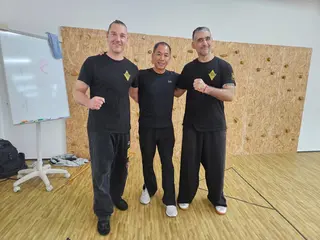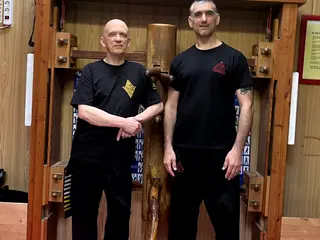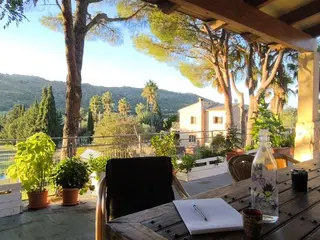




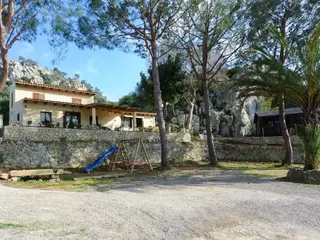



Decision Week – 1 participant, 2 mentors, 20 or more hours of personalized guidance
Alcudia, Spain
$4,286 / 7 Days
A short retreat over the weekend? A Resilience training weekend is great for this. You don't always have two or three weeks to escape everyday life. It's a good idea to take a short break over the weekend to recharge and breathe deeply. With a Resilience training weekend you will start the next week feeling rested!

Alcudia, Spain
$4,286 / 7 Days
Niebüll, Germany
$493 / 3 Days

Palma, Spain
$1,867 / 4 Days

Graz, Austria
$1,637 / 28 Days

St Florian, Austria
$360 / 2 Days

Worms, Germany
$1,097 / 22 Days

Santa Cruz , Spain
$975 / 2 Days
New retreats straight to your inbox?
So you always stay up to date.
We take data protection very seriously. Further information
FAQ
MBSR stands for mindfulness-based stress reduction, an eight-week method developed and clinically evaluated by Jon Kabat-Zinn from the 1970s onwards. It is a form of resilience training, but not the only one. Resilience training is the broader term and includes, besides MBSR, yoga-based stress management, coaching-led weeks, cognitive-behavioural building blocks and combined programs of mindfulness and body work. Anyone looking for a scientifically evaluated method with clear modules chooses MBSR. Anyone wanting a more open, individually reflective approach is better served by a general resilience retreat. The catalogue currently lists 120 programs, ranging from strict MBSR through coaching weeks to yoga-led stress regulation.
An effective resilience week typically lasts five to seven days. Three days are enough for an initial impulse and serve well as a weekend format to learn the method. The full effect, however, only develops once the body has had time to switch into recovery mode, which usually takes two to three days. Longer formats of ten to fourteen days, often as MBSR intensives or sabbatical formats, make sense for deep exhaustion or burnout aftercare. Across all 120 resilience programs in the catalogue, the range runs from weekend workshops to two-week intensives, with five to seven days as the centre, and prices currently between €175 and €6.170, averaging €1.174.
Resilience training is not only for people with a burnout diagnosis. It fits three main groups. First, working people in dense life phases who want to work preventively before exhaustion becomes chronic. Second, people in transitional phases such as a career change, separation, retirement or sabbatical, who are looking for clarity and new routines. Third, people with concrete stress symptoms such as sleep disturbances, constant tension or early exhaustion. For diagnosed mental illness such as severe depression or anxiety disorder, a retreat is a complement, not a replacement for therapeutic support. The catalogue currently lists 120 resilience programs, many with a clear indication description in the house profile.
Most programs combine body work, cognitive modules and mindfulness practice. Typical building blocks are breathwork, body scan, sitting meditation, light morning yoga or pilates, reflective writing, group dialogue and one-to-one coaching. Some programs integrate time in nature as a main component, with daily hikes or forest walks. Others lean more towards sound work, yoga nidra or silent meditation. The daily structure tends to be similar: morning body practice, a theoretical or reflective block, free time in the afternoon, an evening gathering. Across the 120 programs in the catalogue, the emphasis varies while the overall build stays comparable.
A five- to seven-day resilience week in the German-speaking area typically costs between 900 and 1,800 euro, depending on room category, board and the scope of individual coaching. MBSR weeks with a certified lead often sit in the upper range, because the method requires lengthier training of the lead. Weekend formats start around 300 to 500 euro, premium coaching weeks on Mallorca or in Tuscany with individual support can exceed 2,500 euro. Across all 120 programs in the catalogue, the range runs from €175 to €6.170, averaging €1.174. Some costs can be partly invoiced as further training or via corporate health programs, depending on the provider.
No. Most resilience retreats are designed for beginners. Guidance and build-up are chosen so that people with no prior experience of breathwork, body scan or yoga can take part. The lead introduces the methods in small steps, often with a theoretical introduction on day one. Anyone with existing yoga or meditation experience gains depth but is not structurally at an advantage. More important than prior experience is the willingness to spend a week working on your own stress pattern. Across the 120 programs in the catalogue, most are marked as beginner-friendly. A few advanced MBSR-intensive formats require an initial eight-week MBSR course, which is explicitly stated in the description.