Yoga Retreat Week at the Ashram – 6 Days of Yoga, Meditation, and Community
Horn-Bad Meinberg, Germany
$345 / 6 Days
4.5A short retreat over the weekend? A Nature Vacation weekend is great for this. You don't always have two or three weeks to escape everyday life. It's a good idea to take a short break over the weekend to recharge and breathe deeply. With a Nature Vacation weekend you will start the next week feeling rested!

Horn-Bad Meinberg, Germany
$345 / 6 Days
4.5
Sachrang, Germany
$637 / 5 Days
4.7
Horn-Bad Meinberg, Germany
$424 / 7 Days
4.9
Eltmann, Germany
$365 / 3 Days
5.0
Horn-Bad Meinberg, Germany
$143 / 3 Days
4.4
Altenfelden, Austria
$384 / 3 Days
5.0
Altenfelden, Austria
$670 / 5 Days
4.4
Krakow am See, Germany
$1,582 / 3 Days
5.0
Mecina Bombarón, Spain
$853 / 8 Days
4.8
Odenthal, Germany
$1,736 / 8 Days

Krakow am See, Germany
$1,945 / 7 Days
5.0
Biedenkopf, Germany
$307 / 3 Days
5.0
Tijarafe, Spain
$1,533 / 8 Days

Grebs-Niendorf, Germany
$362 / 4 Days
5.0
Ronco, Italy
$4,066 / 6 Days

Damshagen-Stellshagen, Germany
$472 / 5 Days
5.0
Tijarafe, Spain
$1,533 / 8 Days
Möllenbeck, Germany
$395 / 2 Days
5.0
Wiesenburg/Mark, Germany
$978 / 3 Days
5.0
Dreikirchen, Germany
$328 / 3 Days
5.0
Biedenkopf, Germany
$142 / 3 Days

Frauenburg, Austria
$2,088 / 3 Days
5.0
Palma, Spain
$1,205 / 2 Days
Frauenburg, Austria
$2,088 / 3 Days
5.0New retreats straight to your inbox?
So you always stay up to date.
We take data protection very seriously. Further information
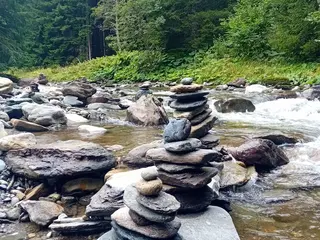
Nature retreats are more than holidays in scenic settings. They mean a deliberate shift of focus from tourist programming towards a stay that treats nature itself as the main attraction and recovery medium. The choice of location is characteristic. Classic hotel hotspots, year-round ski resorts and crowded coastal stretches are not the priority. Instead operators look for places at the edge or within protected areas: nature parks, national parks, UNESCO biosphere reserves, remote valley heads, sparsely populated islands or peninsulas reachable only by narrow roads. Architecture follows the same principle. Often these are former farmhouses, gently converted forester houses, monastic-style refuges or small farm clusters with ten to thirty guest beds. Large hotel chains with three hundred rooms are rare here. What guests seek is the immediacy of nature: a step out the door and meadow, a step out of the room and forest, a view from the window and sky without power lines. This kind of holiday is particularly suited to people who live in urban environments and need a sensory contrast. The scientific concept of biophilic recovery describes the effect well: after just three days in dense nature, cortisol levels drop measurably, sleep deepens and concentration improves. This is precisely the effect most guests are looking for when they book a nature stay as a retreat, often combined with hiking, meditation, yoga or simply free time for unplanned walks.
Five basic types of natural settings shape the offer of nature retreats in the German-speaking area and across Europe, and each has its own profile of effect. The forest is the densest and most regenerative natural setting. Firs, beeches, oaks and mixed woodland in German low mountains, Austrian forests or Swedish Smaland release essential oils that according to studies strengthen the immune system. Silent weeks, forest bathing, day hikes and yoga under old crowns fit well here. Mountains offer a different recovery type: altitude, distance, clear air and the feeling of going to physical limits. They suit guests who understand effort as part of their recovery. Heathland is the opposite of mountains: wide flat planes, low vegetation, soft horizons and a particular light in August and September when the heather blooms. Here walking slows down, silence becomes audible. Lakes and rivers shift focus to water. Swimming, stand-up paddling, canoeing or simply sitting by the shore give the day a different structure. Bavarian foothill lakes, the Mecklenburg Lake District, the Carinthian Wörthersee and the Finnish lake landscapes fall into this category. Finally the sea, whether Atlantic, Mediterranean, Baltic or North Sea, brings salty air, surf, tide and an archaic sense of rhythm. Which natural setting fits you depends on whether you long for density or width, for effort or silence, for water or forest.
The ideal travel time for a nature holiday depends on the chosen natural setting more than for other travel formats. For forest retreats in Central Europe May is the most beautiful month: fresh beech green, flowering forest floor plants, long days and mild nights between 8 and 18 degrees. Early October also convinces with colour play and clear air. Mountain retreats realistically open between mid June and mid September, in high mountains even later. Anyone above 1,500 metres should check the weather forecast carefully, as frost and snow are possible well into June. Heath trips peak between mid August and mid September when the heather blooms. The two or three weeks around 20 August are the visual climax of the Lüneburg Heath. Lake trips are most beautiful in the weeks between late June and late August when the water is warm enough to swim, in Switzerland and Scandinavia a little later. Sea retreats spread by sea: Mediterranean in shoulder season from April to June and September to November, Atlantic between May and October depending on region, Baltic between June and early September. Anyone wanting to experience nature in winter finds individual season profiles in the Black Forest, Lapland, the Alps or on Madeira. In general: anyone seeking silence plans at the edge of high season; anyone needing weather certainty stays within high season.
When asked why they booked a nature holiday, most guests cite four motives that show up in different combinations. The first motive is silence. Anyone living in a city, working in an open office or hearing devices constantly in the background at home notices after three days in the forest or by a lake how much daily stimulus has fallen away. This quietening of the surroundings is often described as the most restorative aspect of the trip. The second motive is movement in nature. Walking, swimming, paddling, climbing or simply slowly ascending a hill are physical activities that work without a club, a stopwatch or equipment. That makes them easier for many guests because they require no routine. The third motive is wildlife observation. Deer, stag, ibex, wild boar, capercaillie, black stork, squirrel or simply a wolf print in the snow are experiences no indoor programme can replace. Some operators specialise in guided wildlife watching at dawn and dusk. The fourth motive is water contact. Swimming in a clear mountain lake, the Wadden Sea of the North Sea, the Atlantic surf or a river eddy has a physical-emotional effect only partly captured by the term hydrotherapy. What most guests share is a changed breathing rhythm on return home and a piece of nature taken along in their mind.
FAQ
Prices for nature retreats range widely from simple self-catering huts to upscale wellness lodges. Simple self-catering options in forester houses, small farm clusters or nature cabins without catering start at 350 to 600 euros per person for one week. With half board and a mix of hikes, yoga or meditations, most houses sit between 700 and 1,200 euros per person. Anyone seeking an upscale standard, meaning well-renovated farmhouses with their own spa area, fresh organic full board and smaller group sizes, lands at 1,200 to 1,800 euros per person and week. Specialised wildlife-watching tours with a nature guide, guided dawn and dusk stalks, hides or huts in protected areas often range from 1,500 to 2,500 euros depending on region and species. What shapes price more than standard is location. Houses directly within a nature park or national park tend to be more expensive than comparable houses in the surrounding area. Season also matters: in peak times such as July, August or during the heather bloom prices are ten to twenty percent higher than off-peak. When booking it pays to look closely at what is really in the price, because packages differ more between nature retreats than between classic hotels.
The best travel time depends on the chosen natural setting. For forest retreats in Central Europe May with fresh green and long light is ideal, as is early October with strong colours. For mountain retreats the window opens between mid June and mid September, in high altitudes above 1,500 metres rather July to September. Heath trips depend on the heather bloom between mid August and mid September. Lake trips are most consistent between late June and late August when water is warm enough to swim. Sea retreats spread by sea: Mediterranean in shoulder season from April to June and September to November, Atlantic May to October, Baltic June to early September. Anyone seeking silence plans at the edge of high season. Anyone reliant on weather stays within high season. For wildlife watching there are special rules: deer rut in September, marmots in July, capercaillie courtship in April and May, eagle watching in late summer. If wildlife matters to you, ask the operator about the daily window and probability. In winter months Lapland for the northern lights and snowscapes, the Black Forest for snowshoe hikes and Madeira for mild weather in the laurel forest are rewarding.
For most nature retreats no prior experience is required. Unlike sports-oriented trips it is not about performance but about being present. Anyone who can walk for one and a half to three hours can manage almost any programme. What helps is a willingness to let go of the daily schedule. Many guests spend the first two days mentally still in their home routine, and only from the third day does the sense for what nature offers truly open. What challenges you physically is more often the weather changes than the elevation. Hiking trousers, a breathable jacket, good shoes and a hat belong in the pack. Anyone travelling into protected areas should be familiar with the rules: keeping to paths, dog leash rules, quiet times during breeding season. Special formats such as wildlife watching, climbing or multi-day treks have their own requirements described in the relevant offer detail. Anyone in poor health should choose particularly simple programmes with moderate movement and short travel distance. And anyone travelling alone for the first time benefits from houses with communal meals and small groups, because making connections is easier there than in large, anonymous resorts.
In the German-speaking area the Black Forest, Bavarian Forest, Eifel, Lüneburg Heath, Allgäu, Berchtesgaden and the Mecklenburg Lake District top the popularity lists. The Palatinate Forest, the Spreewald, the Wadden Sea and the Swabian Jura also have a loyal following. In Austria the Wachau, the Salzkammergut, the Mühlviertel and the Carinthian lake region are classics for nature retreats. Switzerland scores with the Engadine, Ticino, the Bernese Oberland and the region around Lake Lucerne. Internationally Scandinavia, Madeira, the Azores, the Scottish Highlands and the forests of Slovenia are in high regard. Sweden offers particularly accessible nature trips in Smaland and Värmland; Norway the fjord country and the highlands around Rondane. Madeira is mild year-round and offers laurel forests with levada paths. The Azores are booked for whale watching and volcanic landscapes. Italy has made a name with the Sibillini Mountains, the Aspromonte in Calabria and the forests of the Casentinesi. In Slovenia the Triglav National Park and the Soca Valley are favoured destinations. Which region suits you depends on the natural setting, season and desired travel distance. Anyone wanting a short trip finds the closest options in Central European low mountains; anyone travelling longer enjoys the most intense experiences in Scandinavia and on Atlantic islands.
Because nature retreats are often located in remote regions, travel is usually a bit more involved than for classic city hotels. In the German-speaking area train travel is nevertheless often possible. Black Forest, Allgäu, Berchtesgaden, Wachau, Ticino or Engadine are reachable via long-distance connections plus regional links. The last kilometres to the house are often bridged by hike taxi, dial-a-bus, ride share or operator station transfer. Many houses provide a transfer from the nearest station for a small fee or for free. Anyone travelling to a nature park or national park region should ask about the local guest card: in many regions it enables free use of regional buses and trains during the stay. For international destinations such as Madeira, the Azores, Lapland or the Scottish Highlands the route runs via airport and rental car, as many houses lie outside scheduled bus routes. Anyone wanting to travel without a car should clarify before booking whether hikes start directly from the house or whether a vehicle is needed. Some operators specialise in deliberate car-free stays and offer all programme points within walking distance of the house. These houses are a lucky find for train travellers.
The standard price of a guided nature retreat includes accommodation, catering with half or full board and the main programme. For many operators this means guided walks, a daily yoga or meditation session and possibly a closing circle. Breakfast and dinner are usually included, often in a vegetarian wholefoods variant with regional ingredients. Lunch is often packed as a hike picnic. What varies is the scope of activated programming. Some houses offer an open programme where you decide which session to attend; others run a structured programme with fixed times. Wellness areas such as sauna, swim pond or rest room are free in most houses; massages, coaching hours and therapy sessions cost extra. Not included are travel to the destination, drinks at dinner, entry fees for museums or spas, cable cars, rented gear such as canoes or stand-up paddling boards, and tips for the guide. Special formats such as wildlife watching with a nature guide bill the guide separately, often per hour. Before booking it pays to look closely at the service description of the specific operator, as nature houses tailor their packages very individually.
The guest profile in nature retreats is broad in age but often strikingly homogeneous professionally. Most guests are between 35 and 65, and a growing share under 35 comes from professions with high screen time or high stimulus loads. Among over-60s experienced travellers dominate, people who have done many hotel holidays and now deliberately seek the opposite. Women slightly outnumber men in most houses, especially in programmes with yoga, mindfulness or meditation. Professionally, teachers, therapists, doctors, care workers, the self-employed, architects, designers and IT specialists are frequent. Many guests travel alone because the nature format makes solo travel easier than a classic club holiday. Couples often travel as a tandem with similar movement needs. Families with children tend to pick houses with mixed programmes where parents and children find their own activities. What all guests share is a need for reduction. Anyone seeking action, dancing, entertainment or large hotel complexes is in the wrong place. Anyone who likes silence, slow days, honest meals and simple garden conversations will quickly feel at home in most nature retreats.