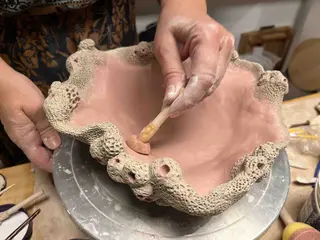
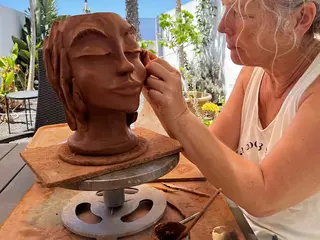


Ceramics Workshop on Lanzarote
Tias, Spain
$648 / 4 Days
A short retreat over the weekend? A Creative Retreats weekend is great for this. You don't always have two or three weeks to escape everyday life. It's a good idea to take a short break over the weekend to recharge and breathe deeply. With a Creative Retreats weekend you will start the next week feeling rested!
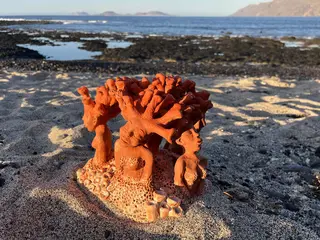
Tias, Spain
$648 / 4 Days

Saint Jeannet, France
$1,099 / 7 Days
4.9
Freudenstadt, Germany
$1,263 / 5 Days
5.0
Krakow am See, Germany
$1,582 / 3 Days
5.0
Krakow am See, Germany
$1,945 / 7 Days
5.0
Waldheim, Germany
$1,417 / 7 Days
5.0
Lajares, Spain
$10,880 / 8 Days

Ronco, Italy
$4,066 / 6 Days
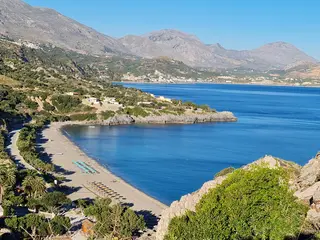
Plakias, Greece
$796 / 8 Days
5.0
Krölpa, Germany
$878 / 6 Days
5.0
Palma de Mallorca, Spain
$2,143
$1,813
Frühbucher Jan-Mär
/ 5 Days

Wiesenburg/Mark, Germany
$978 / 3 Days
5.0
Stenberga, Sweden
$659 / 4 Days
5.0
Agios Stefanos, Greece
$780 / 8 Days
4.5
Korfu, Greece
$714 / 8 Days
5.0
Palma, Spain
$1,205 / 2 Days
Krakow am See, Germany
$2,417 / 10 Days

Wiesenburg/Mark, Germany
$714 / 2 Days
5.0
Groß-Umstadt, Germany
$1,340 / 4 Days

Medulin, Croatia
$3,297 / 4 Days
Groß-Umstadt, Germany
$1,088 / 4 Days

Palma, Spain
$2,196 / 7 Days
4.0
Wiesenburg/Mark, Germany
$978 / 3 Days
5.0
Palma de Mallorca, Spain
$2,196 / 7 Days
New retreats straight to your inbox?
So you always stay up to date.
We take data protection very seriously. Further information

Creative retreats are a travel form that has developed its own identity in recent years. Unlike a painting weekend or a classical workshop, the point is not quick results or the acquisition of a technique. At the centre stands the longer phase in which creative work gets the space that daily life normally does not allow. Four to fourteen days is the typical duration, with three to seven days as the most often booked variant.
The range of themes is wide. Painting and drawing are the most common, followed by writing and literary work. Alongside there are programs for photography, pottery and ceramics, sculpture, mosaic, textile work, music practice. In recent years digital-creative lines have been added: editing workshops for filmmakers, sketch-note weeks, design-oriented coding programs.
What distinguishes creative retreats from workshops is the life phase in which they are usually booked. Creative-retreat guests generally seek less a concrete technique than a different inner state: less appointment pressure, more room to play, more concentration, more readiness to engage with a task whose outcome is not yet clear. This life phase recurs through the year, which makes creative retreats a travel format that makes sense to repeat several times across life.

Three theme fields dominate the creative-retreat offer. The first is painting and drawing. Watercolour, acrylic, oil, pastel, charcoal and ink are the most common techniques. Programs range from beginner weeks training the eye before the hand to studio weeks for advanced guests where guidance is more coaching than instruction. Plein-air programs outdoors, often combined with hiking, are a particularly sought-after variant.
The second theme is writing. Poetry, short prose, memoir writing, novel workshops: many houses have writing weeks with clearly defined daily structures, often three hours of guided writing in the morning, three hours of silent writing in the afternoon, reading and feedback rounds in the evening. This line is especially well suited to first-time guests because writing has fewer material hurdles than painting.
The third theme is craft and material work. Pottery, ceramics, sculpture in wood or soapstone, textile work, felt, bookbinding, print workshop. These programs are often shorter (three to five days) because physical work is more demanding than purely flat practice. Some houses offer mixed formats in which one writes in the morning and works at the pottery wheel in the afternoon, providing stimulation across several senses. Alongside there are programs for music practice, often in smaller houses with one teacher per four to eight participants.

A day in a creative retreat has a different structure from a classical holiday day. Three phases alternate. The first phase is the guided work in the morning, usually from nine to twelve. A teacher or companion gives impulses, shows techniques, observes the work and offers brief feedback. This phase is structure-giving and kept fixed in most houses.
The second phase is free work in the afternoon, usually from two to five. Here each participant works alone, on their own piece, at their own pace. The companion is usually present in the studio or house if someone has a question but does not impose. This phase is the most productive and the real difference from a workshop.
The third phase is the evening, in which shared reading rounds, image discussions or teaching conversations often take place. In some houses there are also walks or yoga sessions before the morning block to loosen the body for concentrated sitting work.
Meals are taken together in almost all houses, mostly vegetarian and regional, and they are a second place of exchange. Anyone not wanting that can usually also eat alone. What many guests cite in hindsight as the most important effect: after three to four days a different depth of concentration sets in that is rarely reachable at home.

Creative retreats fit three profiles particularly well. The first is people who used to work creatively and lost it in their working life. Here the creative retreat is more a reunion than a fresh start. The threshold fear of showing or presenting something is much lower in guided weeks than in open workshops because the group is often very similarly composed.
The second profile is self-employed people and freelancers who need a space in a creative phase that cannot be produced at home. Writers wanting to start or finish a manuscript. Visual artists developing a series. Musicians working on an album concept. Here the creative retreat is workshop more than recovery, and the companion often has the role of a sparring partner.
The third profile is people in a life transition for whom creative work is a processing tool. After separation, grief, burn-out or professional change, a writing or painting stay can have a healing effect because working with material is a different processing form from speaking.
Anyone seeking pure recovery without the work demanding its own tempo is often better placed in a wellness or yoga house. Anyone seeking the blend of work, concentration and space finds in the creative retreat its own travel form, distinct from the usual holiday repertoire.
FAQ
It depends on the chosen program. For beginner programs curiosity is enough; no prior knowledge is needed. The companion builds the first steps and removes for newcomers the threshold from the familiar to the unfamiliar. For studio or workshop weeks where the companion offers coaching rather than teaching technique, prior experience is sensible: regular own practice in the technique, at least one to two years. Anyone unsure whether a program fits their level finds this almost always described in the program text (beginner, intermediate, advanced). When in doubt a short phone call to the provider helps.
Prices currently range from €160 to €11.900 euros, with an average of around €1.343 euros for three to seven days. Weekend workshops are the most affordable, longer studio weeks with individual coaching support sit in the upper range. Most programs include accommodation in a single or shared room, vegetarian full board, all working materials (or a rough material list if material is to be brought separately) and guidance. Surcharges apply for guaranteed single rooms in small houses, for special materials (such as specialised papers, specialised varnishes, fine woods) and for arrival and departure outside the program window.
A weekend workshop aims at a technique or a concrete result. Three days, clear instruction, a finished piece at the end. A creative retreat sets a different focus: less quick results, more depth of concentration and individual work. The companion gives impulses but intervenes less in the creative process. What comes out at the end of the week is more open than in a workshop. Some guests have three finished pieces at the end, others a single one that reaches deeper than the faster weekend works. For a first encounter with a technique, a workshop fits. For deeper work, a creative retreat fits.
For a first creative retreat, themes with low material effort and low entry hurdles fit best. Writing is here the simplest entry: only a notebook and pen, a clear daily structure, quick comparability with one's own experiences. Watercolour and drawing are the second most common entry themes because the material stays manageable and the teaching tradition is well established. For first-time guests drawn to three-dimensional work, pottery fits because the technique is roughly learnable in a week. Anyone already knowing that music or photography is their field can also start there but should check in the program text that beginner level is supported.
Three questions help with the choice. First, which natural setting fits your work? Anyone seeking plein-air painting or landscape writing heads to the sea (Baltic, North Sea, Mediterranean), to the mountains (Alps, low mountain ranges) or to particularly scenic micro-regions (Black Forest, Eifel, Tuscany). Anyone doing studio work and needing little outdoor time can also choose a more urban program.
Second, which group size suits you? Small houses with six to twelve participants give more individual support. Larger houses with fifteen to twenty-five participants give more exchange and more stimulus variety. Third, which guidance style fits you? Some teachers work instructively and structuring, others coaching and reserved. The program text often says which style dominates; a phone call to the provider reliably clarifies the question.
Yes, that is actually a popular variant. But it is worth clarifying a few points in advance. First, do you both work in the same medium or different ones? Some houses offer parallel programs, others focus on one medium per week. Second, do you want to work in the same studio or separately? For some couples shared work functions well, for others separate concentration is more effective. Third, do your rhythms match? Who writes in the morning and who in the evening, who needs breaks and who works through, is a real question. Anyone discussing this in advance avoids the shared retreat becoming a compromise trip. A shared room is usually possible, often with a surcharge.