Flexible Yoga Weekend at the Bad Meinberg Ashram
Horn-Bad Meinberg, Germany
$156 / 3 Days
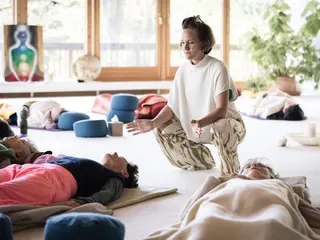
5.0A short retreat over the weekend? A Wellness weekend is great for this. You don't always have two or three weeks to escape everyday life. It's a good idea to take a short break over the weekend to recharge and breathe deeply. With a Wellness weekend you will start the next week feeling rested!

Horn-Bad Meinberg, Germany
$156 / 3 Days
5.0
Horn-Bad Meinberg, Germany
$345 / 6 Days
4.5
Horn-Bad Meinberg, Germany
$424 / 7 Days
4.9
Eltmann, Germany
$365 / 3 Days
5.0
Horn-Bad Meinberg, Germany
$143 / 3 Days
4.4
Horn - Bad Meinberg, Germany
$276 / 5 Days
4.8
Montuiri, Spain
$824 / 5 Days
4.2
Altenfelden, Austria
$384 / 3 Days
5.0
Altenfelden, Austria
$670 / 5 Days
4.4
Saint Jeannet, France
$1,099 / 7 Days
4.9
Montuiri, Spain
$1,351 / 8 Days
4.6
Flechtingen, Germany
$487 / 3 Days
5.0
Flechtingen, Germany
$365 / 3 Days
5.0
Lajares, Spain
$10,880 / 8 Days

Flechtingen, Germany
$768 / 4 Days

Stuckenborstel, Germany
$318 / 3 Days
5.0
Grebs-Niendorf, Germany
$362 / 4 Days
5.0
Ronco, Italy
$4,066 / 6 Days
Waldheim, Germany
$2,516 / 7 Days

Leipzig , Germany
$494 / 3 Days
5.0
Tijarafe, Spain
$1,533 / 8 Days

Horn-Bad Meinberg, Germany
$347 / 6 Days

manacor, Spain
$5,164 / 11 Days
Möllenbeck, Germany
$395 / 2 Days
5.0New retreats straight to your inbox?
So you always stay up to date.
We take data protection very seriously. Further information

Wellness travel has shifted noticeably over the past decade. What used to be a hotel spa with a sauna area and add-on massage has become its own travel category with a clearer offering: a calm daily structure, light food, outdoor movement, small groups and often a morning yoga or mindfulness module. Three distinct lines now sit under the same label.
The first line is hotel wellness in the narrow sense, with large bath and treatment areas where you book freely whatever suits you. The second line is curated weeks with a fixed structure, from base fasting and detox through to ayurvedic treatments, usually five to seven days, often in the Allgäu, the Black Forest, on Mallorca or in Tuscany. The third line is smaller, more personal programs in which silence, mindfulness-based stress reduction modules or coaching take centre stage.
Anyone looking for wellness should first clarify which of these lines is meant. A spa weekend is a different kind of recovery from a detox week, and a guided silent practice feels nothing like a pool day at a resort. The better programs reveal the line in the description itself: scheduled modules suggest a curated week, free booking points to classic hotel wellness, and silence or mindfulness work signals the more personal third route.

Wellness formats roughly split by occasion and length. For a quick reset a weekend is usually enough, three days in the mountains, a low-range hideaway or a countryside hotel. If the body is meant to truly settle, five to seven days is realistic, because the first two days tend to bring tiredness and adjustment before sleep, digestion and energy start to follow.
Classic hotel wellness works year-round, with sauna and snow in winter, pool and mountain air in summer. Base fasting and detox are particularly in demand during shoulder seasons such as spring and autumn, when many people consciously plan their annual reset. Ayurvedic weeks run all year, in DACH houses often with a quieter winter rhythm and herb-led summer themes.
The question of which format suits you depends less on region or hotel star rating than on the daily flow you have in mind. If you want open time and free use of a spa, classic hotel wellness fits well. If you want guidance, a small group and a clear program, a curated week serves you better. Both formats are available across the DACH mid-range mountains, the Baltic Sea, the Alps as well as Mallorca, Tuscany and the Algarve.

The three terms wellness, spa and kur are often used interchangeably but mean different things. Spa in the narrow sense is a treatment and bathing world, embedded in a hotel or run as a standalone day spa. Sauna, pool, massage, facial, scrub. A good spa is used by combining treatments freely and leaving relaxed. A classic wellness holiday builds a week of movement, nutrition and rest around that spa offering.
Kur is a different term, originally from the German heal-and-baths tradition. A classic kur is medically supervised, usually lasts three weeks and includes a doctor's intake, an indicated diagnosis and a treatment protocol. What is sold today as a kur is often a seven- to fourteen-day wellness week with kur-like building blocks such as therapeutic fasting, drinking cures or Kneipp applications. The term thus moves between medical tradition and broader marketing use.
For most people booking, the distinction is pragmatic. Spa, if a few relaxed hours or a weekend is the goal. Wellness, if the whole holiday is meant for recovery. Kur, if there is a medical reason behind it or the cost is partially covered by a health insurance. Most houses make their line clear in the first sentences of their description.

Three points separate a wellness week that truly restores from one that just ends up expensive. First, the daily structure. Houses that live a clear rhythm of morning movement, midday treatment and evening rest give the nervous system the cues it has often lost in daily life. Where the day is built from random treatment slots and unstructured free time, everyday-mode tends to slide into the holiday.
Second, the kitchen. A wellness week without thought-out food does not work. Houses that take this seriously have their own line, usually vegetarian or plant-led, often clearly reduced, sometimes built around a base-fasting or therapeutic-fasting concept. If the kitchen is described as classic German and includes meat at every meal, the wellness label is more marketing than program. Ask for the weekly plan, it gives the line away.
Third, the size of the group and the house. Wellness in an 80-room resort feels different from a 12-room countryside house. Both have their place, but they work differently. The large resort offers space to disappear and a degree of anonymity, which is good for open days. The small house carries a denser atmosphere, you are recognised, which is good for structured programs and curated weeks. Each has its use, depending on what you need at that moment.
FAQ
For a quick reset, three weekend days are the threshold at which sleep and pause noticeably set in. If the body is meant to truly settle, five to seven days is realistic, because the first two days usually pass with tiredness and digestive adjustment before energy and sleep improve in a lasting way. Longer stays of ten to fourteen days are mainly relevant for therapeutic fasting, base cures and ayurvedic programs, where treatment series need time to land. Across all 407 wellness programs in the catalogue, durations range from 2 to 21 days, with five to seven days as the centre. Prices currently span €82 to €11.900, averaging €1.269, depending on region, room category and program depth.
Spa in the narrow sense is the treatment and bathing world with sauna, pool, massage and applications, freely bookable. A wellness holiday wraps this spa world into a week with movement, a calm daily structure and light food. A kur, by contrast, is originally medically supervised, with a doctor's intake, a diagnosis and a treatment protocol, classically three weeks long and often partly covered by health insurance. What is sold today as a kur is mostly a seven- to fourteen-day wellness week with kur-like building blocks such as therapeutic fasting or Kneipp applications. The catalogue covers all three lines: spa and wellness hotels, curated weeks, and houses with a medical-traditional kur profile. The line usually shows in the first sentences of a house's description.
Within the German-speaking area, the focus sits in the Allgäu, the Black Forest, the Bavarian Alps, the Salzkammergut and Tyrol, complemented by the Mecklenburg Lake District and the Baltic Sea coast with its Kneipp and spa tradition. Around the Mediterranean, Mallorca leads, followed by Tuscany, the Algarve and individual houses on Sicily, Sardinia and Crete. Mediterranean houses lean towards outdoor time, mountain air and Mediterranean cuisine, while DACH houses focus more on Kneipp, therapeutic fasting and an alpine atmosphere. The catalogue currently lists 407 wellness programs. Which region fits depends most on the season, the climate you want and the daily structure you are after.
Typical components in a wellness week are morning movement sessions such as yoga, light pilates, a walk or a hike. There is usually at least one treatment per day, most often a massage, a facial or a bathing application. The kitchen is generally vegetarian or plant-led and often reduced. A quiet daily structure with clear mealtimes and afternoon rest belongs to the picture. Some houses add evening breathwork, meditation or sound sessions, others sauna, pool and free spa access. Across the 407 options the depth varies considerably, from hotel wellness with free booking to curated weeks with a fixed schedule. Which components a specific house offers is set out in its weekly structure.
Prices in the wellness segment spread widely because the category spans everything from a hotel spa weekend to a premium ayurvedic week. A weekend in a DACH wellness hotel with half board and spa access often sits between 250 and 500 euro per person. A curated wellness week with full board, a fixed program and treatments commonly runs from 900 to 1,800 euro, with comparable ranges in Mediterranean houses on Mallorca and in Tuscany. Ayurvedic and therapeutic-fasting weeks with daily treatments can land between 1,500 and 3,500 euro. Across the 407 programs in the catalogue, the range runs from €82 to €11.900, averaging €1.269. What drives the price is mainly the room category, the number of treatments and the meal scheme.
Within the German-speaking area, wellness works year-round because sauna, pool and spa worlds run independently of the weather. Spring and autumn are classically strong, since many people deliberately plan their annual reset then, with base fasting, detox or a yoga module. Winter suits DACH houses with sauna and snowy walks, summer fits houses with outdoor pools and mountain or lakeside settings. Mediterranean wellness programs on Mallorca, in Tuscany and on the Algarve are densest from April to October, with peaks in May/June and September/October. To avoid summer heat, book outside the peak months. The catalogue currently offers 407 wellness programs spread across the year.